
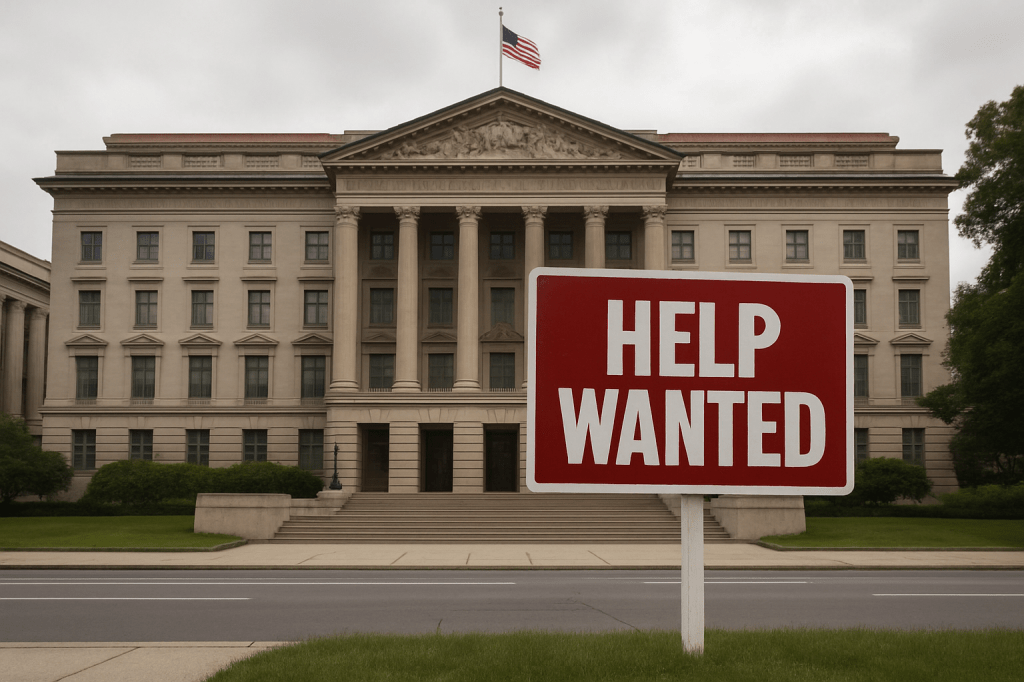
The world of artificial intelligence within the U.S. government just took an unexpected turn. On April 28, 2025, Time magazine revealed a significant shake-up: the Trump administration has dismissed over 200 AI experts hired during the prior administration’s “National AI Talent Surge.” While this might sound like just another bureaucratic reshuffle, the implications are anything but routine. Let’s dive into the deeper currents beneath this seemingly straightforward news.
The Great AI Talent Exodus
In an era where AI advancements are setting the pace for global innovation, the U.S. government’s decision to cut loose a cadre of AI specialists is both bold and bewildering. These experts were brought on board to spearhead projects aimed at streamlining public services, tackling issues like lengthy Social Security wait times, and making tax filings less of a headache. With these specialists now shown the door, one has to wonder: What’s the game plan?
**The irony is sharp.** Despite President Trump’s public assertions of advancing U.S. leadership in AI, his administration’s actions appear to be pulling in the opposite direction. The Department of Government Efficiency, led by Elon Musk, executed these dismissals with surgical precision, dismantling key tech offices like the U.S. Digital Service and 18F. These offices were not just bureaucratic entities; they were the engines driving innovation in federal services, like the IRS’s Direct File program.
What’s Really at Stake?
Former officials are sounding the alarm, and rightfully so. The mass termination of AI experts isn’t just a loss of personnel; it’s a potential setback for federal innovation. **Here’s the rub:** Without in-house expertise, the government may find itself at the mercy of private contractors, which could inflate costs and complicate project implementation. Reliance on external parties isn’t just expensive; it’s risky, especially when dealing with sensitive public data and services.
- Financial Consequences: Increased dependency on contractors could lead to ballooning costs without guaranteed results.
- Talent Drain: The abrupt layoffs send a chilling message to potential recruits: stability and support might be fleeting.
- Innovation Stagnation: Without a skilled workforce, the pace of developing and integrating new technologies could slow dramatically.
The Broader Debate: Policy vs. Practice
Angelica Quirarte, a key figure in recruiting these AI specialists, resigned shortly after the administration change, citing a chaotic environment that stifled governance. Her departure underscores a growing concern: How can the government champion AI innovation if its internal structures are crumbling?
This upheaval raises crucial questions about the trajectory of AI policy in the U.S. Are we witnessing a clash between visionary policy and practical execution? The current administration’s actions have ignited a broader debate about the role of AI in government and the essential need for a stable, skilled workforce to drive technological progress.
**The real winners and losers here?** In the short term, private contractors may find themselves with more business as the government leans on them to fill the void left by departing AI talent. Long term, however, the American public could bear the brunt of slower service improvements and higher costs—an ironic twist in an era that promised efficiency through technology.
Conclusion: A Crossroads for AI in Government
The Trump administration’s decision to dismiss AI experts is more than just a personnel change; it’s a pivotal moment that highlights the tension between political priorities and technological advancement. As the dust settles, one thing is clear: the future of AI in the federal government hangs in a delicate balance, with far-reaching implications for policy and innovation. How this plays out will not only shape AI adoption within government but also influence America’s standing in the global AI race.
Stay tuned, because this story is far from over.
