
Welcome to the future of education, where your language tutor might just be an algorithm. In a move that’s causing ripples across the educational tech landscape, Duolingo CEO Luis von Ahn has unveiled a new chapter in AI integration, positioning the company to redefine learning as we know it.
The AI Frontier: Duolingo’s New Rules of Engagement
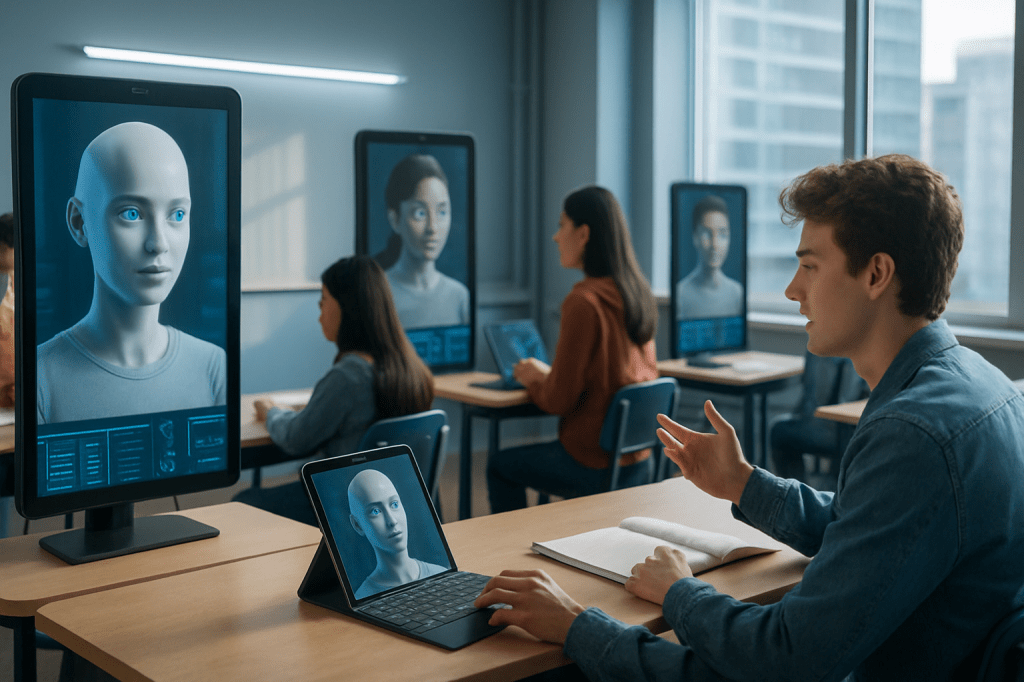
At a recent Axios event in Pittsburgh, von Ahn didn’t just talk about AI in broad strokes; he laid out a vision that’s both ambitious and deeply transformative. Duolingo is not just using AI to streamline operations; it’s leveraging technology to create a personalized learning revolution. Imagine practicing a new language with AI over a video call, complete with responsive feedback and tailored guidance. This isn’t science fiction—it’s the next step in Duolingo’s journey.
Since its inception, Duolingo has been a pioneer in democratizing education. By integrating AI, it aims to extend its reach beyond language learning into areas like math, music, and chess. The goal? To provide every learner with their own virtual tutor, available 24/7, helping bridge gaps in access and affordability.
Workforce Implications: The New Normal
But what about the human element? Here’s where things get interesting. Back in March 2023, Duolingo’s “Duolingo Max” premium tier made headlines by incorporating OpenAI’s GPT-4 technology. Fast forward to January 2024, and the company had reduced its contractor workforce by approximately 10%, thanks to efficiencies gained from AI.
This isn’t just about replacing roles; it’s about reshaping them. While AI takes over repetitive tasks like content creation and translation, human educators remain crucial. According to von Ahn, teaching roles embody a human-centric value that AI simply can’t replicate. In an era of automation, this perspective is both refreshing and reassuring.
Winners, Losers, and the Questions We Should Be Asking
So, who’s really coming out on top here? For learners, the benefits are clear: more personalized, engaging, and accessible education. For Duolingo, the strategic pivot promises enhanced efficiency and potentially higher revenues, as evidenced by recent forecasts exceeding expectations.
However, the real question lies in the broader workforce dynamics. While some roles may vanish, new opportunities are likely to emerge in AI oversight, content curation, and educational strategy. The challenge will be in ensuring that displaced workers are equipped to transition into these new roles.
Moreover, this development raises deeper questions about the future of work. Are we ready for a world where AI tutors are the norm? What happens to traditional educational models, and how do we ensure that the human touch isn’t lost in translation?
Conclusion: Embracing Change with Caution
Duolingo’s bold steps into AI integration herald a new era in education. While the potential benefits are enormous, the path forward requires careful navigation. Balancing technological innovation with human-centered education is no small feat, but if von Ahn’s vision is any indication, Duolingo is up for the challenge.
As we watch this space, one thing is clear: the conversation around AI and work is far from over. The landscape is shifting, and those who adapt will thrive. For Duolingo and its users, this could be the beginning of a bright, AI-enhanced future.
