
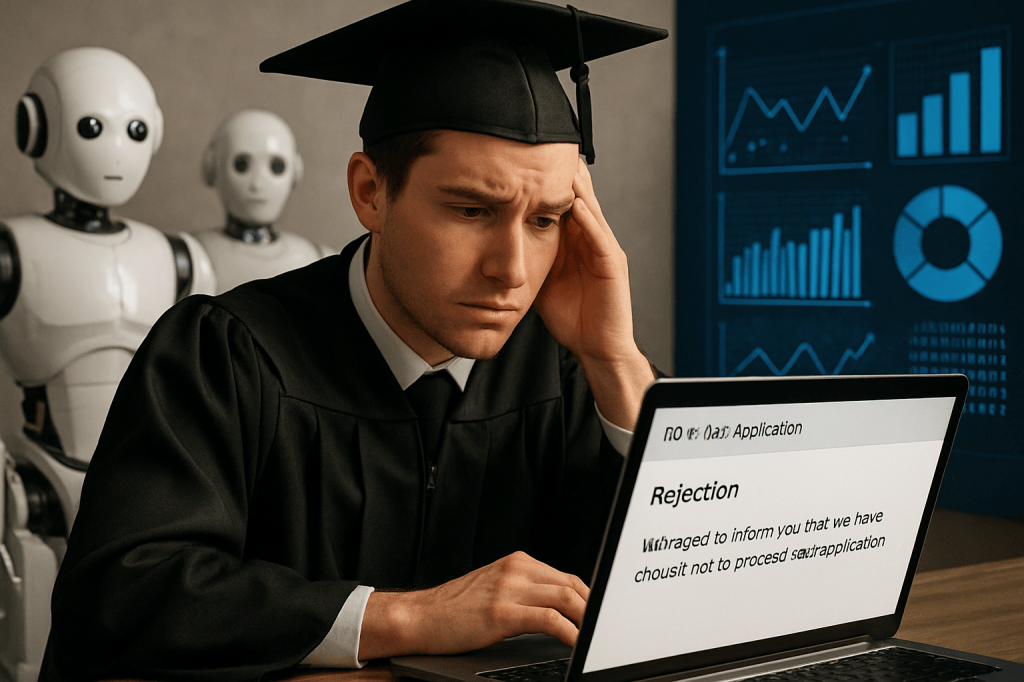
On April 29, 2025, The Atlantic dropped a bombshell that sent ripples through the already turbulent waters of the job market. The unemployment rate for recent college graduates has surged to 5.8%, a figure that echoes the unsettling times of the Great Recession. But let’s cut through the noise and get to the heart of the matter—what’s really happening here?
The Unseen Hand: AI’s Stealthy Influence
In an era where AI’s transformative power is both celebrated and feared, its subtle yet profound impact on the job market can’t be overlooked. While the Atlantic article cautiously attributes the uptick in unemployment to economic aftershocks and cost-cutting measures, the shadow of AI looms large, quietly reshaping the landscape.
Interestingly, the sectors most affected—technology and finance—are precisely where AI’s presence is most pervasive. **AI is not yet the obvious culprit, but it’s certainly a silent partner in this drama.** As companies increasingly deploy AI for tasks ranging from data analysis to customer service, the demand for entry-level white-collar jobs, traditionally a haven for fresh graduates, is waning.
The Diminishing Value of Degrees
Once considered the golden ticket to upward mobility, a college degree is no longer the surefire guarantee of success it once was. **The economic return on a college education is plateauing**, and as AI continues to automate routine tasks, the skills once honed in entry-level roles are becoming obsolete.
For instance, in tech and finance, the ability to code or manage spreadsheets is being overshadowed by the need for AI proficiency. The Pure AI report from May 2024 highlighted this shift, noting that jobs requiring AI skills carry a 25% wage premium. This isn’t just a trend—it’s a tectonic shift.
Winners, Losers, and the New Frontier
So, who stands to gain or lose in this evolving scenario? Let’s break it down:
- Winners: Individuals with AI expertise or those willing to re-skill in emerging technologies. The demand for AI-savvy professionals is surging, and those who can adapt will find themselves in high demand.
- Losers: Recent graduates without AI experience, particularly in fields heavily impacted by automation. The narrowing “recent-grad gap” is a stark reminder of the need for new skill sets.
This development raises deeper questions about the future of education and the very nature of work. Are we preparing our youth for a future that no longer exists? How can educational institutions pivot to meet the demands of an AI-driven economy?
A Call to Adaptation
The Atlantic’s revelation isn’t just a statistic—it’s a clarion call for adaptation. As AI continues to integrate into the workforce, the ability to navigate this new terrain will determine the fate of countless professionals. **The age of AI isn’t on the horizon—it’s here, and it’s time to adapt.**
In this brave new world, the adage “adapt or perish” has never been more relevant. As we grapple with these changes, one thing is clear: the job market, much like AI itself, is evolving rapidly. The real question is, how will we evolve with it?
