
Ah, the saga of AI and the workforce—a tale as old as, well, 2020s technology. But if you’re here for a juicy update on Klarna rehiring its human customer service agents due to AI shortcomings, allow me to gently redirect your attention. Klarna’s latest moves are not about backtracking; they’re about doubling down on AI, with no sign of an about-face in sight.
AI: The New Office Hero or Just a Clever Sidekick?
Klarna’s foray into AI is nothing short of ambitious. In February 2024, they rolled out an OpenAI-powered assistant, which quickly took over two-thirds of customer service interactions. Imagine a digital employee that speaks over 35 languages, works tirelessly across 23 markets, and has the charming ability to cut down customer resolution times from 11 minutes to under 2. It’s like a superhero without a cape, quietly revolutionizing the customer experience.
But here’s where it gets intriguing—this AI isn’t just a customer service whiz. By August 2024, Klarna’s CEO, Sebastian Siemiatkowski, was already singing the praises of AI, announcing plans to shrink the workforce by half, not through layoffs, but via natural attrition. A hiring freeze was put in place, except for engineering roles, underscoring the shift towards a tech-centric workforce.
The Quiet Revolution: AI Beyond Chatbots
December 2024 brought another revelation: a staggering 90% of Klarna’s staff were now using AI tools daily. This wasn’t just a customer service story anymore. AI was permeating Communications, Marketing, and Legal departments. Klarna’s internal AI, Kiki, became a beacon of self-service, fielding over 250,000 employee inquiries. The result? A culture leaning heavily on autonomy and productivity.
- Productivity Surge: AI tools are not just enhancing efficiency; they’re redefining job roles, making employees more autonomous.
- Workforce Transformation: Klarna’s approach reflects a broader industry trend towards reducing human roles in favor of AI-driven efficiencies.
- Market Dynamics: With AI handling routine tasks, human roles are shifting towards more strategic, complex problem-solving positions.
The Winners, The Losers, and The Questions Ahead
So, who really wins in this AI-driven evolution? Klarna, for one, is clearly benefiting from reduced operational costs and increased efficiency. Employees willing to adapt and upskill stand to gain too, as they transition to roles that leverage human creativity and strategic thinking, something AI has yet to master.
The losers? Potentially those resistant to change or unable to pivot to new roles. But the deeper question is whether this model is sustainable long-term. Does reliance on AI create a brittle system that could falter under unforeseen challenges, or is it a robust framework for future growth?
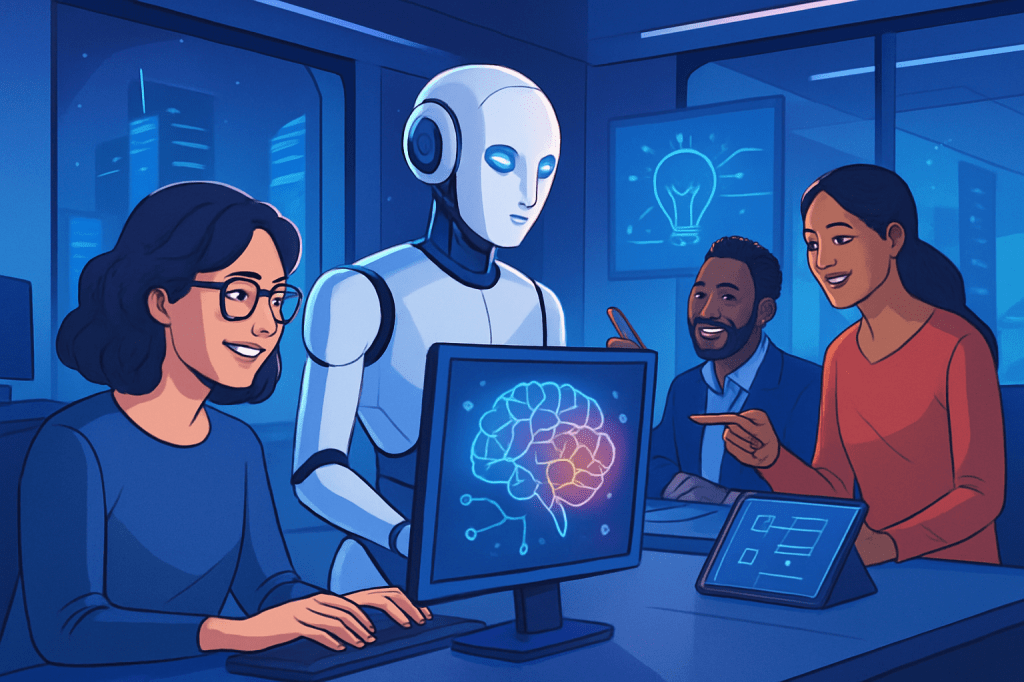
As Klarna marches forward, the real narrative isn’t about a return to human workforce dominance. It’s about exploring the new frontier where humans and AI coexist, complementing each other’s strengths. This isn’t a retreat—it’s a recalibration.
So, next time you hear a whisper about AI’s failures, remember that sometimes, the most compelling stories are about evolution, not revolution. Klarna isn’t looking back; they’re charting a course for what could very well be the future of work.
