
The World Economic Forum’s Unexpected Forecast: More Jobs, Different Work
Yesterday, the World Economic Forum unveiled its “Future of Jobs Report 2025,” a document that, on its surface, offers a surprisingly optimistic outlook for the global labor market. While our inbox is usually flooded with tales of digital displacement, the WEF projects a net increase of 78 million jobs worldwide by 2030, courtesy of artificial intelligence.
This isn’t a simple narrative of AI as a job-creation engine, nor is it a wholesale dismissal of the disruption it brings. The report details a complex churn: an anticipated 170 million new positions emerging, balanced against 92 million roles facing obsolescence due to technological advancements. The net positive figure, therefore, masks a profound re-architecture of the global employment landscape.
Beyond the Net: The Shifting Architecture of Employment
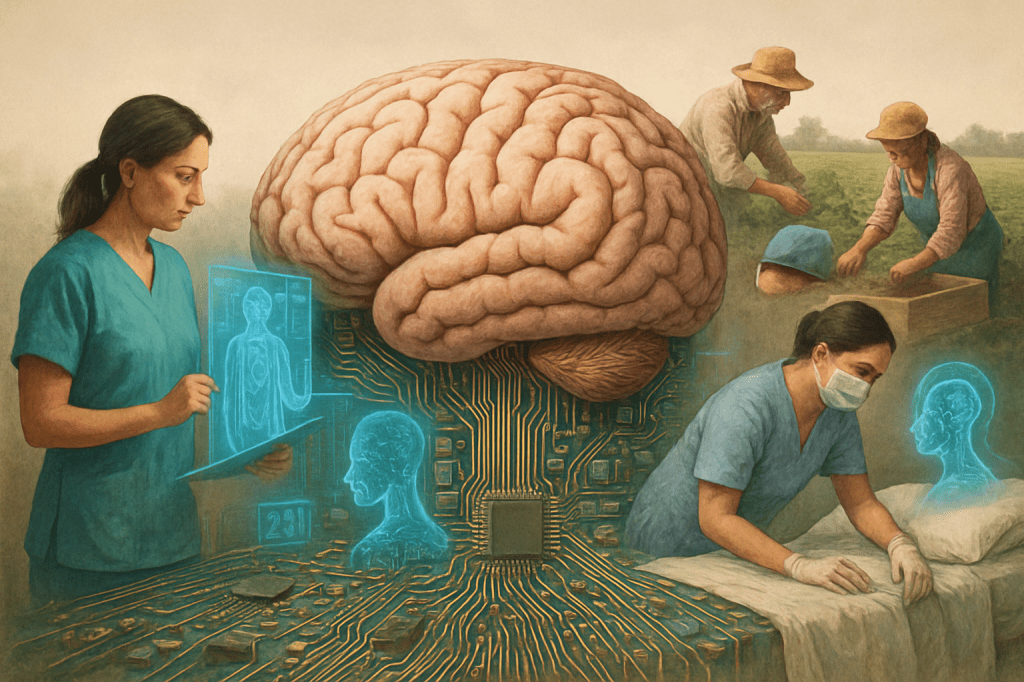
Delving into the specifics, the WEF’s analysis points to a significant transformation across sectors. Service industries are slated for a substantial overhaul, a predictable outcome given AI’s aptitude for automation in these areas. What’s less intuitive, however, is the projected growth in frontline jobs such as farmworkers and nurses. This suggests that while AI excels at data processing and repetitive tasks, roles requiring nuanced human interaction, physical dexterity in unstructured environments, or complex emotional intelligence may see augmentation rather than outright replacement, potentially even an increase in demand as AI handles the more mechanistic aspects of these professions.
This dual impact is a recurring theme. Companies are not just bracing for job losses; they are actively anticipating simultaneous job creation within their operations. It’s a testament to AI’s capacity to both streamline existing processes and unlock entirely new avenues for value generation.
The Evolving DNA of Work
The report also highlights a critical consensus among AI experts: a significant majority (73%) believe AI will fundamentally improve *how* people perform their jobs. This isn’t about AI taking over entirely, but rather about its role in enhancing human productivity and automating the mundane. Imagine an AI sifting through patient data for a nurse, or optimizing irrigation for a farmworker – freeing up human capacity for higher-level, more complex, or more empathetic tasks. The focus shifts from “what job do you do?” to “what tasks does your job entail, and which of those can AI now handle?”
This redefinition of job roles underscores the urgency of proactive adaptation. The report, alongside insights from figures like San Francisco Federal Reserve President Mary Daly, consistently emphasizes the non-negotiable imperative of upskilling and reskilling. It’s not merely about acquiring new certifications; it’s about fostering continuous learning, critical thinking, and adaptability as core professional competencies. The labor market isn’t just changing; its very operating system is being rewritten, demanding a fundamental upgrade in human capital.
Navigating the New Labor Topography
The WEF’s “Future of Jobs Report 2025” offers a complex forecast, moving beyond simplistic narratives of mass unemployment or utopian job abundance. It presents a world where the aggregate number of opportunities may rise, but the nature of those opportunities, and the skills required to seize them, will be profoundly different. For individuals and institutions, the message is clear: the transition will be active, not passive. Success hinges on a willingness to embrace continuous transformation, understanding that while the net may be positive, the individual journey through this new labor topography will demand deliberate navigation.
