
India’s AI Talent Surge: The New Algorithm for Employment
Our usual beat here at “AI Replaced Me” often delves into the granular anxieties of displacement, the subtle erosion of traditional roles under the relentless algorithmic tide. But a report surfacing from India yesterday offers a stark, almost jarring counter-narrative to the prevailing discourse of job loss.
It wasn’t a forecast of future disruption, but a current snapshot of aggressive talent acquisition. On June 11, 2025, a TeamLease EdTech report revealed that over 74% of Indian employers are not just planning to hire fresh graduates in the first half of 2025, but are doing so with a pronounced, unequivocal emphasis on AI-related roles. This isn’t just a trend; it’s a strategic pivot in one of the world’s most dynamic economies.
The Data: A Hiring Boom with a Twist
The numbers from the subcontinent are compelling, painting a picture of an economy actively re-skilling and re-tooling its workforce for the AI era:
- Broad Demand: More than three-quarters of employers are looking to bring in new talent.
- Sectoral Leaders: E-commerce, burgeoning tech startups, and even traditional manufacturing are leading the charge in this hiring surge.
- Urban Epicenters: Key employment hubs are predictably tech-forward cities:
- Bangalore: 78% hiring intention
- Mumbai: 65% hiring intention
- Chennai: 57% hiring intention
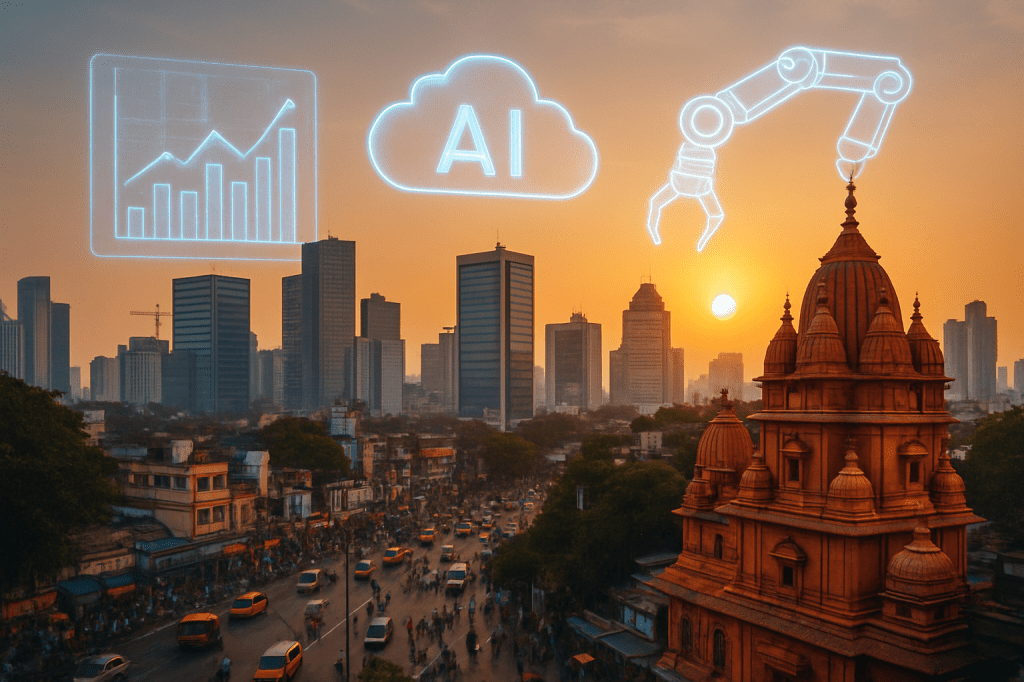
- Skill-Centric Focus: Employers are explicitly prioritizing skills in data visualization, cloud computing, and robotics. This isn’t just about core AI development, but the entire ecosystem of enabling technologies.
Skills Over Scrolls: Redefining Talent
Perhaps the most significant takeaway from this report isn’t just the volume of hiring, but the fundamental shift in *what* is being hired. Jaideep Kewalramani, from TeamLease EdTech, articulated this evolution clearly: the job market is no longer solely evaluating talent based on academic degrees. The paradigm is shifting decisively towards demonstrable skills.
This redefinition creates an unprecedented entry point for fresh graduates who have cultivated competencies in areas like data visualization, which translates complex AI outputs into understandable insights; cloud computing, the essential infrastructure for AI deployment; and robotics, the physical manifestation of AI’s impact. It’s a clear signal that the practical application of knowledge, rather than the theoretical accumulation, is becoming the paramount currency in the AI-driven job market.
The Unspoken Implications: What This Means for Everyone Else
For those of us tracking the “AI Replaced Me” narrative, this Indian development introduces a crucial layer of complexity. It’s not simply about jobs disappearing; it’s about the rapid emergence of *new* jobs, demanding *new* skills, and fundamentally reshaping the talent pipeline. While this offers a beacon of opportunity for a segment of the workforce, it simultaneously underscores the widening chasm for those whose skills are not aligned with this new demand.
India, with its vast youth population and robust IT sector, often acts as a bellwether for global tech trends. This proactive integration of AI into employment strategies suggests a blueprint for other nations. It highlights that the future of work isn’t just about adapting to automation; it’s about aggressively building the human infrastructure to leverage AI for growth. The question then becomes: how quickly can other economies, and their educational systems, recalibrate to prioritize these critical, AI-adjacent competencies before the digital divide deepens further?
The message is clear: the employment landscape isn’t shrinking uniformly; it’s undergoing a profound, skill-based reconfiguration. And for those poised to navigate this shift, the opportunities are not just emerging, they’re exploding.
