
A curious detail emerged yesterday from the International Labour Organization’s latest deep dive into generative AI’s global workforce impact: the overall potential for job automation, by their refined metrics, actually *ticked down*.
The Counter-Intuitive Shift: Less Automation, More Refinement?
The ILO’s “Generative AI and Jobs: A 2025 Update” report landed, and for those expecting an accelerating curve of displacement, its headline figure offers a momentary pause. The mean automation score, a measure of how susceptible jobs are to generative AI, decreased marginally from 0.30 in 2023 to 0.29 in 2025. This isn’t a retraction of AI’s power, but rather a sophisticated recalibration of its immediate, broad-stroke impact. It suggests that as our understanding of AI’s capabilities matures, so too does our ability to discern where its true disruptive force lies, and where human ingenuity remains stubbornly central.
Does this slight dip signal a plateau, or merely a more precise targeting of AI’s capabilities? The report implies the latter, moving past crude estimates to a more granular view of task-level automation versus full job replacement.
Creative Crossroads: The New Front Line
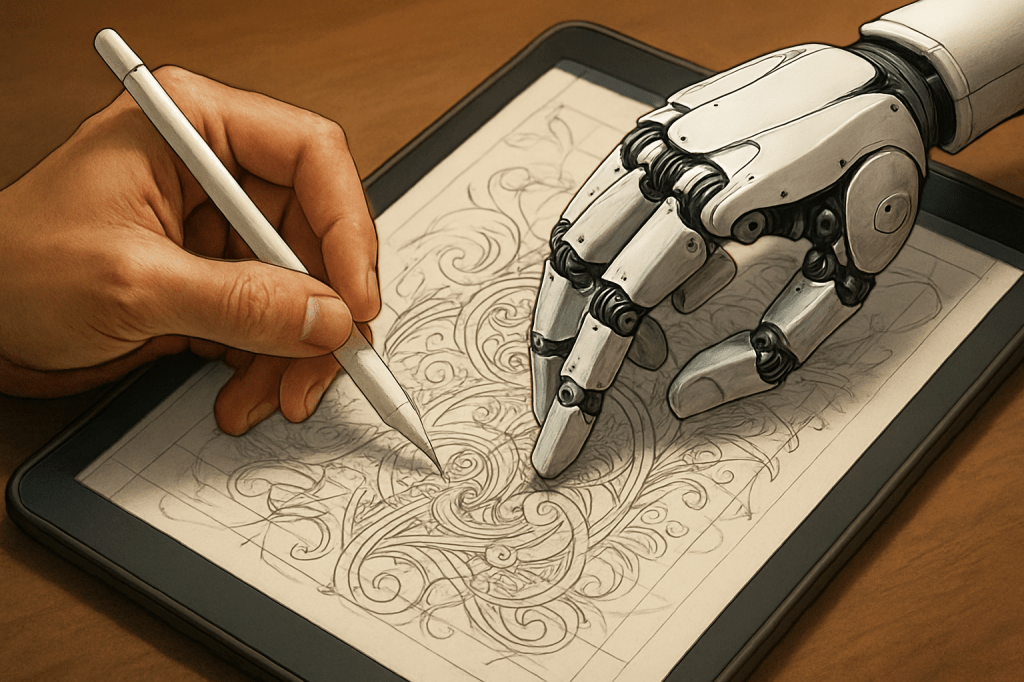
While the aggregate number softened, the report’s true sharpness is felt in specific sectors. Advancements in generative AI, particularly in the realms of voice, image, and video generation, have demonstrably heightened automation scores for tasks within traditionally human-centric creative and media-related occupations. This isn’t just about AI assisting; it’s about AI performing core functions that previously defined these roles. The implications are profound:
- Voice Generation: From voiceovers to customer service interfaces, the need for human voice talent in certain capacities is being directly challenged.
- Image & Video Production: Routine graphic design, stock image creation, and even basic video editing are increasingly within AI’s grasp, shifting the demand towards conceptualization and curation.
- Media & Web Occupations: Content generation, basic article drafting, and web design elements are seeing their automation potential rise, pushing human professionals towards higher-order strategic and creative tasks.
This concentrated impact on creative fields highlights a crucial paradox: as AI becomes more sophisticated, it doesn’t just automate repetitive tasks; it begins to mimic and even excel at outputs once considered uniquely human. The “creative class” often seen as insulated from previous waves of automation is now directly in the crosshairs, not for replacement, but for a fundamental redefinition of their value proposition.
Transformation, Not Annihilation: A Nuanced Exposure
Despite the targeted shifts, the ILO reiterates a familiar, yet critical, point: approximately 25% of workers globally are in occupations with some degree of exposure to generative AI, but the overwhelming emphasis remains on job transformation rather than outright elimination. The report underscores the continued necessity for human input, emphasizing that AI often augments rather than supplants. This perspective challenges the binary “replaced or not” narrative, pushing us to consider a continuum of integration, where human skills evolve in symbiosis with AI tools.
For those of us tracking AI’s march, this isn’t a comforting platitude. It’s an urgent call to understand the granular nature of this transformation. Which specific tasks within our roles are becoming AI-assisted, and which remain uniquely human? The 25% exposure isn’t a threshold for job loss, but a signal for proactive skill adaptation and role redefinition.
Navigating the Transition: The Imperative for Social Dialogue
Perhaps the most actionable insight from the ILO report is its insistence on strategic social dialogue. Managing this unprecedented transition, enhancing both working conditions and productivity, and ensuring that the integration of AI technologies benefits all stakeholders, demands a concerted effort from governments, employers, and worker organizations. This isn’t just about policy; it’s about establishing new frameworks for collaboration and fairness in an AI-driven economy.
The call for dialogue acknowledges that the impact of generative AI isn’t a foregone conclusion, but a socio-economic choice. How we collectively respond to these shifts – through reskilling initiatives, new labor agreements, and ethical guidelines – will determine whether AI truly replaces us, or merely reshapes our professional landscapes into something new and perhaps, more productive.
Beyond the Headlines: What This Means
The ILO’s 2025 update isn’t a simple “good news” or “bad news” report. It’s a complex diagnostic. It confirms that generative AI’s impact is uneven, highly specific, and rapidly evolving. It highlights that while the overall fear of mass unemployment might be overstated in the short term, the reality of profound job redefinition, particularly in sectors once thought immune, is undeniable. For those navigating the AI-altered world, the message is clear: adaptability is no longer a virtue; it’s the fundamental currency of survival.
