
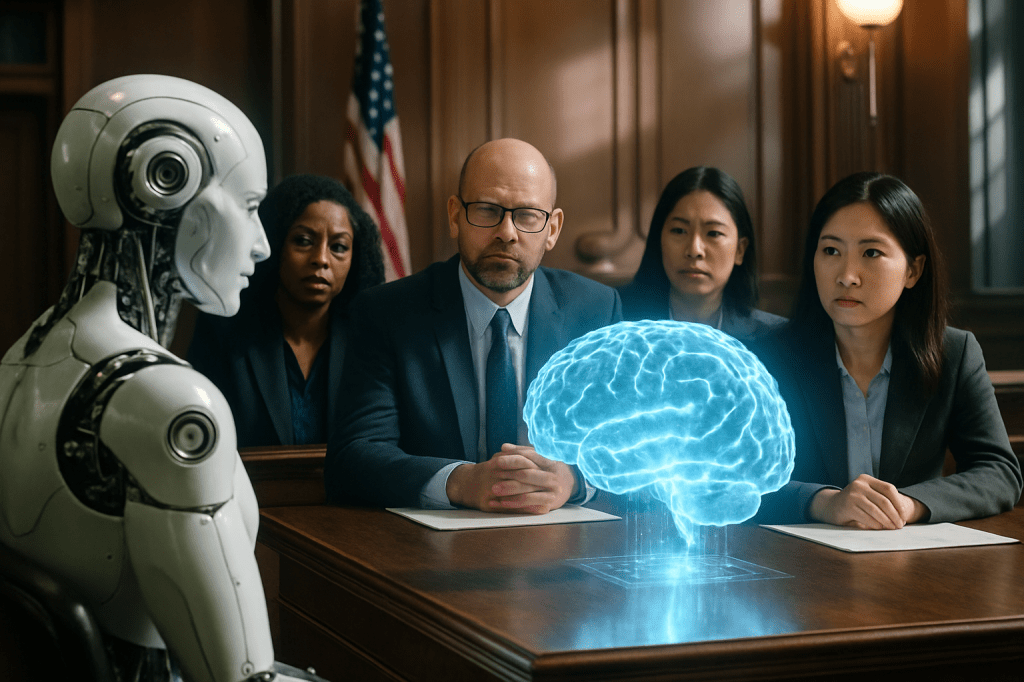
The regulatory landscape for artificial intelligence just got its first major landmark. On July 5, 2025, New York City began enforcing Local Law 144, a regulation that isn’t merely about disclosure, but about compelled, independent scrutiny of AI in hiring. This isn’t a speculative paper from a think tank or a voluntary industry guideline; it’s a municipal law with teeth, setting a new global benchmark for how AI’s influence in the workplace will be managed.
The Mechanics of Accountability
Local Law 144 targets Automated Employment Decision Tools (AEDTs) – the AI systems increasingly used to screen resumes, analyze video interviews, or assess candidate suitability. Its core tenets are straightforward yet revolutionary:
- Mandatory Independent Bias Audits: Before an employer or employment agency can deploy an AEDT, it must undergo an independent audit for bias. This isn’t an internal check; it requires a third party to verify that the AI isn’t systematically disadvantaging specific groups based on protected characteristics.
- Candidate Notification: Job applicants must be informed when an AEDT is being used in their evaluation, providing a level of transparency previously unheard of in automated recruitment.
Beyond the Rulebook: Deeper Implications
The enforcement of Local Law 144 signals a profound shift, moving beyond abstract discussions of AI ethics to tangible, legally mandated accountability. Its implications reverberate far beyond New York’s five boroughs:
- The Rise of the AI Auditor: A new industry segment is poised for rapid growth. Independent AI bias auditors will become critical gatekeepers, turning ethical principles into quantifiable compliance metrics. This introduces a fascinating layer of meta-governance.
- AI Development Under Scrutiny: For AI developers, the directive is clear: build systems with fairness and audibility baked in from conception, not as an afterthought. Performance alone is no longer sufficient; ethical performance is now a legal requirement. This will push innovation towards more explainable and less opaque models.
- A Precedent for Global Governance: New York City, as a global financial and cultural hub, often sets trends. This law could very well be the blueprint for similar regulations in other major cities, states, and even nations. The question is no longer if AI will be regulated, but how and where it will start.
- Shifting Power Dynamics for Job Seekers: While not a silver bullet, the notification requirement offers a glimmer of agency. Candidates, previously unaware their applications were sifted by algorithms, now gain insight. This transparency, however, also underscores just how deeply AI has permeated the hiring funnel.
The Unanswered Questions and Future Fronts
While groundbreaking, Local Law 144 also unveils a new set of complex challenges and questions:
- Defining “Bias” and “Fairness”: How will “bias” be rigorously defined and measured across diverse datasets and protected classes? The technical challenges of ensuring true fairness without inadvertently creating new forms of discrimination are immense. What statistical thresholds will be deemed acceptable?
- The Auditor’s Independence: Who vets the independent auditors? How do we ensure their methodologies are robust and unbiased? This creates a need for an oversight mechanism for the oversight.
- Trade Secrets vs. Transparency: AI vendors often guard their algorithms as proprietary trade secrets. How will the need for deep audit access balance against intellectual property concerns?
- The Scope Creep: If AI in hiring is regulated, what about AI used for performance reviews, promotions, or even workforce reduction strategies? This law is likely the vanguard of a much broader regulatory push into all corners of AI-driven HR and management.
New York City’s move is a concrete manifestation of the world grappling with AI’s rapidly expanding influence. It demonstrates that the conversation has moved past theoretical debates about job displacement to the practical, immediate need for equitable AI deployment. For those of us living in the AI-disrupted landscape, this isn’t just a legal update; it’s a sign that the rules of engagement are finally, tangibly, being written.
