
The Unseen Velocity of AI’s Reshaping Force
Yesterday’s Axios report wasn’t just another headline about AI’s march; it was a potent dispatch on the profound, often unacknowledged acceleration of its impact across our foundational systems. We’ve long forecasted disruption, but the reality unfolding now is the sheer velocity with which AI is not merely influencing, but fundamentally transforming, daily life, work, and education.
This isn’t about AI knocking on the door; it’s about AI having already re-architected the house while many are still wondering about the blueprints. The data suggests a cognitive dissonance: widespread forecasts about AI’s potential are met with a curious lack of preparedness, a collective underestimation of just how rapidly the landscape is shifting beneath our feet.
From Viral Adoption to Algorithmic HR
Consider the trajectory of ChatGPT, which amassed a million users in a mere five days. This isn’t just a statistic; it’s a seismic indicator of unprecedented adoption velocity. It highlights a new paradigm where technological integration isn’t a gradual curve, but a near-vertical ascent, compressing societal adaptation cycles to an extent we’ve never before witnessed.
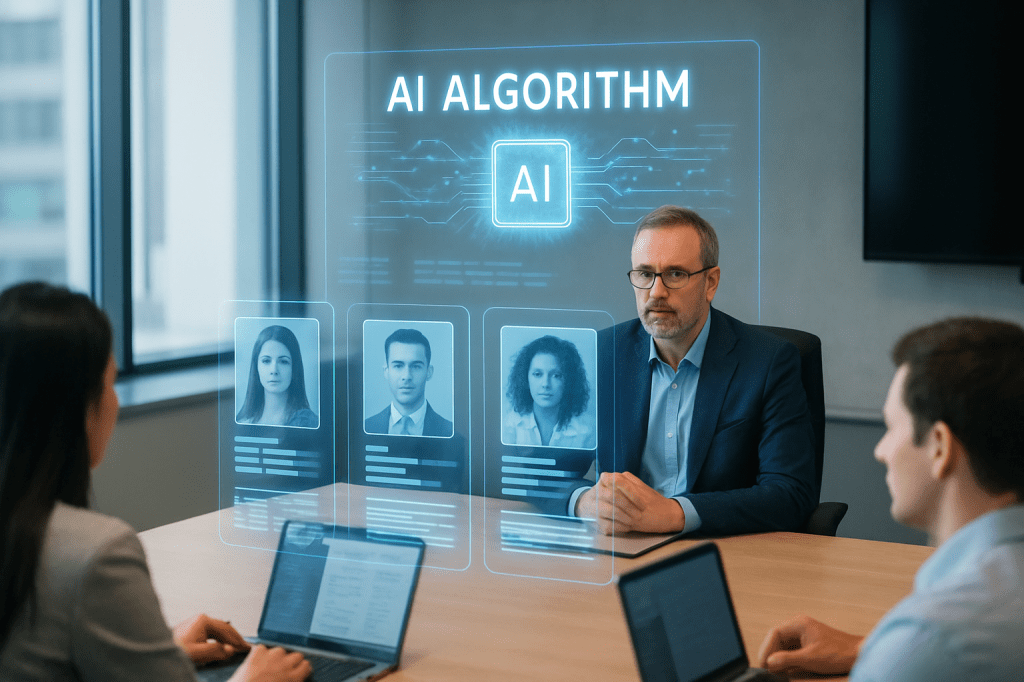
The implications are most acutely felt in the workplace. The Axios piece underscores a critical, perhaps alarming, shift: a majority of U.S. managers are now reportedly leveraging AI for high-stakes decisions, including the very processes of hiring and firing. This moves AI beyond a mere productivity tool; it positions algorithms as arbiters of human careers, injecting a new layer of algorithmic authority into the core functions of management.
- What does this mean for accountability when a career trajectory is determined by an opaque algorithm?
- How do we address inherent biases that might be amplified, rather than mitigated, by AI systems trained on historical, potentially flawed, data?
- What is the future role of human empathy and nuanced judgment in a management structure increasingly streamlined by AI?
This isn’t just about efficiency; it’s about fundamentally reshaping the human-centric practices that have long defined employment, signaling a profound redefinition of managerial power and responsibility.
Education’s Uneasy Embrace
The educational sector, perpetually grappling with technological integration, finds itself in a similar crucible. Educators are navigating the dual promise and peril of AI in classrooms – tools that can enhance learning experiences versus the challenges of maintaining academic integrity in an age of instant, AI-generated content. The question extends beyond plagiarism; it forces a re-evaluation of what constitutes true learning, critical thinking, and the very purpose of educational institutions when AI can perform many traditional academic tasks.
Navigating the New Realities
While experts acknowledge the very real concerns around job displacement and educational transformation, there’s also the historical counter-argument of humanity’s adaptability. Yet, the scale and speed of this particular technological evolution demand a more proactive and nuanced response than simply relying on historical precedent. As Meta’s Yann LeCun points out, current AI systems still lack human-like common sense. This crucial distinction highlights a current limitation, but also underscores the immediate need for vigilance and thoughtful adaptation.
The “AI Replaced Me” narrative, for many, isn’t a future fear; it’s a present reality, often manifesting in the quiet re-engineering of roles and the algorithmic re-evaluation of human value. The Axios report serves not as a warning of what’s to come, but as a confirmation of what is already here, demanding our full, unblinking attention.
