
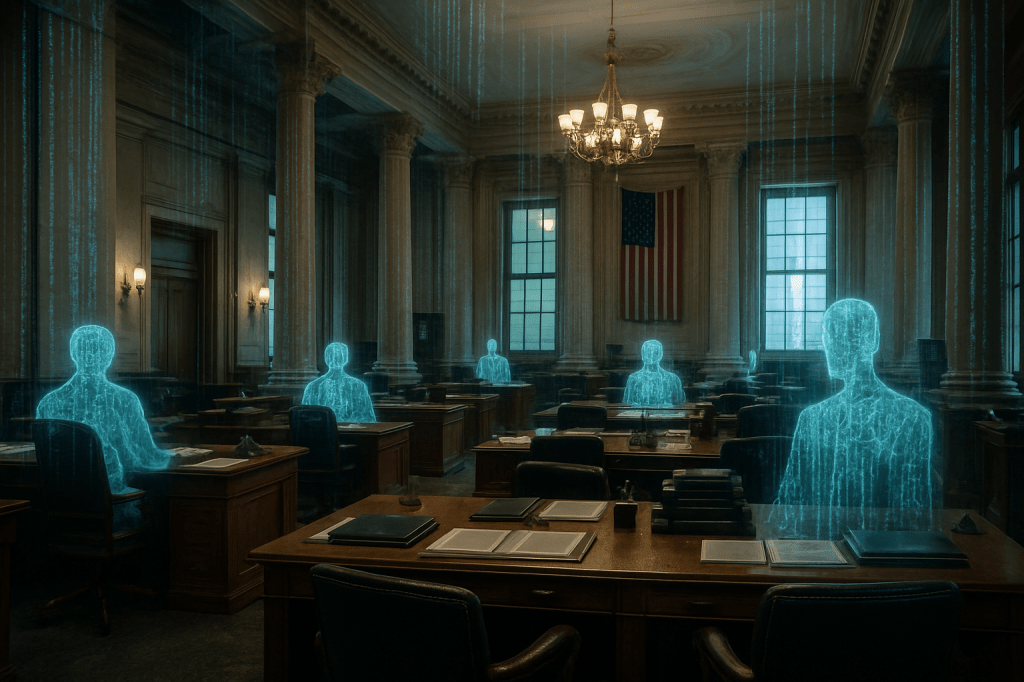
For years, discussions around AI’s impact on employment often centered on the private sector, or perhaps entry-level roles. Yesterday, on July 11, 2025, that narrative received a jarring update directly from the U.S. federal government. The Department of State initiated termination proceedings for over 1,300 civil and foreign service employees, a move that isn’t an isolated incident, but a stark indicator of a deeper, rapid re-architecture of public service itself.
This isn’t a theoretical exercise anymore. It’s happening where stability was once a core promise, and where institutional knowledge is often the unwritten bedrock of national function.
The Diplomatic Core: A Precedent Set
The Department of State’s significant workforce reduction—over 1,300 individuals—is particularly noteworthy. Beyond the sheer numbers, these are civil and foreign service employees, roles typically associated with nuanced human interaction, intricate cultural understanding, and the long-term cultivation of relationships critical to national security and international relations.
- Erosion of Institutional Memory: Diplomacy thrives on historical context and established networks. The rapid removal of this many experienced individuals raises immediate concerns about the potential loss of invaluable institutional knowledge, potentially impacting the effectiveness and continuity of diplomatic operations globally.
- Redefining “Service”: This action signals a strategic pivot towards AI-driven automation even in highly complex, human-centric fields. The question isn’t just *what* tasks are being automated, but *how* the very nature of foreign service might be redefined when its human element is significantly reduced.
Beyond Foggy Bottom: A Systemic Shift
The State Department’s layoffs are not an anomaly. They are part of a broader, accelerating trend across the federal landscape, demonstrating a coordinated push to integrate AI at the expense of human roles.
- Department of Veterans Affairs (VA): Over 1,000 probationary employees have been dismissed, including critical researchers in mental health and cancer treatment. This isn’t just about administrative efficiency; it’s about the direct impact on patient care and the future of medical innovation within a vital public health system.
- Department of Health and Human Services (HHS): Approximately 5,200 probationary employees terminated, with significant cuts at the Centers for Disease Control and Prevention (CDC) and the National Institutes of Health (NIH). The implications here are profound for public health surveillance, disease prevention, and groundbreaking scientific research, especially in a post-pandemic world.
- Internal Revenue Service (IRS): A reduction of 6,000 to 7,000 employees raises immediate red flags about the agency’s capacity. Concerns about potential delays in tax processing, reduced enforcement capabilities, and the overall integrity of the nation’s financial system are not speculative; they are direct consequences of prioritizing automation over human capacity in a complex regulatory environment.
The AI Imperative: Efficiency vs. Expertise
These large-scale workforce reductions underscore the federal government’s increasing reliance on AI as a solution for streamlining operations and reducing costs. While the promise of AI for efficiency is compelling, the speed and scale of this implementation expose critical tensions:
- The Unquantifiable Value of Human Expertise: Many government functions, particularly those involving nuanced judgment, complex problem-solving, and ethical considerations, resist easy algorithmic encapsulation. The loss of experienced personnel could lead to a ‘brittleness’ in government operations, where AI excels at predictable tasks but falters in the face of novel or unforeseen challenges.
- Policy Lag: The rapid pace of these AI-driven layoffs far outstrips the development of cohesive policies for managing the transition for affected workers, preserving institutional knowledge, or even fully understanding the long-term societal implications of a significantly downsized public sector.
- Trust and Accountability: As AI assumes more roles, particularly in sensitive areas like veteran care, public health, and tax enforcement, the questions of accountability, transparency, and public trust become paramount. Who is responsible when an AI makes a critical error, and how does the public feel about essential services being delivered by algorithms rather than humans?
The events of July 11, 2025, are not merely about job numbers; they signify a fundamental re-evaluation of human capital within the very machinery of government. The federal sector, once seen as a bulwark against economic volatility, is now a frontline in the AI disruption. The challenge now is not just to adapt to this new reality, but to critically assess what is gained, and more importantly, what is irrevocably lost, when the core functions of a nation are increasingly entrusted to code.
