
A New Blueprint for Digital Labor Rights?
The ongoing narrative of AI as an unstoppable force reshaping creative industries just encountered a formidable counter-argument, enshrined in a freshly ratified labor agreement. After nearly a year on strike, the Screen Actors Guild – American Federation of Television and Radio Artists (SAG-AFTRA) announced on July 22, 2025, a new contract with major video game companies.
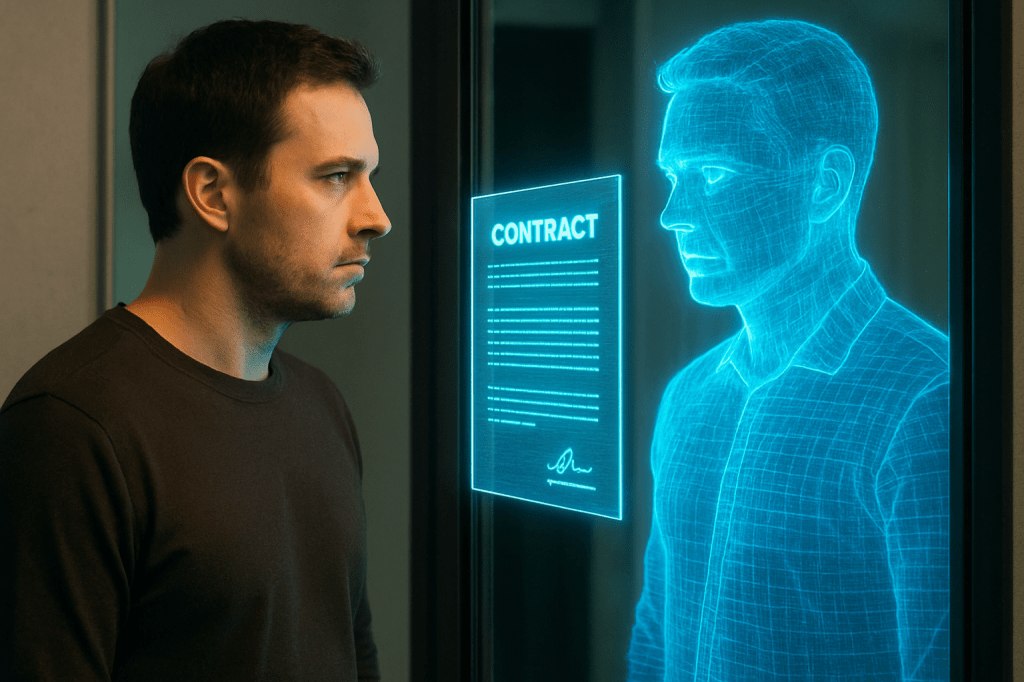
This wasn’t a strike about wages in the traditional sense, or even solely about the number of jobs available. It was a direct confrontation over the fundamental ownership of one’s digital identity and the economic value of a performance in an age where AI can clone voices and likenesses with alarming fidelity. The core demand was clear: performers’ identities and work must be safeguarded from unauthorized AI replication, ensuring both consent and fair compensation for any use.
Beyond Simple Job Displacement
While much of the AI disruption discourse centers on job displacement, the SAG-AFTRA strike highlighted a more insidious threat: the potential for infinite, uncompensated, and non-consensual exploitation of a performer’s very essence. Imagine a digital twin of your voice or appearance being used in perpetuity, across countless projects, without your knowledge, control, or a single residual payment. This isn’t just about a task being automated; it’s about the erosion of personhood in the digital realm.
The new agreement explicitly addresses this, reportedly including provisions that:
- Mandate explicit consent from performers for the creation and use of their AI-generated likenesses or voices.
- Establish clear compensation structures for any such AI-generated content derived from their original performances.
- Impose limitations on the scope and duration of AI-generated asset usage, preventing perpetual, unfettered deployment.
- Provide mechanisms for performers to retain control over their digital identity, even when AI is involved.
The Uncomfortable Truth for AI Developers
For companies that have been quietly, or not so quietly, exploring the cost-saving potential of AI-generated content, this agreement introduces a significant new variable. The dream of an endless, cheap supply of digital actors, voices, and characters just hit a substantial legal and financial speed bump. This isn’t a ban on AI, but a powerful assertion that the value chain must extend to the human originators, even when their output is mediated or expanded by algorithms.
It forces a recalibration of AI development strategies within creative industries. The focus may shift from pure replication to augmentation, or to models where the “source material” (the human performance) is treated as a highly valuable, licensed asset. It underscores that human creativity and identity, far from being obsolete, are becoming increasingly valuable commodities that require explicit negotiation and protection in the digital economy.
A Precedent, Not a Panacea
While a landmark victory, this agreement is by no means the end of the conversation. It sets a crucial precedent for other creative unions and professional bodies grappling with similar AI-driven threats – from musicians and visual artists to writers and even public figures. However, the challenges of global enforcement, the rapid evolution of AI technology, and the varying legal frameworks across jurisdictions mean that this is just one battle won in a much larger, ongoing war for digital labor rights.
The SAG-AFTRA strike serves as a powerful reminder: while AI may redefine the nature of work, it also galvanizes a redefinition of collective bargaining and the assertion of human value. The question is no longer just “Will AI replace us?”, but “How will we ensure that if AI uses us, it does so ethically, consensually, and equitably?”
