
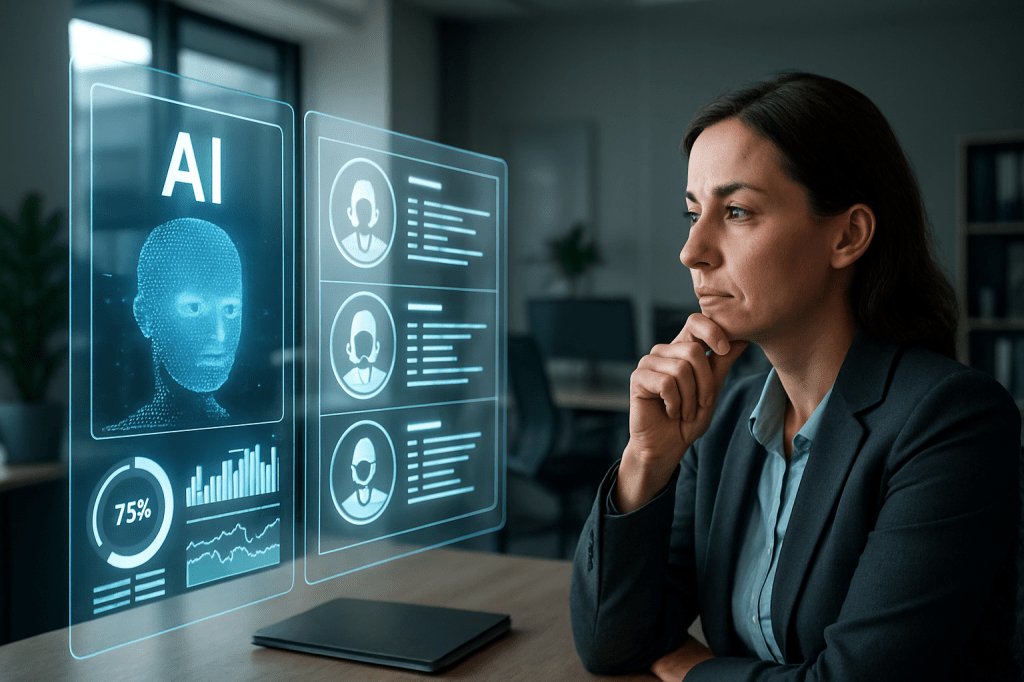
August 17, 2025. The Financial Times dropped a headline that cut through the usual noise: “Does HR still need humans?” It’s a question that, just a few years ago, would have sounded like a thought experiment. Today, it’s a direct challenge to a core corporate function, signaling a profound re-evaluation of what makes an organization tick.
The story isn’t just about automation; it’s about the accelerating speed at which AI is dismantling and rebuilding operational structures. Consider the recent past: the COVID-19 pandemic saw companies like RingCentral rapidly expanding their Human Resources teams, scrambling to manage the complexities of a suddenly remote workforce. Fast forward, and those very same teams are undergoing significant contraction, their roles increasingly absorbed by sophisticated AI tools, from advanced chatbots to predictive analytics platforms.
The C-Suite’s Mandate: Efficiency at All Costs?
Beneath this shift lies an undeniable pressure from senior leadership across industries. The directive is clear: leverage AI for productivity gains, aggressive cost reduction, and, inevitably, headcount optimization. HR, traditionally seen as a people-centric, often compliance-heavy department, is now squarely in the crosshairs of this efficiency drive.
AI’s footprint in HR is already substantial, extending beyond mere administrative simplification:
- Recruitment: AI sifts through resumes, conducts initial screenings, and even predicts candidate success.
- Training & Development: Personalized learning paths and automated content delivery are becoming standard.
- Internal Queries: Chatbots handle a vast array of employee questions, from benefits to policy clarification, often with greater speed and consistency than human agents.
The Uneasy Balance: Automation vs. Nuance
Yet, the enthusiasm for AI integration is tempered by critical concerns. The FT piece highlights a growing apprehension about premature reliance on automation for the most sensitive personnel functions. The legal landscape, for instance, is already reacting to the potential pitfalls:
- Discrimination Lawsuits: Algorithms, if not carefully designed and monitored, can perpetuate or even amplify biases, leading to legal challenges related to hiring or promotion decisions.
- “No Robo Bosses” Bills: Legislative efforts are emerging to mandate human oversight for critical employment decisions, pushing back against fully autonomous AI in roles that directly impact livelihoods.
This creates a tightrope walk for HR departments. They must champion technological advancement while simultaneously upholding their fundamental roles in employee welfare, fostering corporate culture, and managing the delicate transitions of staff into new or redefined roles. The question shifts from “Can AI do this?” to “Should AI do this without human intervention?”
Pioneers, Perils, and the Path Forward
Companies like IBM and Moderna are often cited as trailblazers, demonstrating how AI integration in HR can yield tangible cost savings and free up human HR professionals for more strategic, high-value work. However, experts caution against a myopic focus on immediate gains, urging consideration of the long-term impacts on employment stability and the very fabric of corporate culture.
Predictions suggest that up to 80% of current HR functions could eventually be automated. This isn’t a forecast of mass obsolescence for HR professionals, but rather a radical redefinition of their value. The enduring need for human judgment in nuanced, sensitive interactions—think complex conflict resolution, empathetic employee support during crises, or strategic talent development that requires genuine insight—remains paramount.
The FT’s query isn’t an existential threat to HR, but a forceful prompt for evolution. AI will undeniably reshape the landscape, offloading the repetitive and data-intensive. The human element, however, will persist where empathy, ethical reasoning, and truly strategic thinking are indispensable. The challenge for HR isn’t to resist the inevitable, but to intelligently navigate this new reality, proving that the human touch, when applied to the right problems, is more critical than ever.
