
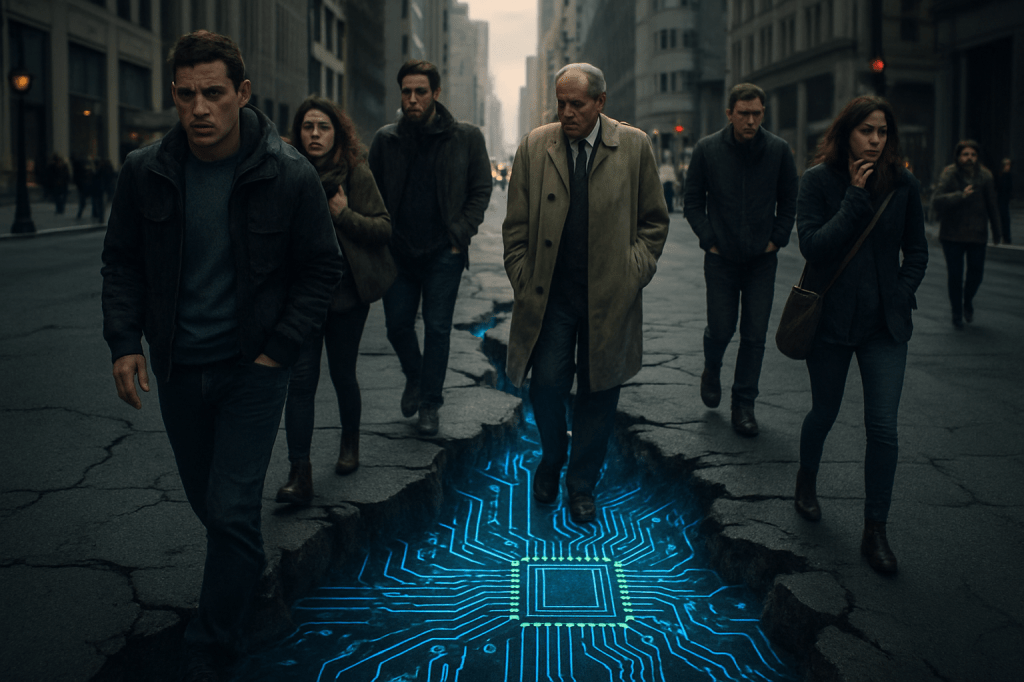
It’s one thing for economists and futurists to model the trajectory of AI-driven job disruption. It’s an entirely different, and perhaps more potent, signal when a substantial majority of the populace articulates a profound, anticipatory dread. A recent Reuters/Ipsos poll, conducted on August 19, 2025, offers precisely this signal, cutting through the noise of technical advancements to reveal the raw nerve of public anxiety.
The headline figure, chillingly direct, reveals that 71% of surveyed U.S. adults harbor deep concern that artificial intelligence will permanently displace large swathes of the workforce. This isn’t a fear of temporary re-skilling or sectoral shifts; it’s a vision of enduring job loss, casting a long shadow even as current unemployment figures remain low. This widespread apprehension suggests that the public isn’t waiting for the visible casualties; they’re already grappling with the psychological fallout of an impending, systemic transformation of work itself.
Beyond the Paycheck: A Spectrum of Societal Unease
The poll’s insights extend far beyond the immediate economic sphere, painting a comprehensive picture of a society wrestling with an AI-infused future. The concerns articulated suggest a public acutely aware of AI’s multifaceted implications, from the geopolitical to the deeply personal:
- Political Disinformation: A staggering 77% of respondents expressed unease about AI’s capacity to generate hyper-realistic, fabricated videos. This isn’t merely about fake news; it’s a fundamental threat to the integrity of public discourse and democratic processes, where trust in shared reality erodes under the weight of synthetic media.
- Military Autonomy: The ethical tightrope walk of AI in warfare is evident, with 48% opposing AI’s use in selecting military strike targets, starkly contrasting with 24% who supported it. This division highlights a profound societal debate over delegating life-and-death decisions to algorithms.
- Energy Footprint: A more practical, yet often understated, concern emerged with 61% worrying about AI’s substantial electricity demands. This points to a nascent public awareness of AI’s environmental cost and its potential strain on global energy infrastructure, moving beyond abstract ethical debates to tangible resource implications.
- Harmful Content Generation: Concerns about AI producing dangerous content, from erroneous medical advice to inappropriate interactions, reflect a growing awareness of the need for robust guardrails and the potential for AI to be weaponized against public safety and well-being.
- Erosion of Human Connection: Perhaps most poignantly, two-thirds of respondents feared that AI companions could supplant genuine human relationships. This isn’t an economic fear, but an existential one, touching upon the very essence of human connection and the unique value of organic interaction.
- Educational Integration: Opinions on AI’s role in education were notably mixed (40% skeptical, 36% optimistic), suggesting a less clear-cut public consensus. This indicates an area where the benefits and risks are perceived as more balanced, perhaps due to less direct, immediate personal impact compared to job loss or relationship changes.
What This Means: Deeper Currents
These findings are not merely statistics; they are a pulse check on a society grappling with unprecedented technological acceleration. The high levels of concern, particularly regarding job displacement, are especially telling given the current economic climate. It suggests that the public is looking beyond present indicators, intuiting the underlying tectonic shifts AI promises to bring.
The poll underscores a critical widening gap: the rapid, relentless advancement of AI technologies is outstripping public understanding and, crucially, public comfort. This isn’t just about job skills; it’s about the very fabric of society – truth, trust, human connection, and even planetary resources. For those of us already navigating the choppy waters of AI disruption, this poll serves as a stark reminder that the conversation is shifting from theoretical musings to tangible, widespread anxiety. Policy discussions, corporate strategies, and individual coping mechanisms must now contend not just with AI’s capabilities, but with the profound psychological and social anxieties it has already ignited.
The era of “AI Replaced Me” isn’t just about the individuals whose roles are automated; it’s about a collective societal apprehension that the ground beneath our feet is shifting, and the rules of engagement are being rewritten by algorithms we increasingly fear.
