
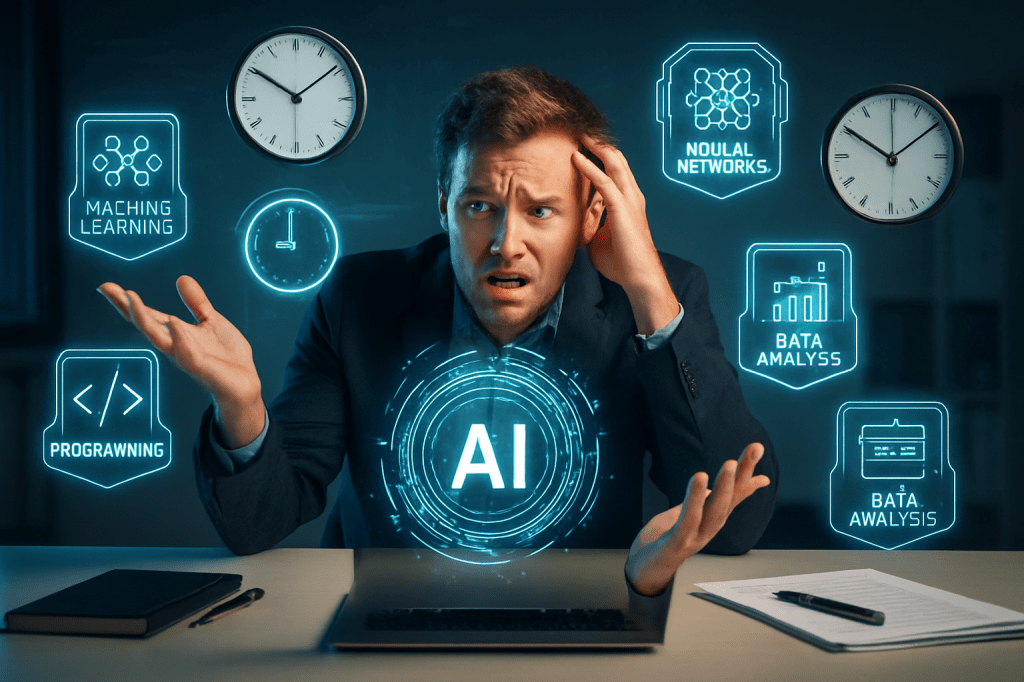
The quiet hum of artificial intelligence in the background of our professional lives is growing louder, but for many, it’s not the gentle melody of efficiency. It’s the insistent thrum of a second job, an unpaid, often overwhelming, commitment to continuous upskilling. This isn’t just a lament from the trenches; it’s a rapidly escalating concern that’s now rattling the very foundations of corporate confidence and Wall Street’s AI-fueled optimism.
A recent LinkedIn report, based on a July 2025 survey of over 2,000 U.S. workers, has pulled back the curtain on this simmering tension. Professionals are reporting significant overwhelm, struggling to integrate AI tools into their workflows effectively. The core issue? The perceived demand to acquire AI skills feels less like professional development and more like an additional, uncompensated workload. This isn’t about being replaced by AI; it’s about the relentless, often unmanageable, pace of adapting to its presence.
The Unpaid AI Internship: A New Professional Burden
For a workforce already stretched thin, the expectation to master generative AI, prompt engineering, or data interpretation through machine learning tools is proving to be a significant psychological and temporal burden. This isn’t merely about learning a new software suite; it’s about fundamentally rethinking workflows, problem-solving, and even the definition of productivity itself. The report suggests that while the hype around AI’s potential for efficiency is pervasive, the actual, on-the-ground integration is lagging, leaving a substantial gap between aspiration and execution.
From ‘Nice-to-Have’ to Non-Negotiable: The Shifting Competency Landscape
Perhaps the most profound implication of the LinkedIn findings is the rapid redefinition of what constitutes “competent.” AI proficiency is no longer an optional differentiator; it’s quickly becoming an expected, baseline competency. This isn’t a future projection; it’s happening now. More than a third of executives surveyed plan to embed AI skills directly into performance reviews and hiring criteria within the next year. This means the ability to effectively leverage AI won’t just open new doors; its absence could very well close existing ones.
- **Performance Metrics:** Expect AI utilization to appear on your next performance review.
- **Hiring Filters:** Job descriptions will increasingly screen for demonstrable AI skills.
- **Career Trajectories:** Those who adapt will accelerate; those who don’t risk stagnation or obsolescence.
Wall Street’s Unease: The Unpaid AI Dividend
This individual struggle has a direct, material impact on the broader economy. A separate MIT study corroborates the LinkedIn findings, pointing to slow AI adoption as a direct drag on corporate returns on investment. The promised productivity gains, the efficiency dividends that justified massive investments in AI infrastructure and development, simply aren’t materializing at the expected pace.
This disconnect is particularly unsettling for Wall Street. Corporate earnings calls are now peppered with references to AI, as executives attempt to reassure investors about their companies’ adaptability and future efficiency. Yet, the underlying data suggests a different story: a workforce struggling to keep pace, an ROI that’s delayed, and a market heavily reliant on the performance of Big Tech’s AI narrative. If the human element can’t effectively harness the technology, the entire economic thesis risks unraveling.
The “AI replaced me” narrative often focuses on direct automation. But this new data points to a more insidious form of displacement: being outpaced not by the machines themselves, but by the relentless, uncompensated demand to integrate them, a demand many professionals are finding increasingly difficult to meet. The real question is not just *if* AI will change work, but *who* will bear the cost of that transformation, and what happens when that burden becomes unsustainable.
