
AI Impact on the Job Market – News (August 22, 2025 to August 29, 2025)
Ever notice how the “next big thing” always seems to arrive with an instruction manual written in Klingon? This week, the AI revolution is feeling less like a sleek upgrade and more like that confusing new gadget your tech-savvy friend insists will change your life… if you can just figure out how to turn it on. The big question: Are we ready for this, or are we all just frantically Googling for answers?
The Stanford Study: AI’s “Axiety Pivot” Hits Entry-Level Jobs
This week’s headliner: a new Stanford University study dropping some hard data on AI’s impact on the job market. And the news isn’t exactly sunshine and rainbows for young professionals. The study, based on ADP payroll data, reveals a 13% relative decline in employment for workers aged 22-25 in occupations most exposed to AI since generative AI took off in late 2022. Ouch.
Where’s the pain? Think software engineering, customer service, accounting, auditing, secretarial work, computer programming, and sales. Entry-level positions in software engineering and customer service have seen a particularly sharp drop, around 20%. Meanwhile, older, more experienced workers in the same fields are holding steady – or even increasing their employment. Why? According to Stanford economist Erik Brynjolfsson, these large language models are trained on the kind of “book learning” that young people get in universities, creating direct competition for their skill sets.
Why is this important? Because this isn’t some far-off prediction. It’s happening *now*. Entry-level jobs are the traditional on-ramp to professional careers, where new talent gains practical skills and experience. If AI is already displacing these roles, we could be facing a long-term talent pipeline crisis. Where will future senior developers and project managers get their start? Are we creating a “vanishing ladder” effect that stifles skill development and erodes institutional knowledge?
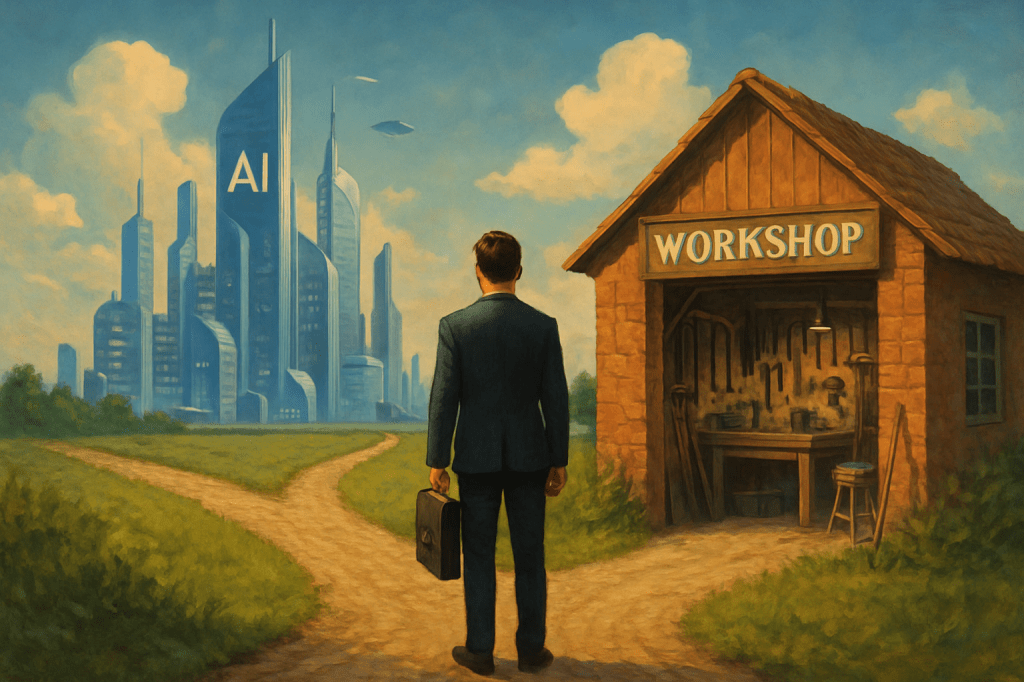
There’s also the human cost. As the Stanford Study suggests, this is leading to an “‘AIxiety Pivot,’ with some young professionals reconsidering career choices and shifting toward blue-collar trades perceived as less susceptible to automation.” This raises some serious questions about how we prepare the next generation for a job market that’s being fundamentally reshaped by AI.
Layoffs: TikTok’s Trust & Safety Department Gets a Tech Upgrade
Adding fuel to the fire, TikTok announced plans to lay off hundreds of employees in its trust and safety department, citing “technological advances, such as the enhancement of large language models.” Translation: AI can now do a lot of the content moderation work that humans used to do. This is a concrete example of AI directly leading to job cuts, and it’s a trend we’re likely to see more of.
Why is this important? Because it moves the conversation from theoretical job displacement to actual job losses. As the Challenger, Gray & Christmas report highlighted, AI was directly responsible for over 10,000 job cuts in the U.S. in the first seven months of 2025. It’s not just “restructuring” rebranded; it’s a clear corporate strategy to replace human roles with AI to enhance productivity and reduce costs. This is no longer a “future of work” issue; it’s a “present of work” reality.
Business Leaders Weigh In: From “Dumbest Thing Ever” to “Replace Yourself”
The news cycle also featured some strong opinions from industry leaders on the wisdom of replacing junior staff with AI. Matt Garman, CEO of Amazon Web Services (AWS), called it “the dumbest thing I’ve ever heard.” He argued that junior employees are the least expensive, the most engaged with new AI tools, and essential for the future talent pipeline. “How’s that going to work when you go like 10 years in the future and you have no one that has built up or learned anything?” he asked.
On the other hand, Amanda Kahlow, founder of the AI company 1mind, presented a more radical idea: incentivize employees to automate their own jobs. “Imagine if our employees replace themselves fully. If you replace yourself by building an agent that does everything you do, and does it better, we will forward vest your equity,” she stated.
Why is this important? Because it highlights the conflicting views on AI’s role in the workplace. Garman’s perspective emphasizes the importance of human capital and the long-term consequences of short-sighted automation. Kahlow’s approach, while provocative, suggests a potential path for employees to benefit from AI’s advancements, rather than being displaced by them. It’s a reminder that there’s no one-size-fits-all solution, and that companies need to consider the ethical and social implications of their AI strategies.
Worker Anxiety and the AI Upskilling Overload
It’s no surprise that worker anxiety is on the rise. A survey by the Trades Union Congress (TUC) in the UK found that half of all adults are concerned about the impact of AI on their jobs, with the highest levels of concern among workers aged 25 to 34 (62%).
And it’s not just about the fear of being replaced. A recent LinkedIn report reveals a growing sense of overwhelm among professionals who are struggling to integrate AI tools into their workflows. The perceived demand to acquire AI skills feels less like professional development and more like an additional, uncompensated workload. It’s like being handed a new instrument and told to join the orchestra, without any lessons or sheet music.
Why is this important? Because it highlights the human cost of the AI revolution. The pressure to constantly upskill and adapt to new technologies can lead to burnout and anxiety. Corporate earnings calls are now peppered with references to AI, as executives attempt to reassure investors about their companies’ adaptability and future efficiency. Yet, the underlying data suggests a different story: a workforce struggling to keep pace, an ROI that’s delayed, and a market heavily reliant on the performance of Big Tech’s AI narrative.
Microsoft’s Granular Look: Communication Skills at Risk
Microsoft’s granular look at AI’s job impact pinpoints roles heavily reliant on language processing – both written and verbal – along with customer service positions, as significantly more susceptible to automation. This isn’t merely about AI writing emails or answering FAQs; it points to a deeper vulnerability in any career where communication follows established patterns, involves information synthesis from defined sources, or adheres to predictable scripts.
Conversely, the Microsoft analysis reinforces the enduring value of occupations demanding complex problem-solving, genuine creativity, and human empathy. These aren’t just buzzwords; they represent a suite of cognitive and emotional capabilities that current AI architectures simply cannot replicate.
Why is this important? Because it underscores the imperative to look beyond superficial job titles and identify the core competencies that AI is either augmenting or rendering redundant. The focus shifts from merely “upskilling” to a more profound re-evaluation of one’s unique human capital.
The VC Perspective: The “AI Roll-Up” and the Future of Service Businesses
Hemant Taneja, CEO of General Catalyst, is charting a course through what he calls a period of “peak ambiguity” by pursuing the “AI roll-up.” This involves systematically acquiring established, service-centered businesses across sectors like healthcare, customer support, and finance, and deeply integrating AI into their operational DNA.
Why is this important? This approach bypasses the often-slow adoption cycles of new AI tools by forcing integration at the ownership level. It suggests a future where AI isn’t just an add-on, but the fundamental operating system for vast swaths of the service economy. The impact on traditional job roles within these acquired entities will be direct and immediate.
Washington Weighs In: Treasury vs. Fed on AI’s Economic Impact
U.S. Treasury Secretary Scott Bessent launched a direct challenge to the Federal Reserve, arguing that the nation’s central bank is potentially overlooking the transformative power of AI, much as it initially did with the internet in the 1990s. Bessent anticipates significant productivity gains from AI by early 2026 and suggests that a robust U.S. economy, coupled with AI’s rise, could benefit from decreasing interest rates.
Why is this important? Because it signals that AI’s potential has matured into a top-tier macroeconomic factor demanding immediate consideration from the highest levels of economic governance. If Bessent is correct, a Fed holding steady or raising rates might be inadvertently applying the brakes to an economy poised for an AI-fueled acceleration. The implications for investment, particularly in AI infrastructure and applications, are immense.
So, where does all of this leave us? The AI revolution is here, and it’s impacting the job market in real and tangible ways. The key is to stay informed, adapt your skills, and advocate for policies that ensure a fair and equitable transition. And maybe, just maybe, we’ll all figure out how to use that new gadget before it becomes obsolete.
