
The First Jobs to Vanish Have a Script
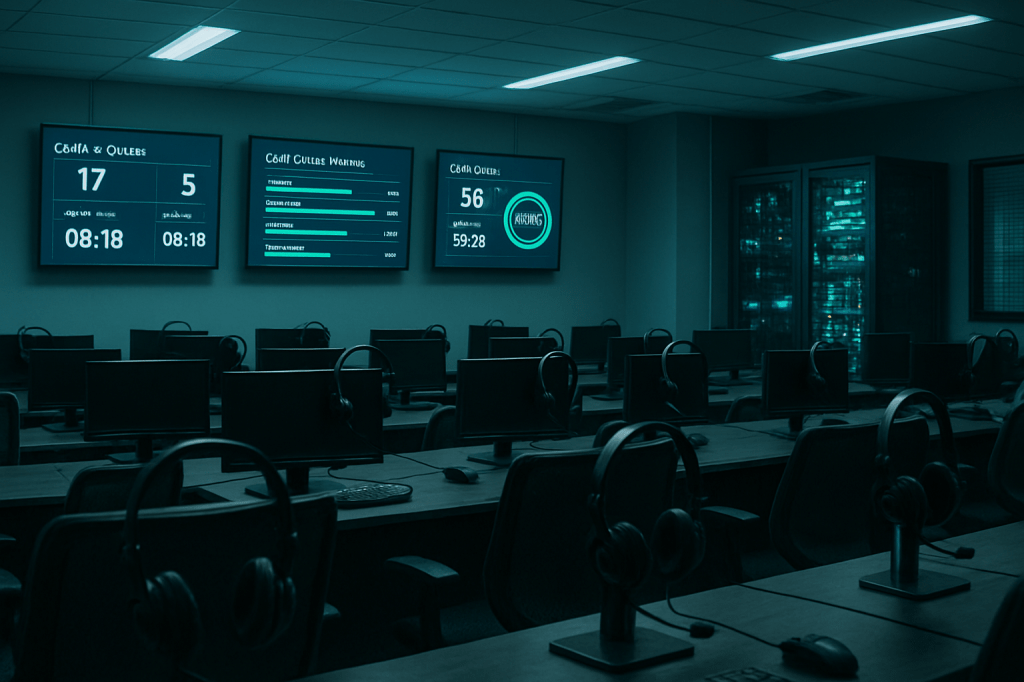
Yesterday’s most consequential sentence about the future of work arrived not from a white paper or a conference keynote, but in the flat cadence of a talk‑show segment. Sam Altman, who runs the company powering much of today’s AI experimentation, said out loud what many vendors and CFOs already whisper in procurement meetings: he is confident a large share of phone‑ and chat‑based customer service jobs will be taken over by AI systems. It wasn’t framed as another incremental tool upgrade. It was a category call.
That distinction matters. For a decade, contact centers have absorbed waves of “assistive” tech—suggested replies, better search, smarter routing—each sold as productivity frosting on the same cake. Altman’s phrasing rejects the frosting model. If the job is defined by following a script, retrieving account data, complying with policy, and projecting steady politeness, he argued, the core of the job and not just its edges is now modelable. The timing aligns with what’s actually changed under the hood: sub‑second speech recognition, voice synthesis that maintains tone across interruptions, retrieval that pulls the right clause from a policy maze, and connectors that let models click buttons in a CRM without breaking compliance. In this stack, a “bot” isn’t a branching IVR menu with delusions of grandeur; it is a worker that can hold a conversation, remember what you said three minutes ago, and update your mailing address without dropping the call.
Why this lane goes first
Customer support is uniquely susceptible because both sides of the equation are now aligned. On the demand side, the work is heavily standardized and audited; success is measured in average handle time, first‑contact resolution, adherence to procedure. On the supply side, the raw material for training is abundant: oceans of transcripts, labeled dispositions, and policy documents that read like they were written to teach a machine how to reason by rules. The economics then sharpen the point. Support is often the largest operational cost that scales linearly with customers. If a system can answer in every language at any hour and never needs a break, the return on automation isn’t theoretical; it’s a line item.
And yet, the market has already taught us a counter‑lesson. Companies that have bragged about dramatic cuts to live agents have been forced to throttle back when customers revolt against labyrinthine bots, or when failure modes turn public on social media. Adoption, in other words, is governed not just by capability but by tolerance. The difference now is that capability is finally catching up to that tolerance. When the voice on the line can interrupt you naturally, ask a clarifying question, fetch your last three invoices, and escalate gracefully, resistance softens. The remaining gatekeepers become risk officers and regulators rather than irritated callers.
Programmers aren’t safe—just differently exposed
Altman extended his forecast to “computer programmers,” cautiously. The job is already mutating in plain sight; code copilots have shaved hours off routine work, and entire scaffolds of boilerplate are now generated rather than typed. But the felt change is less about headcount than about what the word “programmer” will mean. If generation is cheap, value shifts to decomposition, integration, verification, and product judgment. The old picture of a junior engineer working through a queue of well‑scoped tickets gets inverted: models produce candidates, and humans become editors and system designers responsible for safety, performance, and alignment with business logic. It’s not immunity. It’s a reshuffling of leverage—more output per capita raises the performance bar and thins out roles that were mostly glue code to begin with.
Care work resists for reasons technology can’t price
By contrast, he singled out nursing and other care professions as comparatively resilient. That’s not techno‑romanticism; it’s a recognition of what’s actually being purchased. In a hospital ward or a home visit, the service isn’t just information delivery or task execution. It is reassurance, calibration to mood, the subtle adjustments that build trust when a body is in distress. Automation will bite into documentation, scheduling, and triage; it already is. But the core promise—“I see you, I’m with you, I’ll notice if something’s wrong”—is not reducible to latency and token cost. Even if a model imitates bedside manner, the stakes of misplaced confidence create a ceiling on autonomy that a call about a lost package doesn’t reach.
A faster epoch, not a steady glide
Altman reached for a historical rhythm—work evolves over decades—only to warn that this may be a punctuated stretch where many shifts arrive in a cluster. That’s consistent with what deployment looks like when systems graduate from pilot to platform. A single vendor deal can flip thousands of seats; a single compliance template can clear legal for a dozen lines of business at once. Add pressure from investors who have normalized AI‑assisted margins in peer companies, and the adoption curve steepens. The brakes aren’t gone, but they’re heating up.
The messenger is part of the message
There is also theater here. When the CEO of the company behind many of the incoming tools names a specific job family on national television, he isn’t merely forecasting; he is setting expectations for boards, vendors, and policymakers. The choice to emphasize scripted service while assuring that empathy‑centric roles will endure is a strategic placement of boundaries: here is where we intend to push hard; here is where we don’t want to be accused of overreach. It invites a regulatory bargain—allow aggressive automation where harm is bounded, keep a human nearby where stakes climb. Expect new norms to form around disclosure, escalation rights, and auditability rather than outright bans.
What changes Monday morning
If your day is governed by a playbook and a dashboard, your exposure just moved from abstract to immediate. Contact centers will still keep humans, but the mix tilts toward exception handling, supervision, and complex cases that models aren’t allowed to close. Quality assurance morphs into model evaluation. Workforce management becomes orchestration between synthetic and human queues. And the resumes that rise to the top will not only speak the language of empathy but also show they can teach, tune, and govern the systems that are arriving.
That is the quiet subtext of yesterday’s prediction: not simply that jobs will be lost, but that job content will compress, bifurcate, and then harden into new definitions much faster than we are used to. Customer service is the first proof because it is the cleanest test. Everything after will be messier, more political, and less scriptable. But the direction is clear. In the places where work already reads like a prompt, a model is now ready to read it.
