
Walmart Quietly Rewrites America’s Job Description
In Bentonville, the sentence was short and impossible to mishear: artificial intelligence “is going to change literally every job.” Doug McMillon didn’t deliver it like a threat or a promise so much as a final decision. When the leader of the country’s largest private employer says every role is about to be reworked—and that the company intends to hold its headcount steady around 2.1 million by shifting what those jobs contain—he isn’t just speaking to associates in blue vests. He’s issuing new instructions to the labor market.
This wasn’t an offhand remark. It capped a week in which Walmart convened executives and AI leaders for its Opportunity Summit and set a date on something that makes all the talk operational: a national AI certification with OpenAI through Walmart Academy, slated to roll out in 2026. For a company that already runs on task-directing software, upgraded conversational assistants, live translation, and AR/RFID in apparel, the signal was clear. The era of pilots is over. AI has moved from innovation theater into the wiring of daily work.
“Every job” means the job architecture itself gets rebuilt
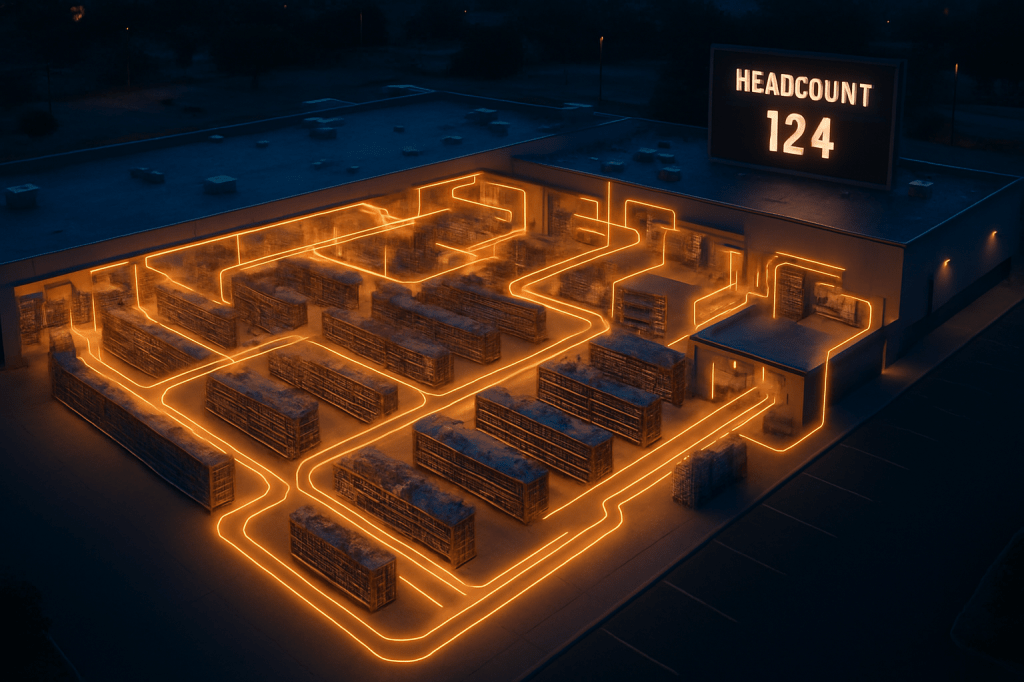
Headcount stability paired with sweeping change sounds paradoxical until you see the mechanism. Walmart is not announcing a wave of layoffs; it is announcing a redesign. Some functions will evaporate into automation. Others will get bundled together into new roles that lean into judgment, customer interaction, and orchestration of AI tools. McMillon’s line wasn’t about cutting bodies—it was about decomposing tasks. Over the next three years, Walmart will attempt to recompose those tasks into roles that make better use of time, attention, and machine assistance without shrinking the overall workforce.
That distinction matters because it resets expectations for the entire services economy. If one of the world’s most logistics-heavy, margin-disciplined companies chooses recombination over reduction, competitors will struggle to defend pure cost-cutting narratives. The competitive play becomes: automate away waste, then reinvest the productivity into higher service levels, faster fulfillment, and a more adaptive store floor. In that world, the winning retailer isn’t the one with the fewest people; it’s the one whose people can do the most with the system they command.
From experiments to plumbing
Walmart’s internal tooling has been edging toward this for years, but 2025 is when the switch flips. Task-directing systems already decide what gets done next in stores and backrooms. Conversational assistants now mediate information flows that used to die in binders or inboxes. Translation compresses language barriers that once lowered the ceiling on who could excel in a given department. AR and RFID have turned parts of apparel into a live inventory instrument instead of a static guess. None of these are demos; they’re quiet, persistent infrastructure. The new phase layers generative agents into that plumbing, giving associates something between a co-pilot and a conductor’s baton.
Once AI lives in the plumbing, metrics change. The unit of work is no longer “who scanned how many items.” It becomes “what sequence of tasks maximized availability, minimized stockouts, and preserved customer delight under real constraints.” Performance management follows the flow of decision quality, not just effort. That’s a profound cultural shift—and it becomes contagious up the chain.
The rise of the agent builder
McMillon’s shout-out to “agent builders” was not a flourish. At Walmart scale, this describes a new species of operator: part product manager, part process engineer, part prompt architect. These people will assemble, test, and govern AI workflows tuned to the frictions of retail: curbside pickup surges, returns triage, planogram drift, perishables loss, cross-lingual customer support. They won’t code full-stack apps so much as wire together foundation models, policy constraints, data sources, and store realities into dependable agents that teammates trust at 3 p.m. on a Saturday.
Hiring and growing this cohort is not merely a tech investment. It is a control systems decision. Agent builders determine what the AI sees, what it is allowed to do, and when to escalate. They will shape the line between helpful automation and unacceptable error. At a company famous for scale discipline, that line will be policed with dashboards, audits, and escalation paths as rigorous as any safety protocol. The labor leverage is obvious; the governance burden is, too.
The hidden bet behind “stable headcount”
Keeping roughly 2.1 million people employed while saying every role will change is a resource allocation thesis. Walmart is wagering that the productivity dividend from AI will be spent inside the experience: fewer out-of-stocks, better-sorted pick paths, faster in-aisle help, tighter shrink control, and more time for human-to-human moments that increase basket size and loyalty. That requires a workforce that can work with AI, not around it. Hence the certification pipeline with OpenAI and the move to skills-first hiring. The credential doesn’t just teach prompts; it blesses a new shared language for how work gets done and who is ready to do more.
Credentialing at this scale carries a second-order effect: it standardizes expectations beyond Walmart’s walls. Community colleges and workforce programs will align curricula. Vendors will shape tools to match the exam. Resume screens at other retailers will start to treat “AI agent proficiency” as table stakes. In other words, Bentonville just authored a chunk of the nation’s job spec.
What changes on the floor
In practice, repetitive support tasks will recede. Associates will still stock, stage, and sell, but the rhythm will be different. A bilingual associate with a translation tool can fluidly serve more customers across departments. A produce lead with an agent watching waste patterns will intervene days earlier. A curbside team guided by dynamic routes and real-time substitutions stops playing whack-a-mole and starts making promises it can keep. The “soft skills” Walmart keeps emphasizing—empathy, judgment, situational awareness—will be amplified by AI, not replaced, and they will show up in scheduling and pay bands, not just posters.
There’s a flip side. Directed work can shade into directed lives if not handled carefully. If every action is measured, the human autonomy that makes service feel genuine can evaporate. Done well, AI becomes the exoskeleton for better work. Done poorly, it becomes a metronome that burns people out faster. The difference will hinge on whether agent builders and managers are rewarded for outcomes and learning, not raw throughput.
Fault lines to watch
The risks aren’t theoretical. Algorithmic oversight can harden bias if the data it trains on bakes in old inequities. A brand-new credential can become a gate, excluding good workers who lack time or support to earn it. Middle managers may find their span of control expanding as agents take over the status reporting they used to coordinate, compressing their value unless the company rewrites leadership roles as intentionally as frontline ones. And whenever AI touches discipline or scheduling, trust becomes the scarcest commodity. Walmart will have to show its math—why an agent recommended an action, how appeals work, what gets audited—if it wants broad adoption without backlash.
The copycat effect
Walmart does not operate in a vacuum. Suppliers will tune their own planning agents to speak Walmart’s dialect. Carriers will adjust to AI-driven dock rhythms. Competitors will borrow the vocabulary—agent builders, skills-first, certification—and race to publish their own transitions. Regulators, watching this cascade, will start asking for transparency frameworks that look more like food safety than privacy disclosures. By going first at this scale, Walmart essentially volunteered to write Version 1 of the standard operating procedure for AI-era retail work.
How to read this moment
It is tempting to treat McMillon’s line as another executive gesture toward inevitability. It’s more specific than that. Walmart just told 2.1 million people—and the rest of us—how it plans to turn AI from a headline into a new labor contract: automate tasks, rebundle roles, certify skills, and keep the payroll intact by pointing human effort at higher-value problems. The test will be whether service quality, associate mobility, and wage growth move in the same direction. Watch the internal job boards for a proliferation of agent-adjacent roles; the Academy for throughput and completion; store KPIs for fewer stockouts and faster pickup without cutting shifts; and, crucially, attrition. If the redesign works, churn falls even as the work changes. If it doesn’t, the exits will tell the story before the earnings call does.
Back in Bentonville, the sentence landed with the finality of a policy, not a prediction. “Every job” is not an omen at Walmart; it’s a work order. AI isn’t replacing the workforce. It’s replacing the old blueprint for how work gets done—and inviting 2.1 million people to help draw the new one.
