The UK finally put a number on the thing everyone was whispering
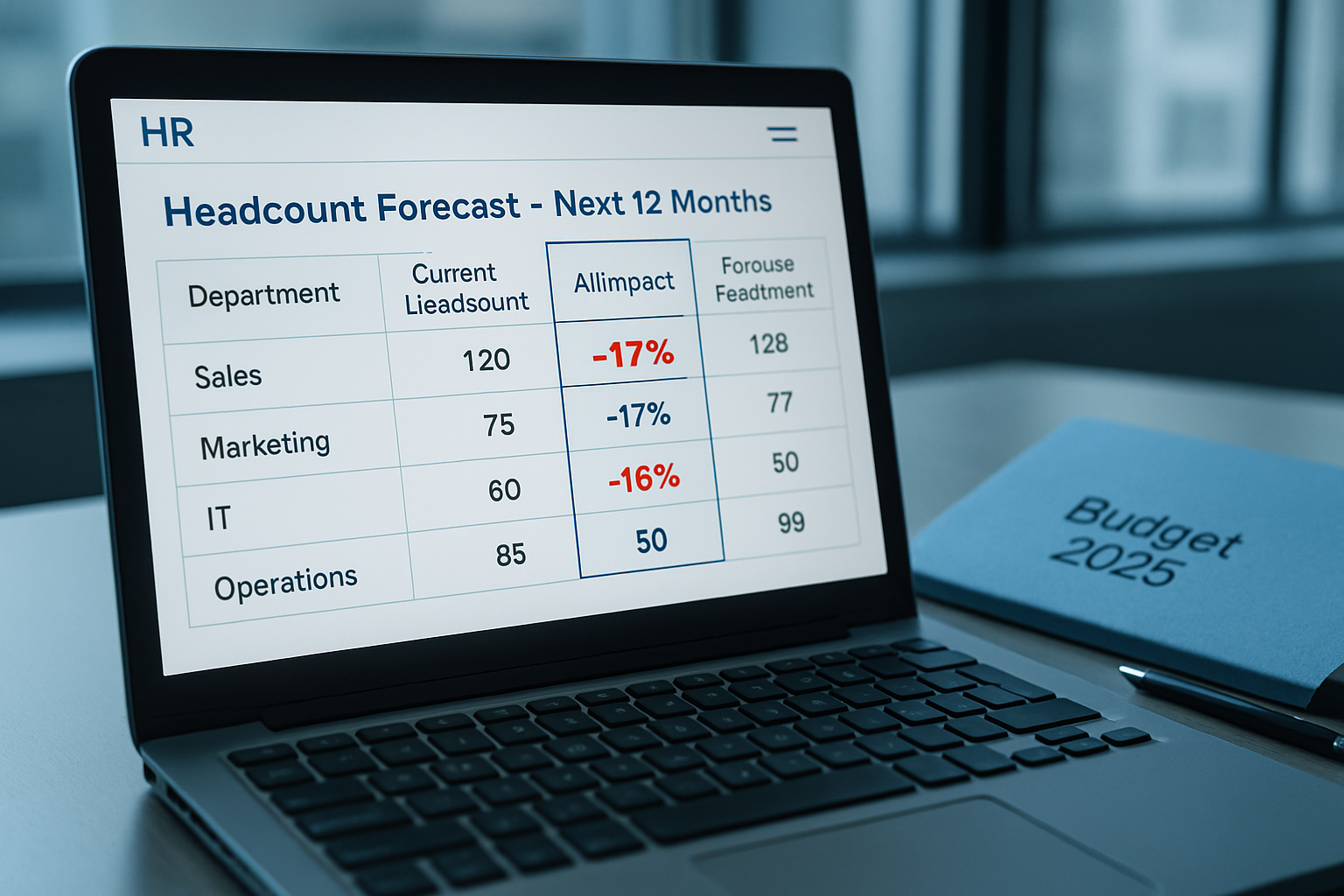
The moment AI moves from keynote slides to headcount spreadsheets is rarely announced with fanfare. It arrives as a percentage in a sober document, and the room feels colder for it. That was the sensation when the UK’s Chartered Institute of Personnel and Development released its Autumn Labour Market Outlook and, for the first time, asked employers to isolate AI as the reason for staffing plans. Seventeen percent of them said they expect artificial intelligence to shrink their workforce in the next twelve months. Not “efficiency,” not “macroeconomic uncertainty.” AI.
What makes that figure more than a talking point is its proximity to action. This isn’t a retroactive tally of layoffs; it’s a forward-looking signal from the HR body that central bankers and ministers read before breakfast. It was gathered from more than two thousand employers between late September and mid-October, a period when budgets for 2026 are being locked. A quarter of the firms that anticipate AI-driven reductions think the cuts will exceed one in ten staff. In large private-sector companies—the ones with the budget and governance to operationalize AI at scale—fully twenty-six percent foresee AI-linked headcount declines.
The number that changes the conversation
We’ve had years of promises that AI will “augment, not replace.” This survey doesn’t erase the augmentation story, but it ends the era when replacement could be treated as speculative. The novelty here is methodological: employers were asked to separate AI from the usual swarm of drivers behind staffing decisions. That’s the difference between a cloudy sky and a weather forecast with a named storm.
It also resets timelines. Many assumed AI displacement would be a slow attrition through hiring freezes. The CIPD data suggests a more deliberate path: explicit plans to convert workflows, trim certain roles, and redesign teams within a year. This is how a capability shift becomes a labor market event.
Where the knife cuts
The roles most at risk are the connective tissue of modern organizations: clerical, administrative, junior managerial, and certain professional jobs. Not factory floors. Desktops. Calendars. Dashboards. The layer that routes information, compiles reports, drafts summaries, checks compliance boxes, and keeps the machine aligned. Nearly two-thirds of employers who anticipate AI cuts point to these families.
That targeting exposes the logic of current AI deployments. Today’s systems are extremely good at compressing routine knowledge work into prompts and checks. They shorten the distance between request and output. In practice, that means fewer people being asked to prepare the first pass, kick off the process, or reconcile the spreadsheet. Senior staff still decide and sign, but there are fewer hands between question and answer. When that middle thins out, the organization’s silhouette changes.
The vanishing rung problem
Strip away enough junior posts and you don’t just cut cost; you disrupt the ladder that produces tomorrow’s seniors. If entry-level analysts, assistants, and junior managers become the most automated slices of the chart, where do people learn the tacit knowledge that can’t be fine-tuned into a model? The UK has worried for a decade about productivity. An AI-enabled reshaping that accelerates output while eroding training ground could deliver near-term efficiency and long-term skill scarcity at the same time.
CIPD’s James Cockett leans straight into this tension by calling for a national reskilling drive. He is right to put a clock on it. The survey’s horizon is twelve months. That’s not enough time to stand up new qualification pathways at scale if we wait for the displacement to show up in the unemployment figures. The only practical way to preserve pipelines is to treat junior roles as apprenticeships to AI systems, not casualties of them, and to fund transitions into adjacent, higher-value tasks before the rungs are gone.
Hiring without ladders
Here’s the paradox: even as one in six employers expect AI to shrink staff, a solid majority—sixty-one percent—still plan to recruit in the next three months. The net employment balance is positive. The public sector looks soft, with education particularly under strain, but the private sector is not declaring a freeze. This is why the next year will feel strange on the ground. Teams will continue to hire while other teams contract. Job titles will survive while job content mutates. A CV may still match a role name, but the day-to-day will have fewer keystrokes and more orchestration of tools.
Large firms will move first because they have the procurement muscle, data assets, and compliance playbooks to run AI through their arteries. The public sector, with tighter budgets and more procedural constraints, will trail, which risks widening capability gaps between services citizens use and the interfaces they expect.
Pay signals and the CFO’s equation
Wage expectations form the backdrop to every automation discussion. Employers in the survey still peg median basic pay rises at three percent over the next year, steady for six quarters. Separate Bank of England polling pegs broader wage-growth expectations a notch higher, at 3.7 percent. That gap—between what firms plan to grant and what workers expect to receive—creates pressure that AI conveniently alleviates. If your unit labor costs are drifting up and demand is unpredictable, a toolkit that promises 20–40 percent productivity gains on routinized tasks isn’t a curiosity; it’s a line in the budget narrative.
But there’s a macro twist. If AI trims junior roles and concentrates pay in senior ones, average earnings can rise even while the headcount dips. Central-bank watchers will read the CIPD report as a potential cooling mechanism for labor tightness, but the composition effects could muddle the signal. The policy impulse to “not add costs” in the upcoming Budget reflects that fragility: pile on employer burdens now and you tip marginal hiring decisions toward automation.
Implementation without illusions
Forecasts don’t automatically translate into outcomes. AI projects still stall on data quality, workflow redesign, and trust. Yet those frictions are falling as vendors ship domain-specific copilots and the legal boilerplate for deployment becomes familiar. The survey window—late September to mid-October—coincides with year-end rollouts of productivity suites that place AI inside the apps everyone already uses. That proximity matters. It turns “pilot” into default behavior with a toggle in the admin console. Once the tool is in the chair, the role changes shape.
Policy with a deadline
CIPD’s guidance is pragmatic: don’t layer near-term costs onto employers in a way that freezes hiring, and do invest in long-term workforce planning so people can use AI or step into new roles. The skill target is not abstract. If junior administrative and professional roles are vulnerable, the curriculum has to meet them where they are: data hygiene, prompt design for internal systems, quality assurance over model outputs, and the soft skills of escalation and judgment that machines still fumble. Give workers a path to supervise the software that would otherwise replace them.
What to watch as the numbers turn into reality
Because the CIPD survey is a forward indicator, the real test arrives across the next four quarters. If firms follow through, we should see fewer openings for clerical and junior professional roles, smaller teams managing larger scopes, and a shift in training budgets from generic compliance to AI-enabled workflows. If they don’t, it will be because the savings were harder to capture than expected or because policy nudges made reskilling cheaper than redundancy. Either way, the headline has done its work. AI is no longer an ambient factor in employment; it is a column in the HR plan with a percentage next to it. For the UK, that turns an argument into a timetable.