
Texas Didn’t Court an App; It Courted the Substrate
On Friday in Austin, a handshake between Governor Greg Abbott and Sundar Pichai redrew the employment map of the AI economy. Google’s $40 billion commitment to Texas isn’t another trophy announcement about “jobs created.” It’s a blueprint for where the physical backbone of machine intelligence will live, who will get paid to build it, and which skills become the currency of the next decade.
The Center of Gravity Slides West
Armstrong County in the Panhandle and Haskell County in West Texas are not where most people pictured the apex of cloud-era work. But that’s the point. By planting three new data center campuses in these rural counties—alongside expansions in Midlothian and Dallas—Google is deliberately scattering AI operations work beyond the usual coastal grids. In practical terms, it means six-figure infrastructure jobs and mid-skill operations roles will pop up beside cattle gates and wind farms, not only in the shadow of big-city headquarters. If the AI boom has felt abstract, here it becomes addressable: parcels, permits, megawatts, commutes.
Jobs That Start With Rebar and End With Reliability
The near-term hiring surge won’t look like a software offsite; it will look like a construction site. Electricians threading bus duct, HVAC techs calibrating industrial cooling, ironworkers raising steel, concrete crews shaping the thermal mass that keeps racks stable. Power-systems engineers will author the interconnects; commissioning teams will chase gremlins through miles of fiber and control loops. Then the tempo changes. The baton passes to operations technicians, reliability engineers, and facilities specialists who keep the buildings breathing—24/7, five-nines, and forever on call. Google didn’t publish headcounts, but the framing is unambiguous: the project is designed as a pipeline, not a pop-up.
Pipelines Over Perks
Most corporate announcements stop at incentives. This one leads with apprenticeships. Training for college students and electrical apprentices is the clearest tell of what’s scarce and valuable: licensed electrical talent, high-voltage expertise, controls and building automation, industrial refrigeration, and safety regimes that span energy and IT. Those skills are portable across employers and eras, which makes them the safest bet a worker can make in a capex cycle that may run hot and cold. Texas is betting that if you build the instruction manual alongside the building, the jobs outlive the ribbon cutting.
The Grid Becomes an Employer
A data center is a power strategy masquerading as a building. The state pointed to programs that strengthen energy capacity and affordability, a polite way of saying the grid is now a direct participant in hiring. Every megawatt added or reshaped entails utility planners, substation crews, protection engineers, demand-response specialists, and the crews who pull new lines across miles of easement. The people who used to be adjacent to tech are now inside it. In Texas, where generation is abundant but transmission and timing can be unforgiving, these roles will determine whether racks light up on schedule or sit in the dark.
Second-Order Work, First-Order Paychecks
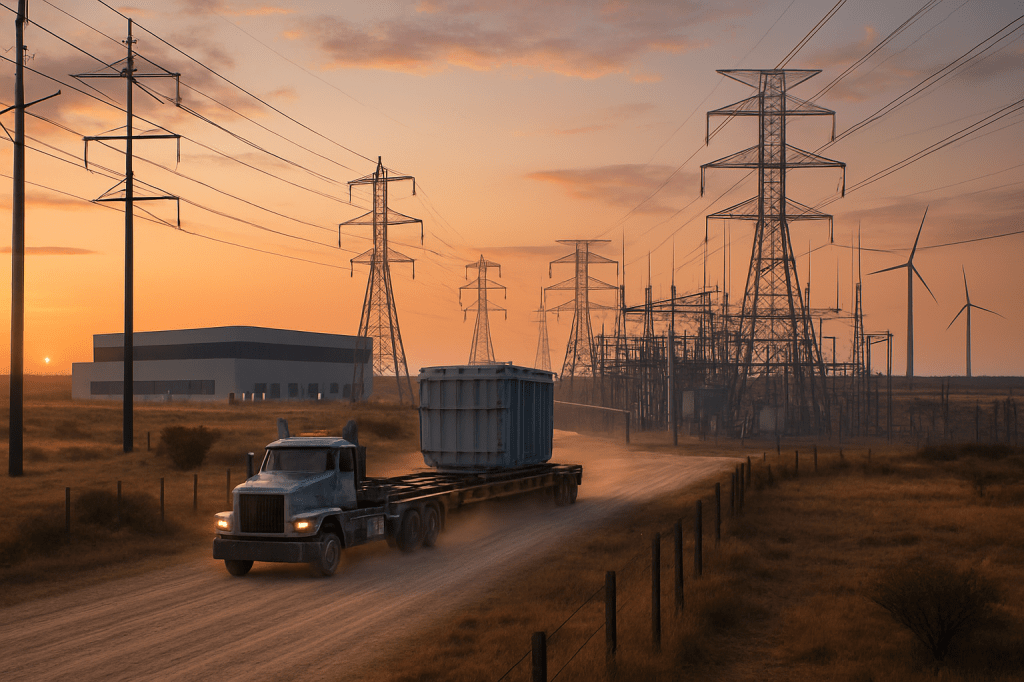
Clusters create gravity. When three campuses land, so do suppliers of switchgear, transformers, backup generation, liquid cooling, fiber, security, and the logistics that feed them. Fabricators staff up to meet lead times; specialty trucking firms chase oversized loads; local services—from catering to facilities maintenance—stitch themselves into a predictable cadence of night shifts and maintenance windows. This isn’t trickle-down; it’s procurement math at scale. And because licensed trades are the bottleneck nationally, the training carve-outs are less philanthropy than risk management.
The Risk Case Is Real—and That’s the Point
There is a race underway. Google, Microsoft, Meta, Amazon, and others are spending ahead of certain returns, wagering that AI demand justifies a continental buildout. Analysts warn of overshoot. If usage lags, hiring could throttle back; the tempo of Armstrong and Haskell will be gated by permitting, interconnect queues, transformer availability, and construction sequencing through 2027. But that uncertainty strengthens the logic of the pipelines: even if the exact sites slip, the skills hold value across utilities, industrials, and competitors sprinting toward the same goal.
The Geography of Tech Work Changes Shape
When a Dallas cloud region grows while the Panhandle captures net-new campuses, the phrase “tech job” stops pointing exclusively to code and coastal campuses. Operations work that once clustered near headquarters now follows land, power, and latency paths. Rural Texas gets continuity—construction today, operations tomorrow, supplier footprints after that—rather than a one-summer boom. Community colleges and apprenticeship programs become primary on-ramps, not fallback options. The winners in this wave will be institutions that can align syllabi with substation drawings and turn a semester of theory into a skill that clears a commissioning checklist.
From Hype Cycle to Supply Chain
The story covered on Saturday wasn’t about a press conference; it was about the industrialization of AI. Put simply: the hottest segment in software now depends on cold equipment, cold climates, and colder math about capacity factors and line losses. Texas offered land, speed, political clarity, and an energy ecosystem that knows how to scale. Google offered capital and a willingness to train the people who turn capital into amperage. In that exchange, you can see the next phase of AI employment: less swag, more hard hats; fewer slogans, more schematics.
The Takeaway
If you track AI for what it does to work, circle this one. A $40 billion build that pairs immediate construction demand with formal training links and long-run operations roles is how hype converts into households. The beneficiaries are not just the PhDs writing models, but the apprentices wiring switchgear, the technicians tuning chillers, and the engineers balancing a grid that now doubles as a hiring engine. Yesterday, Texas didn’t just land data centers—it landed a workforce architecture for the AI era.
