
Sunday’s Drop: The Hiring Machine Comes Into Focus
On a quiet Sunday, TMCnet pulled together Resume Now’s yearlong research into a single frame, and the picture it produced wasn’t a rumor or a forecast—it was a live feed. Not an academic dataset, not a government series, but a stitched panorama of how hiring and management have actually been re-wired during 2025, just in time to define the opening moves of 2026. The through-line was disarmingly simple: before the headlines about mass displacement arrive, the system that decides who gets work—and how that work is directed—has already become algorithmic end to end.
The Applicant’s Paradox
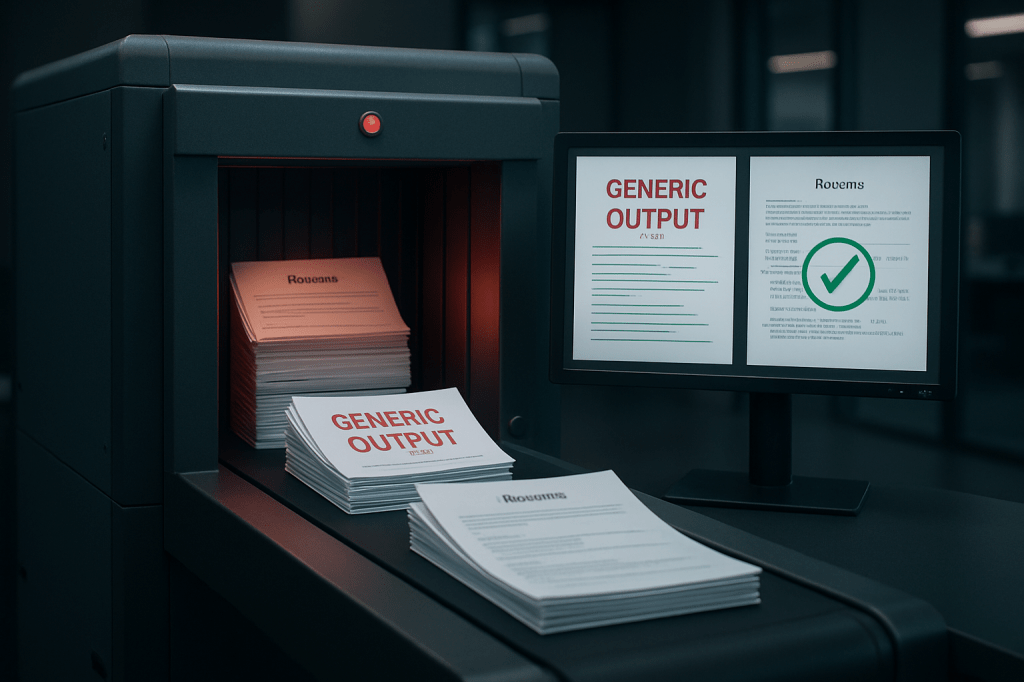
Imagine a mid-career marketer sitting down to apply for five roles before lunch. She uses AI to uncover the postings, summarizes unfamiliar product lines, tailors her resume to each job, and drafts notes to recruiters. She moves faster than she could last year, and the outputs feel polished. But on the other side of the wall, the employer has upgraded too: AI parses her materials in milliseconds, compares the phrasing to tens of thousands of near-duplicates, and quietly lowers the score for anything that smells like generic assistance. The same technology that enabled her speed just lowered her odds. That is the labor market’s new tension: AI is now table stakes for applicants, yet overuse or sameness has become a negative signal.
Resume Now’s synthesis makes that tension explicit. Large majorities of jobseekers rely on AI to find and draft; at the same time, employers—over nine in ten of whom report using AI somewhere in their funnels—say they’re shortening time-to-hire and want clearer rules for AI-authored materials. If you submit purely human prose that misses the model’s preferred structure, you’re invisible. If you submit AI gloss without distinct substance, you’re penalized. The winning approach is starting to look like a hybrid craft: show fluency with AI tools, but surface proof of judgment, context, and real outcomes that can survive both the model’s screening and a human’s scrutiny.
Trust, Transparency, and the Silent Rollout
Workers aren’t imagining the ground moving. “Nine in ten” told Resume Now they fear AI-related job loss, and more than four in ten personally know someone already affected. Most expect AI to take over parts of their role within five years. Yet many describe employers as only “somewhat transparent” about where and how AI is being used. That gap is not academic; it’s operational. Inside firms, the report finds half or more of employees unclear on rules, many admitting they use AI in ways that might violate policy, and a similar share asking for more training. This is governance debt, accrued by deploying tools faster than the organization can codify guardrails and teach new habits. In 2025, shadow IT became shadow automation.
Left untreated, governance debt metastasizes as inconsistency. Two people doing identical work see different levels of automation. Teams invent local norms that collide in performance reviews. Compliance exposure grows quietly as models touch decisions where documentation and explainability are not optional. The headline anxiety—will AI take my job?—obscures the near-term pain point: if workers can’t see the rules, they can’t play to them, and trust erodes even when productivity rises.
Robobossing Moves From Pilot to Preference
The most startling signal wasn’t in recruiting; it was in management. The report describes a workforce newly open to algorithmic authority. Two-thirds of workers said that AI involvement could make workplaces fairer and more efficient, and majorities support AI participating in high-stakes decisions, including hiring and budgeting—and even layoffs. A meaningful minority would prefer reporting directly to an AI manager. That is not a novelty item. It’s a statement about what people want from power at work: clear rules, consistent application, and visible logic, even if that logic is computed.
For supervisors, this reorders the job. If AI systems orchestrate scheduling, assign tasks, shape evaluation rubrics, and triage budgets, managers become stewards and exception-handlers. Their work shifts from producing judgments to explaining them, from collecting data to curating it, from “my call” to “our process.” Employees, in turn, begin to learn the appeals system: what data to surface, how to challenge an output, where the logs live. When people say AI could be “fair,” they are asking for reliability and recourse. Whether they find it will depend less on model quality than on whether audit trails, escalation paths, and consent to use data are actually built into the workflow.
What This Reading Is—and Isn’t
It’s worth pausing on source. This isn’t a central bank beige book or a peer-reviewed study; it’s a year-end consolidation of Resume Now’s surveys, published by TMCnet for a tech-business audience. Yet its weight comes from proximity to the levers that move careers right now. Instead of abstract exposure indices, we get the mechanics: applicants using AI to scale, employers using AI to select, and managers starting to share authority with software. And it resists the easy storyline of wholesale replacement. The first-order change is not mass firings; it’s that the gates and guardrails of employment are now mediated by models.
What to Watch in the Next 3–6 Months
Hiring will harden around disclosed AI norms. Expect application portals to ask candidates to certify acceptable AI use, and for job descriptions to treat AI literacy as baseline rather than bonus. “Generic output” will be treated like spam; proof of judgment will outperform flourish. Simultaneously, employers will standardize provenance—submission logs, structured prompts, and portfolio artifacts that are harder to fabricate and easier for models to verify. Cover letters won’t vanish; they will be scored less for prose and more for evidence of decision quality.
Inside organizations, the governance backlog will come due. Policies will move from PDF memos to enforceable controls: model access by role, default retention settings, prompts and outputs logged by workflow, and red-teaming for HR use cases. Training will stop being optional because the liability isn’t optional. Expect template playbooks for managers on when to defer to a system, when to override, and how to document either choice. Vendor contracts will sprout audit clauses. If you’re a leader, the question is no longer “Should AI assist supervision?” but “What decisions are the system allowed to make without a human, and how do we defend those decisions later?”
As “robobossing” normalizes, appeal routes will define culture. Organizations that treat AI decisions as explainable and reversible will see adoption framed as fairness infrastructure; those that deploy without recourse will convert efficiency gains into grievance pipelines. The technology is ready either way. The social architecture is the differentiator.
The Real Adjustment
For workers, the immediate skill is not learning a new tool; it is becoming legible to the tools that are already reading you. That means demonstrating you can use AI without outsourcing your judgment, and that your output carries a signature—context, tradeoffs, metrics—that survives both detection and interview. For managers, the job is to turn experimentation into policy before policy arrives as backlash. Decide where the model leads, where it advises, and where it is barred; then teach the difference. In 2026, the winners won’t simply automate faster. They’ll make automation contestable, auditable, and worth trusting.
Yesterday’s roundup didn’t break the news that AI is in the loop. It showed that the loop now runs through the entire employment cycle—and that the people moving through it are ready to negotiate with software as a counterpart, not just a tool. That’s not a distant scenario. It’s the operating system for the next year of work.
