
United States Tech Force: Washington’s Bid to Rewire the AI Labor Market
Yesterday, the federal government did something unusual: it tried to hire like the future it keeps describing. A new program called United States Tech Force opened its doors with a promise to bring about a thousand AI, software, cybersecurity, and data engineers into one‑ to two‑year roles, placed directly in agencies that run the country’s core systems. The timeline is aggressive—the first cohort is meant to be on payroll by March 31, 2026—and so is the ambition. “We want to get the benefit of really smart people working on some of the world’s most complex and difficult problems,” said Office of Personnel Management Director Scott Kupor, framing talent not as a press release accessory but as the operational core of the agenda.
Speed as Policy
At first glance, Tech Force looks like a hiring portal. In practice, it’s a structural correction. Previous efforts sprinkled a few hundred technologists into government; some stayed, many left, and much of the institutional learning leaked with them. This time the scale and the process are centralized: a multistep assessment, placement across agencies, and a repeatable annual cycle. The signal is clear—AI capacity is no longer a special project; it’s a baseline requirement for the state. When the government declares formal, near‑term demand for a thousand AI‑adjacent roles, it doesn’t just meet the labor market; it changes it.
An Apprenticeship with a Flag
The program is tuned for early‑career engineers, with room for seasoned managers who can steady the wheel. Salaries land in the $130,000 to $195,000 range depending on grade and placement. Most jobs will be in Washington, D.C., though remote leeway will vary by agency—reasonable for a system that still turns on clearances and secure rooms. The rotation model is deliberate: two years is long enough to ship, short enough to recruit continuously. And then there’s the hinge between public service and private opportunity. Apple, Microsoft, Meta, Nvidia, OpenAI, and other giants are signed on to mentor and train, and to consider alumni for roles after their federal tour. No guarantees, but the architecture matters: it builds a bidirectional pipeline instead of a tug‑of‑war.
The consequences for entry‑level hiring are immediate. A federal tour becomes a credible on‑ramp for engineers who want to learn on real, messy systems at national scale, then exit with experience that venture‑backed companies struggle to simulate. For industry, this offloads part of the training curve to government while importing talent that’s been forced to reason under constraints—privacy law, auditability, procurement, and uptime for populations measured in tens of millions. That’s not altruism; it’s pipeline design.
What Gets Built
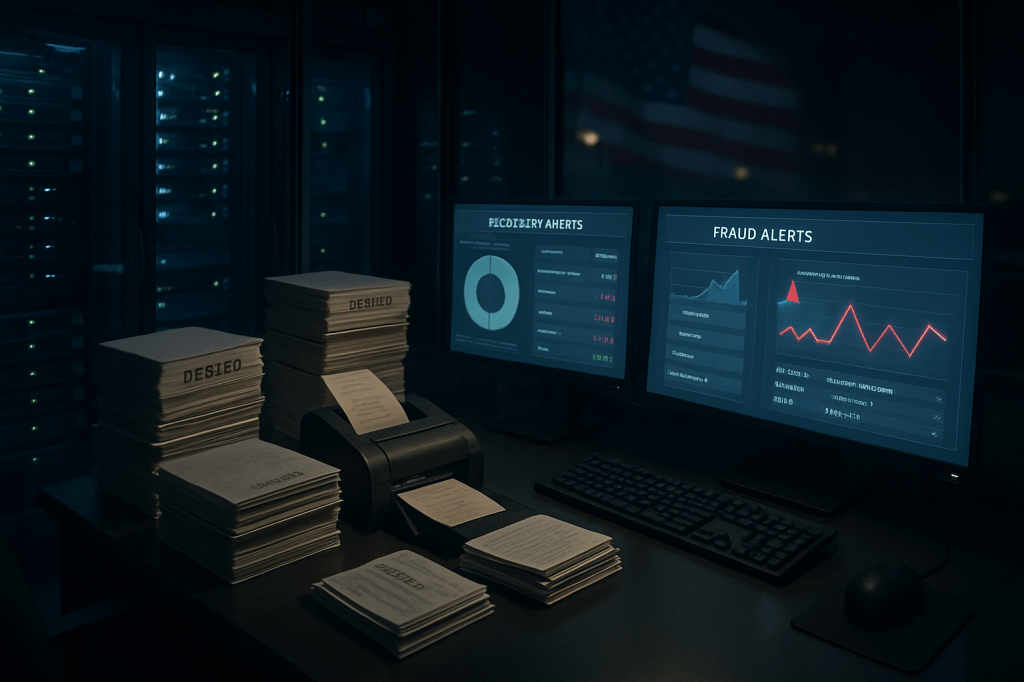
Tech Force isn’t just about “AI adoption” in the abstract. The first projects include new digital services—among them, infrastructure tied to the administration’s children’s savings‑account initiative—plus cybersecurity and data‑modernization work. These are domains where machine learning can do more than summarize PDFs. Eligibility checks, fraud detection, case triage, and resource allocation are all model‑shaped decisions hiding inside paper forms and legacy databases. Put the right people on them and you don’t just make government software less frustrating; you change the throughput and fairness of public programs.
It also puts AI talent at the table where operational decisions get made. The White House’s broader AI agenda—guided in part by figures like tech investor David Sacks—needs implementers who can translate policy into code and dashboards into outcomes. If that translation layer improves, the gap between regulation and deployment narrows, and debates about AI risk stop floating above the stack.
The Quiet Bargain
The compensation won’t top Big Tech offers, but the trade is different. Scope, not stock, is the currency: datasets that mirror the complexity of the country, systems with failure modes that actually matter, and the discipline of shipping within audited, adversarial environments. For the companies mentoring these cohorts, the bargain is symmetric. They get a look at candidates who’ve been shaped by real‑world constraints—security, compliance, and the politics of rollout—skills that are increasingly valuable as AI systems move from demos to infrastructure.
The Friction Ahead
Fast‑track hiring is only fast until it meets clearances, procurement rules, and the gravity of legacy systems. A one‑ to two‑year term is a sprint; unless agencies capture knowledge and modernize the scaffolding—data pipelines, permissions, model monitoring—the expertise walks out the door on schedule. The remote‑optional promise will also collide with the need to handle sensitive data in controlled environments. None of this is a reason not to try. It’s a reminder that success here looks like platforms that survive turnover, not heroics that don’t.
If It Works
By late 2026, success would look unglamorous: benefits processed faster and more accurately, fraud caught earlier with fewer false positives, cyber incidents contained with fewer surprises, and public‑facing services that behave like the modern web instead of a museum of broken links. It would also look like a repeatable, scalable hiring cycle—the difference between a headline and a habit.
Why This Matters for Your Job
Tech Force doesn’t just create a thousand roles; it creates a new credential. “Federal AI alum” becomes a recognizable line on a resume, a signal to industry and a magnet for ambitious graduates who want responsibility early and leverage later. That changes the center of gravity for entry‑level recruiting and sets a public‑sector anchor for AI compensation. It also redistributes expertise: some of the people who would have built yet another internal LLM chatbot at a cloud company will be debugging benefit eligibility models for actual families. The work is different. The skills transfer. The market notices.
In a decade defined by software colonizing everything, the state is finally staffing up as if that were true. A hiring portal shouldn’t matter this much. Yesterday, it did. The countdown to March 31 isn’t just about filling seats; it’s about whether government can turn AI from a talking point into functioning public infrastructure—and, in the process, redraw the map of where the most consequential engineering work gets done.
