
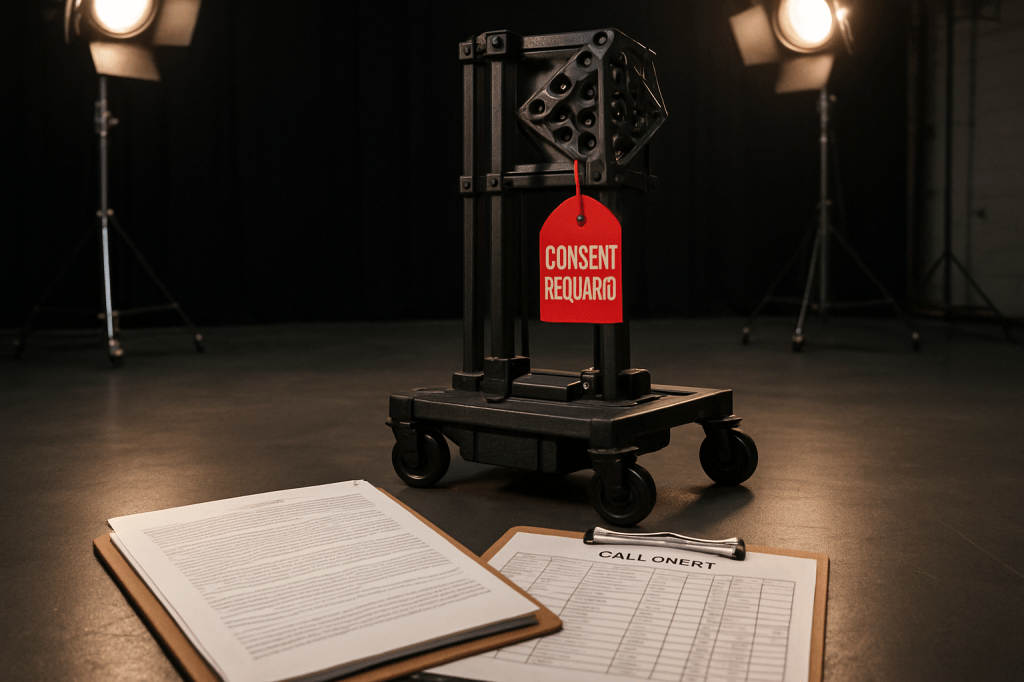
When the scanner cart stops rolling
On Thursday, the United Kingdom’s performers did something deceptively simple: they promised to say “no” to a machine. Not to AI in the abstract, but to the rig on the edge of the soundstage, the one that captures bone structure, skin tone, gait, micro‑expressions, and voice timbre in a single pass. Equity, the performing‑arts union, announced that 99.6% of voting film and TV performers are prepared to refuse on‑set digital scans unless AI protections are carved into their contracts. With a 75.1% turnout across 7,732 eligible members—actors, stunt performers, and dancers—the message wasn’t a protest chant. It was a production note.
The vote isn’t a legal strike. It doesn’t need to be—at least not yet. Equity’s strategy is to squeeze a chokepoint that AI pipelines can’t automate away: you can’t build a compliant digital double without the performer’s participation and permission. If scanners go unused, crowd replication plans collapse, voice cloning timelines slip, and the invisible math that lets producers amortize a background artist into perpetuity stops adding up. In a country where Equity says roughly 90% of film and TV is produced under Pact–Equity agreements, and where most artists working on those agreements are union members, a coordinated refusal doesn’t just send a signal. It stalls the trucks.
The new “workday” is a dataset
What makes the ballot startling isn’t the lopsided margin. It’s the clarity about what’s at stake. A scan isn’t a headshot. It’s inventory. With high‑fidelity capture, studios can generate digital doubles and synthetic voices, reuse them across scenes or projects, and bypass additional days of employment and residual payouts. Without explicit consent, clear scope, and fair pay baked into the paperwork, the modern background job becomes a one‑time data harvest with indefinite reuse. Yesterday’s vote converts that fear into leverage: no consent, no capture.
Equity’s demands are blunt and legible. Informed consent for any capture and reuse. Transparency about terms and future uses. Remuneration when replicas are created and when they earn for someone else again. Movement on royalties and residuals. Technologists will hear echoes of model governance and provenance audits; producers will see revised deal memos and new line items. The union will return to negotiations with producers (through Pact) in January and has signaled that a statutory strike ballot is ready if talks stall. The point isn’t to freeze scanning forever. It’s to force a contract architecture where a person’s digital self isn’t free stock.
Labor power, not policy white paper
Eighteen months of discussion have already softened the ground. UK performers have been telling stories—some quiet, some loud—about likenesses and voices captured on the margins and resurfacing without clarity on pay or permission. Across the Atlantic, SAG‑AFTRA’s post‑strike provisions set a template: guardrails, consent flows, and compensation structures that treat AI as a workplace issue rather than a philosophical debate. Paul W. Fleming, Equity’s general secretary, made the frame explicit: “Artificial intelligence is a generation‑defining challenge.” He did not mean an abstract test of ethics. He meant jobs, pay, and control of work.
That frame matters because it shifts the battleground from Parliament and policy commissions to call sheets and crew calls. Legislators may take years to harmonize rights of publicity, biometric protections, and data‑use norms. A union can change tomorrow’s on‑set routine. If the second assistant director can’t get performers through the scanner, producers must negotiate the terms under which the scanner becomes useful again. In practical terms, Equity has located a switch inside the production workflow that labor can reach and flip.
What happens when refusal becomes the default
The near‑term consequences are more operational than existential. Producers will be notified of the ballot result and will face scan refusals as the next cycle of shoots ramps up. Shooting schedules will need contingencies for scenes that assumed crowd doubling. VFX teams will reassess pipelines that expect volumetric capture on day one. Casting directors will anticipate budget shifts back toward live days. Accountants will add new columns—consent status, reuse scope, residual triggers—and lawyers will draft clauses that read like software licenses attached to human beings.
Some will try to route around the union. Expect experimentation with synthetic actors not derived from a specific scan, algorithmically blended from public imagery. But those models carry their own risk: the closer they approach recognizability, the greater the legal and reputational exposure. Others will push for blanket consents tucked into onboarding paperwork. That tactic is precisely what the union’s stance is designed to defeat. “Informed” and “explicit” here mean context, duration, and pay mechanisms that can be audited, not a signature on page nine of a rush contract.
The more interesting response will be constructive. A functioning market for replicas requires provenance, permissions, and a meter. If Equity succeeds, we’ll see consent wallets for performers, machine‑readable licenses attached to digital doubles, and audit trails that make reuse billable without a fight. Royalty systems built for linear broadcasts will be coaxed into counting synthetic appearances. Databases that knew how to pay for a rerun will learn to pay for a render.
A data strike by any other name
What the industry is watching is a form of coordinated data strike. We’ve seen this dynamic in other AI markets where access to high‑quality training material is the scarce input. Here, the scarcity isn’t text or images scraped from the web. It’s legally compliant, high‑resolution, actor‑authorized captures that can stand up under scrutiny. Refusal raises the price of that input until the other side agrees to a governance regime. The tactic only works when the supply is organized. Equity’s coverage of the UK production ecosystem makes it viable.
The context also matters. The United States already demonstrated that AI provisions can be bargained into national agreements without collapsing an industry. That precedent emboldens UK performers to move from awareness to coordination and offers producers a roadmap: build the consent apparatus, budget for reuse, and treat scans as the start of a payable relationship rather than the end of one.
The deeper implication: identity becomes a negotiable asset
For years, performers traded on presence. Now they must trade on persistability. Identity—face, voice, motion—becomes a programmable asset with a licensing surface. That sounds cold because it is, and because it’s necessary. The only way to tame the asymmetry created by infinitely copyable talent is to attach rules and prices to the copies. If that feels like turning human expression into software, that’s because AI has already done the conversion. Labor is just insisting on the API.
In the immediate term, the standoff will be measured in days lost or saved. In the long term, it will be measured in whether the industry normalizes an economy of replicas with consent by design. If the January talks with Pact fail and a statutory ballot authorizes strikes, the disruption will spread—from call sheets to VFX bids to delivery dates—and money will find its way to the table quickly. If they succeed, it will be because both sides realized that reliable AI practices need contracts as much as code.
One way or another, the scanner is about to learn some manners. And the people it points at are about to get paid for what it remembers.
