
When Sunday Night Put Steel Nerves in a Soft Body
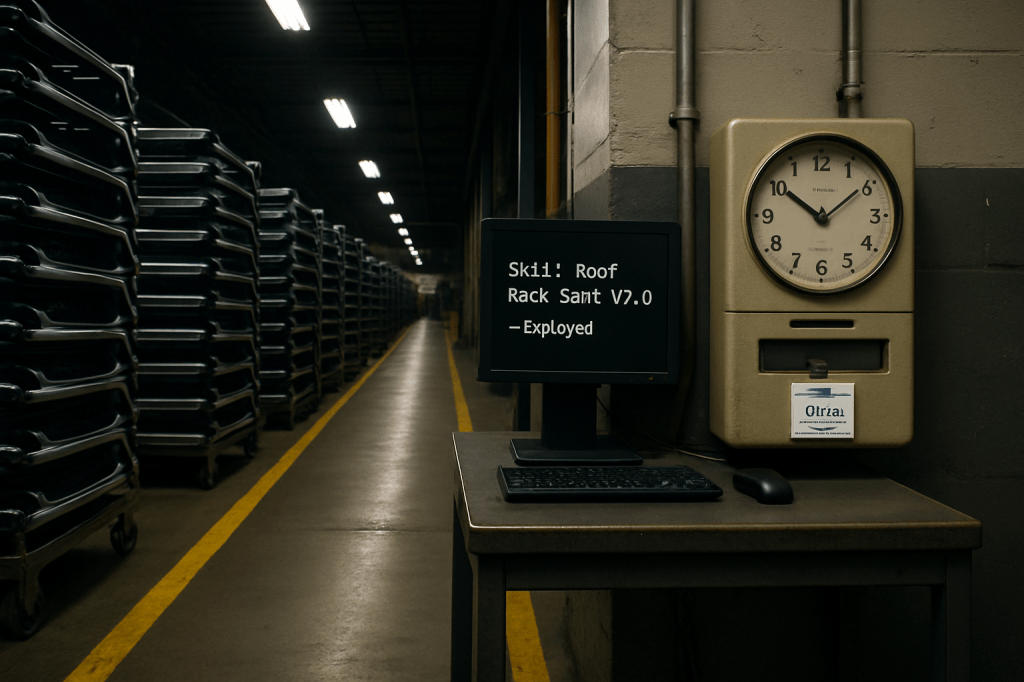
On a quiet line in Georgia, a five‑foot‑nine machine did something unremarkable and historic at once: it sorted roof racks. The task is as old as assembly itself—lift, place, repeat. The camera crews weren’t there for choreography. They were there because Boston Dynamics let 60 Minutes watch Atlas do work that belongs, for now, to people. The setting mattered: Hyundai’s new factory, not a demo stage; a robot with an all‑electric frame and an AI brain, not a tethered research project performing party tricks.
From spectacle to procedure
The bridge from viral videos to factory duty is a training loop that looks more like a pipeline than a breakthrough. A human in VR teleoperates Atlas through the steps. Motion‑capture gives the robot a body memory to imitate. Then the real acceleration begins: thousands of digital Atlases run the task for hours in simulation, exploring variations, teasing out the edge cases that humans learn on day two and robots typically learn on day never. When the skill stabilizes, it isn’t taught again; it’s uploaded. Once one Atlas is trained, they’re all trained. In other words, the expertise of a single line can travel at the speed of a patch.
The work that moves first
Boston Dynamics’ chief executive put a name to the first tranche of jobs that will change: the repetitive, the backbreaking, the roles that draw a straight line from injury reports to overtime budgets. The message wasn’t apocalypse. It was reconfiguration. These machines will need managers. They will need people who build them, train them, tune them, and nurse them through bad days. That’s not a soothing add‑on; it’s a shift in who gets hired and promoted in the plant. The company also insisted on a timeline that resists headline heat: even at Hyundai, it will be several years before Atlas clocks a full‑time shift.
Hardware that behaves like software
Atlas is now all‑electric and runs on Nvidia chips, which sounds like a spec sheet until you think about maintenance, safety, and scale. Electric actuators mean cleaner, quieter motion around people and easier diagnostics. Standardized compute means the learning loop—teleoperation, imitation, mass simulation—can be replicated and improved quickly, then rolled out across a fleet. The bottlenecks aren’t cinematic; they’re industrial. Reliability must cross a threshold where downtime is rarer than human sick days, and the price has to pencil out against wages, turnover, and insurance. Those curves, not a clever demo, decide when the robot joins the rota.
Limits worth listening to
The segment was careful to show the gaps. Atlas can run, crawl, dance, stack, even tie a knot after training. But it’s clumsy at the mundane tasks humans handle without thinking—pouring coffee, getting dressed. That’s not trivia; it signals how much tacit skill lives in everyday motion. There was also a pointed rejection of sci‑fi specters. The near‑term risks aren’t rogue machines; they’re inconsistent performance, safety protocols that need proving, and unit costs that need to sink.
A race with policy riding shotgun
If you want to know when a tech becomes a market, follow the capital and the governments. Hyundai owns the vast majority of Boston Dynamics. U.S. firms face state‑backed competitors in China. Analysts are now modeling humanoids as a tens‑of‑billions‑within‑the‑decade category. Those aren’t just big numbers; they are the scaffolding for supply chains, workforce programs, and regulatory frameworks that will make this year’s pilot look quaint by mid‑decade.
Why this broadcast mattered more than another agent demo
Most of the year has belonged to white‑collar software: planners, copilots, “agents” promising to schedule our calendars into submission. Last night moved the horizon for physical automation. It put a national spotlight on a real factory, a real task, and a concrete claim: certain human jobs will be offloaded first, and the adjacent human jobs will grow in training, maintenance, and orchestration. For millions of people in warehouses and on lines, that’s the first credible sketch of what changes, and when.
The Monday after
What happens now is not dramatic; it’s procedural. Plant managers start writing budgets for pilots with explicit reliability gates. Safety teams draft new playbooks. Community colleges tilt curricula toward robot operations and field service, because “managing” a humanoid isn’t a line item—you have to teach it. Unions and policymakers will ask better questions, because the cameras showed the thing doing work, not dancing. And on the factory floor, workers will do the quiet math of career strategy: which roles shrink as roof racks get sorted by something that never needs a back brace, and which roles expand as fleets need instructors and fixers.
The clearest signal yet
In a single segment, humanoids stepped from lab curiosity to pilot employee. Not universally. Not tomorrow. But unmistakably on a timeline that factories can plan against: first the hazardous repetition, then the broader tasks as reliability and cost fall into place. The story ended where the future often starts—in process, not poetry. A robot learned a job, and the job learned to make room for the robot.
