
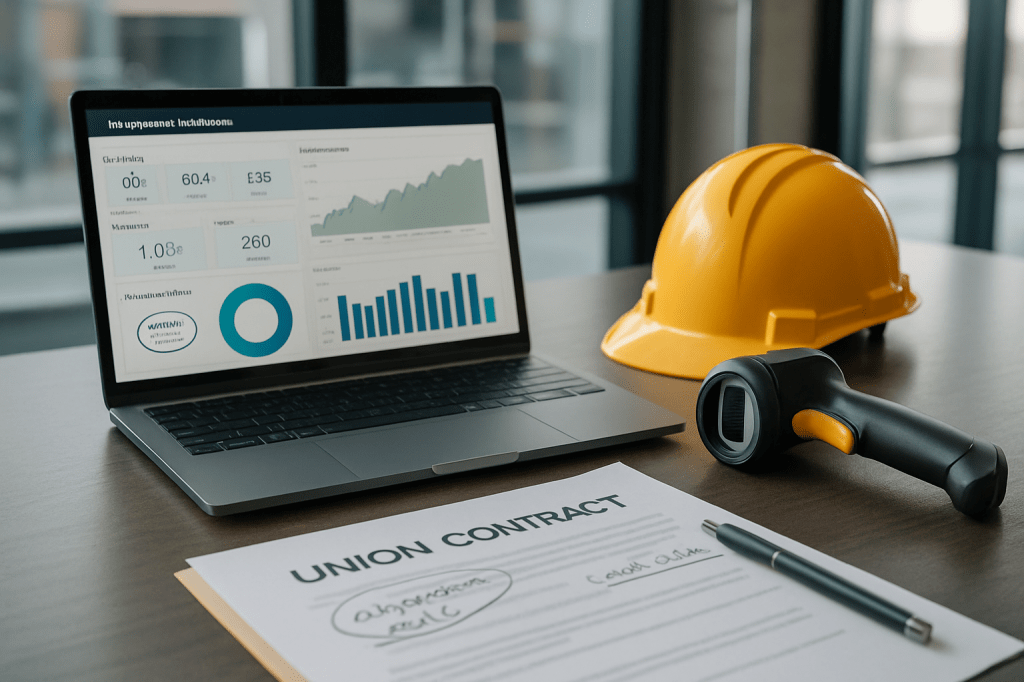
When Fear Starts Bargaining: AI Anxiety and the Quiet Birth of a New Workers’ Movement
The most important story about AI yesterday didn’t unveil a new model or a spectacular demo. It traced a seam running through warehouses and boardrooms, checkout counters and open-plan offices, and then pulled. The Guardian launched its “Reworked” series with an essay arguing that the defining question of AI at work isn’t net job loss. It’s power. Who sets the rules for how algorithms enter our shifts, our screens, our bodies’ rhythms? And what happens when the people answering that question aren’t only engineers and executives, but workers acting together?
If you’ve spent the last few years watching AI seep into your workflow—nudging your writing tone, scheduling your tasks, grading your performance—you already know the sensation the piece captures. It’s not the clean terror of replacement alone. It’s the messier dread of being left behind while still being watched. Lower‑wage workers have been warning for years that they’re either “replaced by robots” or “turned into robots” by algorithmic monitoring. Now, office workers are edging toward the same cliff: a future where you’re tracked as granularly as a picker on a loading dock, or reshuffled into whatever tasks resist automation this quarter. The old boundary between knowledge work and manual work looks less like a wall and more like a mirage that heat has already burned away.
The mood data is stark. Pew reports that nearly two‑thirds of Americans expect AI to mean fewer jobs by 2045, and barely a fifth imagine a positive national impact. This isn’t a culture primed for techno‑optimism. It’s a workforce attuned to downside risk, which turns out to be a potent organizing fuel. When hope is thin and exposure is shared, people seek leverage.
The convergence nobody planned
What The Guardian’s piece gets right—and what many forecasts miss—is that AI’s most disruptive trick for labor isn’t automating a single category. It’s standardizing control. The same dashboards and scoring systems that slice seconds off a warehouse path can be repurposed to slice minutes out of your calendar, nudge you to write faster, and then rank you against your peers. Lisa Kresge at UC Berkeley names the dual threat: displacement on the one hand; dehumanizing micromanagement on the other. Sarita Gupta at the Ford Foundation sees what that shared exposure makes possible: cross‑class solidarity that isn’t theoretical. When the spreadsheet and the scanner start to feel like cousins, conversations that used to stall on identity and status find new footing in dignity and voice.
This is why the story lands now. After a pandemic surge in labor activism and amid historic lows in union density, workers are reinterpreting technological change as a design choice, not an act of fate. The essay draws a line back to earlier inflection points: insecurity gave people a reason to gather, and bargaining gave them a way to redraw the future’s edges. If AI once looked like an external shock, it now looks like a governance problem.
Ending the spell of inevitability
Perhaps the sharpest move in the piece is its attack on mystification. You’ve heard the script: models will improve, automation is inevitable, the curve is the curve. That language is not just prediction; it’s a tactic. The more the outcome feels ordained, the less room there is for negotiation over deployment, design, and oversight. The Guardian counters with a simple proposition: democratic choices can reroute the technology. If contractors can cap facial recognition at a city council meeting, if a newsroom can vote to limit AI‑written bylines, if a hospital can set rules for decision support versus decision replacement, then the arc is not physics. It’s politics.
For readers of this newsletter, that may sound obvious. But the distinction has real consequences. If you think “impact follows capability,” you watch benchmarks. If you think “impact follows power,” you watch contracts, procurement, and policy. The first worldview tracks GPUs; the second reads collective bargaining agreements.
The shop floor is now a product roadmap
What does organizing around AI actually look like? Not a general strike against code. It looks like negotiating the texture of everyday work: which data can be collected, how performance is scored, what explanations are required, who gets to review the system’s errors, which tasks are automated and which are cushioned with training and pay protection, when workers can veto a deployment that deskills or intensifies labor. Surveillance, task allocation, and training pathways become the new wage tables and safety standards. A manager may still buy a model; a workforce may now shape its use.
This is a practical pivot with deep implications for the next few contract cycles. Expect more proposals that sound like product requirements: audit trails for algorithmic decisions, sunset clauses for monitoring systems, retraining guarantees tied to deployments, human‑in‑the‑loop definitions that are enforceable rather than ornamental, and grievance processes that contemplate statistical error, not just interpersonal conflict. The language of machine learning will keep leaking into labor law, and the language of labor will creep back into engineering roadmaps.
From fear to architecture
Where does this go? If the analysis is right, we’re entering a period where worker power is rebuilt not only through wages or benefits but through control over information flows and automated decision rights. That’s a wider aperture than the automation debate has allowed. It’s also a more grounded one. You don’t have to predict synthetic agents that eliminate 40% of roles to justify a movement. You can start with the bad dashboard that makes everyone worse at their job and then ask, collectively, who authorized it and under what rules.
There’s a subtle hope embedded here. Anxiety can corrode, but it can also coordinate. When a pick rate and an email draft feel like different surfaces of the same system, people who rarely share a break room can share a bargaining agenda. And once that happens, the meaning of “AI policy” shifts from DC rulemaking to everyday governance: the standing meeting where a union’s AI committee and a company’s product team negotiate the next rollout; the clause that forces an external audit when model drift spikes; the training fund that turns looming displacement into a paid choice rather than a sudden cliff.
The Guardian’s essay reframes the week’s conversation by insisting that the future of work won’t be delivered by a keynote. It will be co‑authored in the most ordinary places: the warehouse floor, the clinic, the newsroom CMS, the CRM dashboard, the code review. The question is no longer what AI can do, but who it will answer to. If fear can be converted into architecture—rules, rights, and routines—then the era of AI at work won’t be remembered for the jobs it erased so much as for the institutions it forced us to rebuild.
