
Atlassian’s AI Rebalance, Told in Headcount
In the pale Sydney morning, Atlassian sent a note that tried to be both humane and unsentimental. “We fundamentally believe people and AI create the best outcomes,” CEO Mike Cannon‑Brookes wrote, before adding the line that mattered: “it would be disingenuous to pretend AI doesn’t change the mix of skills we need or the number of roles required in certain areas.” By evening, the euphemism had a number—1,600—and a purpose: self‑fund a sprint into AI and enterprise sales.
The geography made it feel less like cost-cutting theater and more like a structural redraw. About 640 roles in North America, 480 in Australia, 250 in India, with the remainder scattered across Japan, the Philippines, Europe, the Middle East, and Africa. If this were merely wage arbitrage, you’d see it pooling somewhere. Instead, it spread, signaling something colder: the work itself is changing, not just where it is done.
Then came the sharpest datapoint: more than 900 of the eliminated jobs were in software R&D. That statistic breaks a quiet assumption many knowledge workers still hold—that if you’re near the core, you’re safe. Atlassian’s message is the opposite. The core is exactly where AI is being installed. The company isn’t shrinking away from building; it’s changing what “building” means. Fewer squads spinning features, more teams fusing data, inference, and workflow into products where the unit of value is no longer an interface or an API, but a decision made faster and with less human effort.
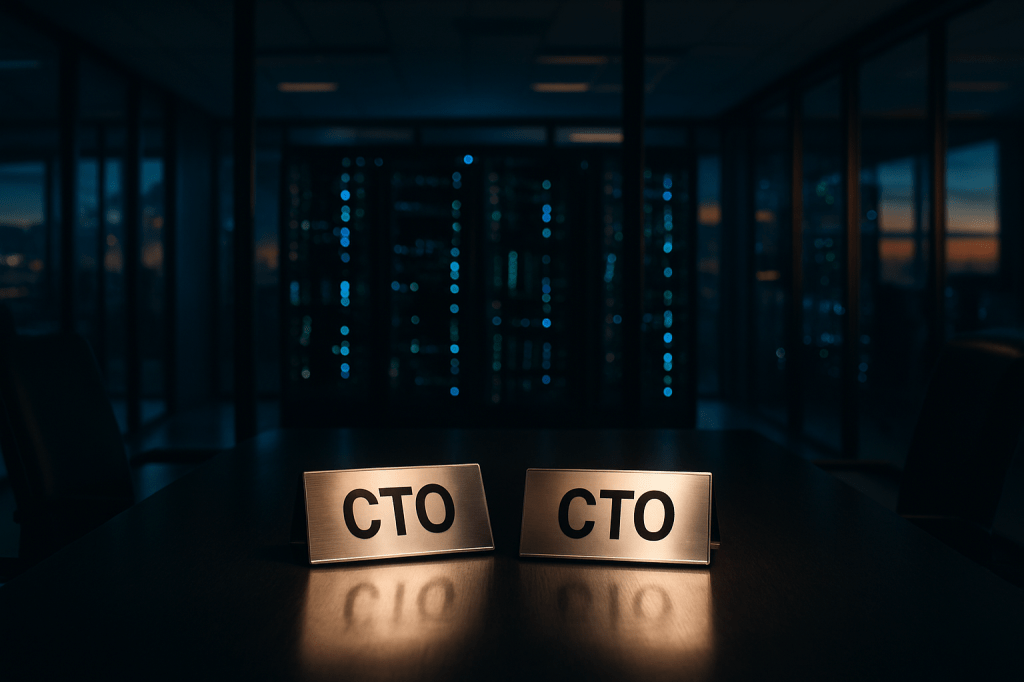
To make that shift palpable, Atlassian pulled a lever rare enough to make insiders do a double take. Chief Technology Officer Rajeev Rajan will step down at the end of March. Two AI‑centered leaders, Taroon Mandhana and Vikram Rao, will split the CTO mantle. A dual CTO model is not a flourish; it’s an operating hypothesis. The company is effectively declaring that its technology stack now has two gravitational centers: the cloud product platform where Jira, Confluence, and the rest live, and the intelligence layer that will increasingly mediate how customers touch those products. In old software org charts, AI reported into something. Here, AI is the something.
The financial mechanics make the thesis legible. Atlassian expects roughly US$225–236 million in restructuring charges—mostly severance and office exits. It’s a one‑time bill to reprice recurring costs. “Self‑funding” is not just investor-friendly phrasing; it’s strategy. You don’t get to run large‑scale inference, staff evaluation pipelines, negotiate enterprise data terms, and stand up safety and governance without paying for it somewhere. If you can move those dollars out of legacy headcount and real estate instead of out of margin, you send a clear signal to the market: our AI bet won’t arrive as a drag.
Inside the building, the logic is blunter. AI won’t replace all humans, and that’s not the claim here. But it will collapse some tasks that once demanded entire teams. Requirements triage, ticket grooming, test generation, incident summarization—these aren’t “jobs,” they’re layers of recurring cognitive labor. When those layers become machine‑assisted by default, you need fewer people at the layer, and more people a level up, tending the systems that make the assistance trustworthy. That arithmetic rarely nets to zero.
What Atlassian is really optimizing for
Three moves, threaded together, clarify the company’s aim. First, it is concentrating leadership around AI, not as a feature but as a substrate. Second, it is redirecting cash flow to platformize that substrate—evaluation suites, data contracts, prompt orchestration, retrieval, permissions, latency, cost control. Third, it is leaning into enterprise sales, because the economic buyer for AI in the workplace isn’t the developer choosing a tool; it’s the executive who sees cycle time drop across thousands of employees. The monetization path for AI assistants inside Jira or Confluence will live or die on trust, security, and compliance. That’s not a bottoms‑up sale.
Notice what’s absent from the press-line gloss. This is not a model‑building arms race. Atlassian’s advantage isn’t that it will invent a better transformer. It’s that it sits atop a dense, permissioned graph of work: issues, documents, comments, code reviews, calendars, identities. If you can safely ask that graph questions and let it take actions, you will matter in the AI workplace. If you can’t, you’ll be an integration tile on someone else’s canvas. Rebalancing here means moving engineers from shipping yet another dialog box to building the machinery that lets a machine ship the dialog for you.
The human math behind “people + AI”
When executives champion “people and AI,” they’re often trying to hold two truths in tension. The first truth is moral and cultural: the company doesn’t want to become a place where human judgment atrophies. The second truth is operational: if AI removes enough friction, the necessary headcount falls. Atlassian stated both truths on the same day and then let the numbers reconcile them. The consultation window in Australia through March 19 adds a formal cadence to the change, but the logic crosses borders. Workflows that used to require coordination across time zones now happen in a single prompt. The gains are real. So are the displacements.
For software teams elsewhere reading this as a parable, resist the easy takeaway that “coding jobs are gone.” What’s evaporating is the premise that every incremental capability must be hand‑wired by a cluster of specialists. Demand is rising for a different slice of expertise: people who can make product and model behavior converge, who understand guardrails as product, who treat observability not just as uptime but as model integrity, who can square legal and privacy obligations with embeddings and context windows. This is not prompt fiddling. It’s systems work, and it absorbs fewer but more differently skilled people than the feature factory did.
Signals to the rest of the industry
Atlassian didn’t invent the idea of using layoffs to underwrite AI, but the company did something specific that will echo: it cut deeply into R&D while installing AI at the apex of technology leadership. That combination tells boards and CFOs what “serious” looks like. It also ups the ante for competitors who thought they could bolt assistants onto their suites without rewiring their orgs or their P&Ls. Expect more dual‑track leadership models, more office exits justified by inference costs, and more plain‑spoken admissions that the skill mix has shifted and the headcount must follow.
There is a discomfort that hangs over days like this, and it deserves to be named. When a company says it will “self‑fund” AI, it is saying—in effect—that the next wave of software will be paid for by the last wave’s jobs. That trade may still be rational. It may even be necessary. But for the people whose severance checks are underwriting the GPU line item, the slogan lands differently. AI didn’t replace them in a single stroke; it repriced what their work was worth to a company that has decided its future is an intelligent platform, not a larger team.
On March 12, the message was not subtle. If you build the tools that manage knowledge work, you’re no longer immune to the transformation reshaping knowledge work itself. Atlassian chose to say that out loud—and then organized its leadership, its balance sheet, and its headcount to make it true.
