
Genesis Gets a Deadline—and a Hiring Plan
Washington often sketches sweeping ambitions and leaves the calendar blank. Yesterday, it did the opposite. In an Axios interview, Energy Department Under Secretary Darío Gil sat alongside Michael Dell and turned the Genesis Mission from a slogan into an operating schedule: hands‑on AI curricula hitting universities this year and a flagship supercomputer stood up by the end of 2026—a machine meant less as a trophy than as a template other agencies can copy.
That shift matters because Genesis, launched by executive order last fall to concentrate federal data and computing against national challenges, has always carried twin mandates: accelerate discovery and build the workforce to do it. The interview made the second mandate explicit. Instead of assuming the labor market will eventually produce AI‑literate scientists and operators, the Department of Energy is manufacturing that supply on purpose, embedding experiential training and apprenticeships as fast tracks into federal labs and industry partners. The message to students and mid‑career technologists is unusually direct for a government program: there will be work here soon, and we’re going to teach you to do it.
From mission to machine room
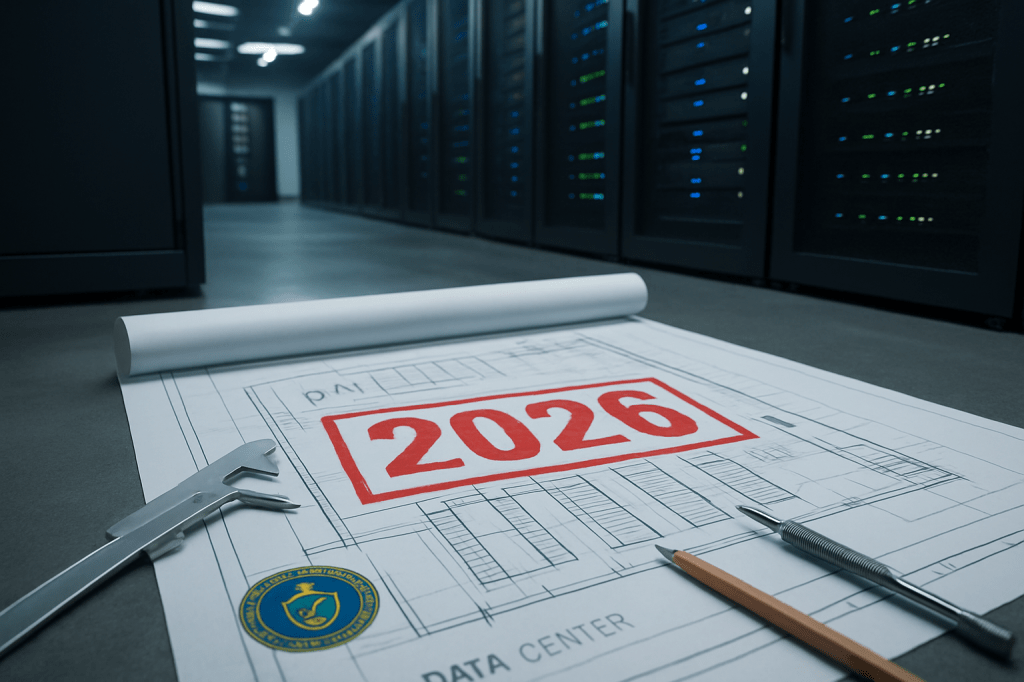
Genesis is now in the assembly phase. In February, DOE formed a public‑private consortium and published two dozen‑plus science and technology challenges to channel the effort into funded projects. Lab‑level plans are already granular. Oak Ridge National Laboratory, for example, has detailed near‑term AI systems—including an AI cluster targeted for 2026—to drive Genesis workloads in materials, the grid, and beyond. Those deployments don’t run themselves. They require mixed teams: researchers who can translate domain questions into computational problems, data engineers who can stitch together messy federal datasets, and operators who can keep high‑density compute humming without cooking the power room. A deadline on a supercomputer isn’t just a procurement milestone; it’s a hiring clock.
Consider what a “blueprint” supercomputer implies inside government. Standardization collapses the boutique chaos that has long defined agency computing. If the reference stack works at DOE, other departments can adopt it with fewer surprises—same orchestration patterns, similar security hardening, predictable performance envelopes. That repeatability doesn’t only accelerate science; it stabilizes job descriptions. Once you know the pattern, you can train for it and staff against it. You can stand up apprenticeships for cluster operations, codify incident response for AI workloads, and turn ad‑hoc research computing gigs into careers.
The quiet bet on experiential training
The near‑term curricula DOE is rolling out is the quietest but most radical part of the plan. Traditional AI education often delays contact with the messy world—real sensors, real policy constraints, real data governance—until a capstone. Genesis flips that, seeding hands‑on programs that put students on lab‑grade infrastructure and into teams solving named national problems. It’s not just pedagogy; it’s throughput. If you want a workforce ready to wire up multimodal data to a biology pipeline or to tune a model that forecasts wildfire risk without leaking PII, you don’t wait for a four‑year cycle. You create on‑ramps this semester and hire the ones who can ship.
Notice the timing. A 2026 machine with 2026 workloads forces a 2026 labor market. That compresses experimentation into months, not years. Universities will have to adjust, but so will clearance processes, procurement, and facilities. Genesis is, in effect, a coordination device across systems that normally move at mismatched speeds. If it works, the reward is compound: the same playbook that trains modelers also trains the electricians, cooling specialists, and cybersecurity staff needed to keep scientific AI viable in the real world.
Dell’s Socratic turn
On the industry side, Dell described something unusual for a Fortune 100: a company‑wide “Socratic debate” about what AI means for employees and the firm. That’s not a town hall to sell a roadmap; it’s internal discovery, aimed at surfacing where roles should evolve, where automation will bite, and where new competencies deserve investment. Framed against Genesis, it reads like a bid to synchronize a private talent engine with a public mission. If Dell is the anchor vendor on the reference system, it is also incentivized to produce the operators, integrators, and support engineers who can replicate that system across agencies and customers. In other words, the product isn’t just hardware; it’s a workforce that knows how to make that hardware matter.
Employment, reframed
For a publication called AI Replaced Me, yesterday’s interview lands with a twist. The most consequential federal AI initiative on the table is presenting itself as a jobs program as much as a research agenda. Not because the government suddenly prefers payrolls to productivity, but because the fastest way to move the science is to flood the zone with people who can actually run it. That reframes the near‑term employment story around AI from displacement to deployment: less about tasks evaporating in spreadsheets, more about new roles crystallizing around compute, data, and domain science.
It also raises sharper questions than the usual AI‑policy chatter. Who gets access to the training seats, and how are placements measured? Does anchoring on a vendor‑backed blueprint accelerate delivery or risk lock‑in? Can the government produce enough cleared operators and data stewards to keep up with the hardware curve? Where will the clusters live, and what does that mean for regional labor markets around national labs and partner campuses? These are not theoretical debates; they decide whether Genesis becomes a repeatable talent ladder or another pilot that can’t scale past its original champions.
The signal inside the noise
Strip away the press language and one through‑line remains: Genesis has a clock. Deadlines force choices. With curricula arriving now and a supercomputer promised by late 2026, agencies and companies don’t get to ruminate about the future of work; they have to assign it. For workers already living in the blast radius of AI disruption, the near‑term read is clear. If you can translate scientific intent into data and model pipelines, if you can operate high‑performance systems under tight governance, if you can make AI legible to a lab bench or a field crew, the door is opening—not someday, but on a schedule.
Genesis began as a mission statement. After yesterday, it looks more like a build sheet—and a hiring plan—stitched together across campuses, labs, and a vendor that’s willing to argue with itself in public. That is novel. If it holds, we’ll remember this moment not for another promise about AI’s distant horizon, but for the day the federal government pinned its ambitions to a calendar and told the labor market to meet it there.
