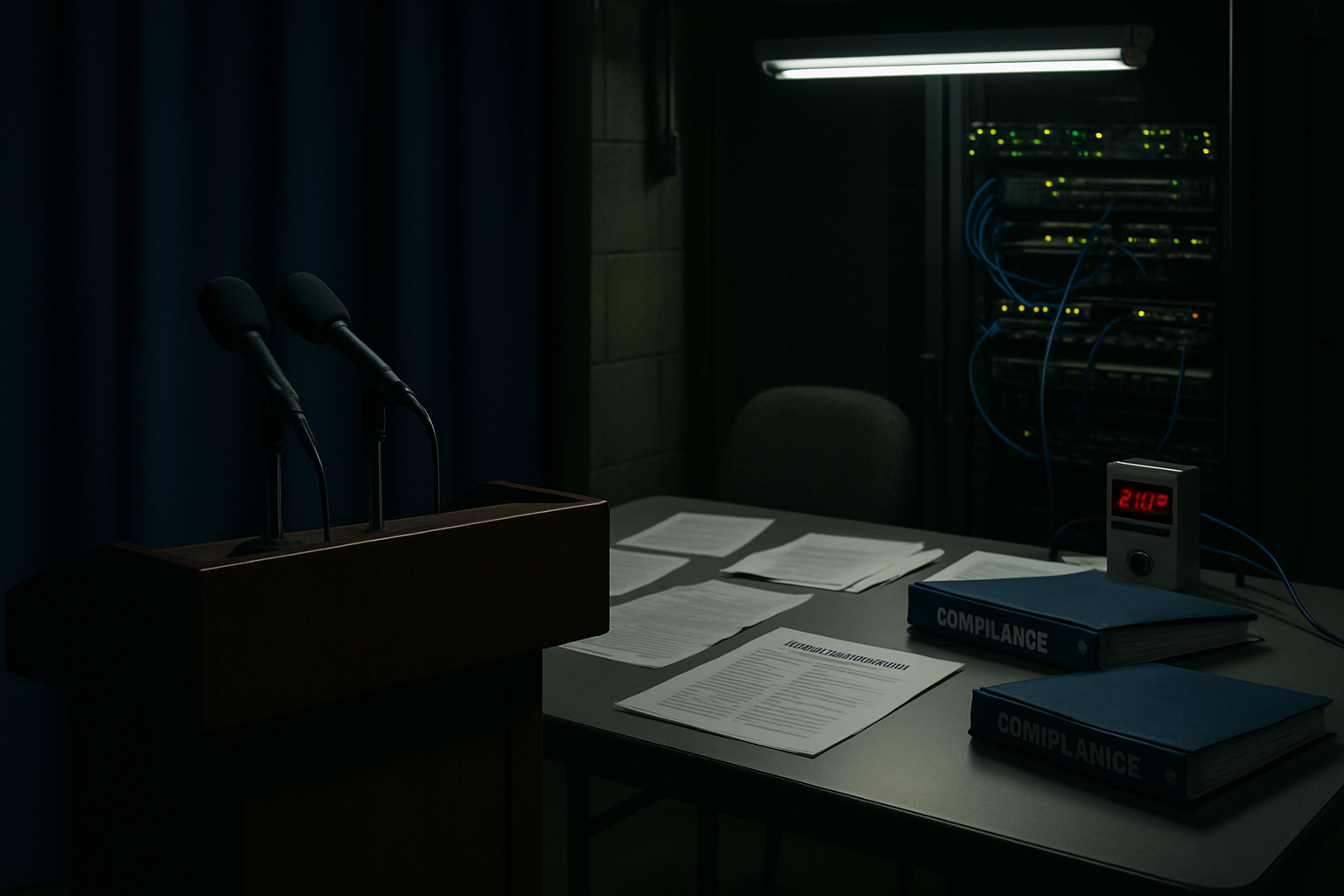
The Day the Feed Blinked: When No Single Story Became the Story
I woke up expecting the usual: a model release masquerading as a labor report, a corporate memo smuggled into the news cycle as a productivity revolution, another set of charts pretending to settle the fate of your paycheck. Instead, March 26 handed me an odd kind of silence. Not a blackout—plenty of chatter—just no centerpiece. No definitive write‑up, no flagship op‑ed, nothing I could point to and say: that’s the day’s hinge for AI and work.
The only dated, on‑the‑record item with a clear employment throughline was not a story but a schedule. Brookings posted the program for its BPEA Spring 2026 conference, opening with a session titled “Mind the Gap: AI Adoption in Europe and the US.” An agenda is a promissory note, not an argument. It tells you what people with data hope to say next, not what they know today. But even that placeholder matters. When the most citable thing is a conference timetable, it’s a sign the conversation is moving from hype into the slow machinery of evidence. The spotlight drifts from product marketing to papers that change budgets.
Rumor Velocity vs. Evidence Latency
Into the quiet, a claim tried to take root: that Sam Altman had said AI will soon be cheaper than human labor. It spread fast and source‑light. You could feel why it resonated. It compresses every anxiety about substitution into a single, stinging sentence. But without a primary source or a reputable outlet running it that day, it belonged in the rumor drawer. That discipline is dull compared with a viral quote, but the gap between what travels and what’s true is where job decisions go wrong. “Cheaper than labor” isn’t a headline; it’s a math problem. Cheaper than which worker, doing which task, at what scale, under which liability regime, with what data rights, and how many nine‑nines of uptime?
On quiet days you can see the cost stack clearly. Inference still rides energy prices and capacity constraints. Context windows expand capability and cost in tandem. Retrieval helps reliability but pulls in new infra overhead. Compliance is not free; neither is indemnity. Even where unit costs fall, integration is the line item that humbles spreadsheets—workflow surgery, exception handling, data hygiene, and the human time to change how the work actually flows. Some tasks will cross the threshold where machines win outright; many will live in the in‑between of assistive gains and managerial friction. Silence gives you time to remember the difference.
When No Headline Dominates, Normalization Is Doing the Work
The absence of a big bang does not mean stasis. It often means diffusion. AI’s impact on employment is increasingly delivered through procurement meetings, not press releases. The job architecture quietly mutates: roles split, backfills freeze, junior rungs get thinner, and “must be comfortable with AI tools” stops being a flair and becomes table stakes. Net employment effects lag because substitution rarely looks like a pink slip on Tuesday. It looks like a requisition that never gets approved in June.
This is also what mainstreaming feels like. A Brookings agenda slot is not a victory lap; it is the center of gravity rebalancing. When macroeconomists argue about adoption gaps between Europe and the US, they are really interrogating institutions—works councils and wage structures, training subsidies, data governance, liability exposure, capital deepening and labor flexibility. If that sounds less thrilling than a demo, remember demos don’t set tax policy, training budgets, or procurement rules. Papers do.
The Story Hiding in the Blank Space
There’s a temptation to wait for an unmistakable signal—the op‑ed that sways a senator, the chart that collapses a debate, the CEO who claims a clean 40% productivity uplift. But labor markets don’t adjust by headline. They absorb. The structural story of 2026 is that the tools are good enough to matter and messy enough to stall, simultaneously. Firms are sifting tasks into three bins—automate, augment, and avoid—for every function from finance and legal to marketing and support. Workers are building a new layer of meta‑skills: orchestration, prompt design as process design, data labeling as quality control, escalation mapping as risk management. The payoffs are real but lumpy, which makes the evidence patchy and the narrative fragmented.
So yes, yesterday’s “biggest” story was an absence. But absence is informative. It tells you the action has slid off the stage and into the wings: procurement officers running A/B tests no one tweets about; union negotiators translating amorphous “AI policies” into enforceable language; regulators triangulating liability between model makers, integrators, and end‑users; CFOs reconciling seat licenses with headcount plans; HR rewriting job ladders so that entry‑level doesn’t vanish, it just reappears under a new name with different prerequisites. None of that yields a headline that trends. All of it decides who gets replaced, who gets reshaped, and who gets raised.
What To Do With a Quiet Day
If you’re building, use the lull to measure rather than marvel. Replace platitudes with baselines. Track what the tool actually moves—cycle time, error rates, rework, customer satisfaction—and price the risks you’re accepting to get there. If you’re working inside the machine, aim at the zones that automation keeps creating but cannot close: ambiguous inputs, cross‑system handoffs, exception triage, data stewardship, model oversight, and the cultural work of getting teams to change how they work. Those aren’t consolation prizes; they’re leverage points that compound.
And if you’re policy‑minded, take the agenda seriously not because it is dramatic, but because it is iterative. Build longitudinal measurement that doesn’t wait for a layoff wave to count harm. Treat “no story today” as a prompt to stitch together the micro‑stories that never make print: the unpaid trial of a new tool, the shift from contractors to orchestration roles, the internship that quietly disappeared, the upskilling stipend that finally got approved. The mosaic is only visible if someone keeps collecting tiles.
Tomorrow, Brookings may release results, or a Fortune 500 may announce a redeployment plan dressed in euphemism. Either way, the slope of change will be set by the unglamorous mechanics we witnessed today: rumor resisted, evidence queued, institutions catching up. On “AI Replaced Me,” that’s not a gap in coverage. It’s the plot.