Morgan Stanley’s Quiet Rebuttal: AI Will Rewrite Tasks Before It Rewrites Payrolls
It arrived on a Saturday morning with none of the drama that usually accompanies predictions about work. No alarms, no sweeping declarations about the end of employment—just a tidy macro note reminding anyone with a dashboard and a deadline that economies change by rearranging the furniture long before they knock down the house. Morgan Stanley’s latest analysis, summarized by Investing.com, makes a deceptively simple claim: AI will first change what people do, not whether people work.
We’ve been here before, the note argues, though the costumes were different. Electrification dissolved the need for line shafts and midnight coal, but it didn’t vaporize labor; it rerouted it. The IT wave didn’t erase offices; it retextured them. Across these episodes, productivity rose, tasks migrated, and new occupations materialized in the gaps created by efficiency. That is the historical baseline the bank brings to the AI debate: over time, innovation has tended to be labor‑augmenting on net, but the augmentation doesn’t show up as a headline jobs boom on day one.
The theater of change is inside the job, not outside it
The near term, they suggest, is a choreography problem. Tools diffuse faster than organizations rewire incentives, workflows, and trust. So the first observable effect is a shift in task mix within existing roles—account managers drafting better proposals with model help, clinicians spending fewer minutes on documentation, engineers turning eight-hour builds into two-hour integrations—rather than mass layoffs. The spreadsheet keeps the same number of rows for a while; the formulas inside them change.
That gap between tool speed and organizational speed is where many forecasts go wrong. They treat capability demos as labor market outcomes. But firms adopt in stages: experiment, standardize, redesign, then scale. The benefits initially accumulate as quiet productivity gains—more done per hour, fewer handoffs, less rework—before they harden into hiring policies. If you’re waiting for immediate headcount cuts to validate AI’s impact, you’re watching the wrong indicator.
2026–27: The intermission that matters
Morgan Stanley places the current moment squarely in that in‑between. Expect a transitional couple of years, they say, where workflows get rebuilt and the productivity dividend thickens, but broad labor effects remain muted. That timeline doesn’t deny the pace of AI’s technical diffusion; it reframes the path of the labor response. Executives who read this as permission to freeze training budgets will miss the turn. The winners will be the ones who treat 2026–27 as design time: clarifying which tasks are automated, which are assisted, and which are newly valuable precisely because machines now handle the drudgery around them.
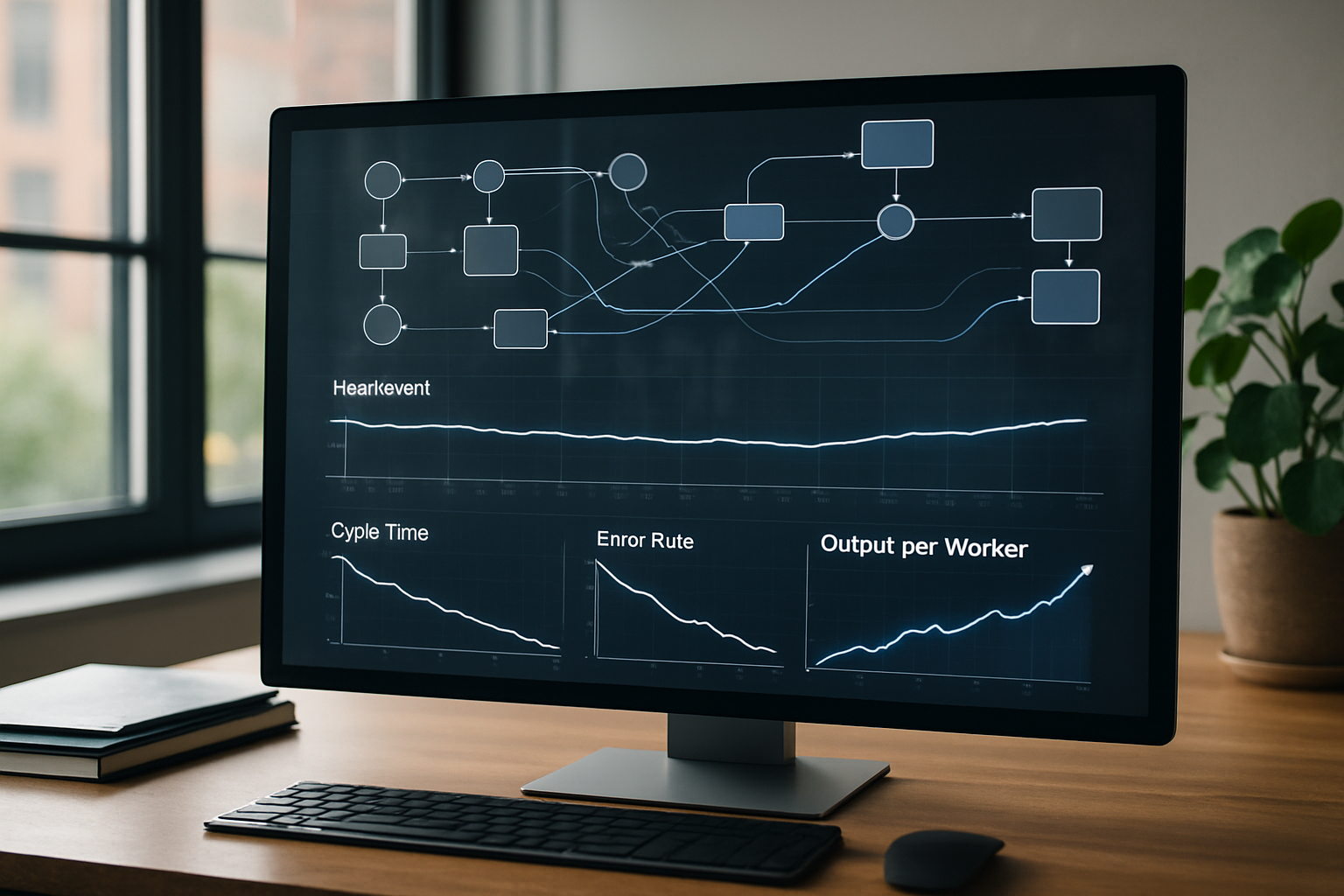
This is not fence‑sitting. It is an operating guide. If the center of gravity is task reallocation, then the crucial managerial acts are mapping, measuring, and redeploying. It means instrumenting work at the level where change actually occurs: cycle times inside teams, error rates after model integration, the proportion of a role’s hours that moved from synthesis to judgment. It means building internal mobility pathways before attrition turns them into exit routes. And it means realizing that a flat unemployment rate can coexist with a turbulent labor market under the surface, as people trade task bundles without changing job titles.
What investors and policymakers should actually watch
The headline labor numbers will lag the story. Look instead for the signatures of augmentation: rising output per worker in function‑specific data; job postings that splice old titles with new tool fluency; promotion criteria that elevate oversight, exception handling, and domain context; training line items treated as capital formation rather than discretionary spend. Call it the micro‑metrics of reconfiguration. They will move first. Hiring will respond later, if at all, and even then the shape may surprise—fewer roles erased outright, more roles reweighted around the edges where human judgment earns its premium.
There is also a policy implication hiding in plain sight. If what’s shifting is the composition of tasks within jobs, then a dashboard anchored to unemployment alone will misread the cycle. You will see stability where there is motion. Better to track redeployments, reskilling throughput, internal transfers, and the diffusion of AI‑mediated processes across sectors. In other words, measure the rewiring, not just the light that flickers when a switch is flipped.
The uncomfortable—but useful—conclusion
Morgan Stanley’s core message punctures both extremes. The apocalypse is not here; the status quo is not safe. Treat AI as a system that changes the locus of human value before it changes the count of humans needed. For the next couple of years, the most consequential decisions won’t be about how many people to cut, but about how to redraw the map of work so that people and models complement each other at speed. If history is a guide, that is how economies turn technical breakthroughs into broad gains—by letting productivity arrive first, then letting employment evolve to meet it, not the other way around.