The week the robots blinked
Every few days a headline insists the workforce has crossed a point of no return. Yet the data keeps breaking character. In a column that ricocheted across finance feeds this weekend, Conor Sen argued that the near‑term AI employment shock isn’t arriving on schedule. The numbers back him up: unemployment has eased since late 2025, new jobless claims remain subdued, and with a slowly growing labor force, the economy doesn’t need a hiring frenzy to stay in balance. If a tidal wave were already cresting, it would be splashing onto those metrics. It isn’t.
Sen’s point, republished by Advisor Perspectives, sounds almost subversive precisely because it is restrained. We have not outrun the long‑term logic of automation, he says; we’ve merely encountered the practical physics of 2026. The takeaway is not that jobs are safe. It’s that the timing mechanism is slower, messier, and more macro‑dependent than the daily discourse allows.
The brake pedal nobody tweets about
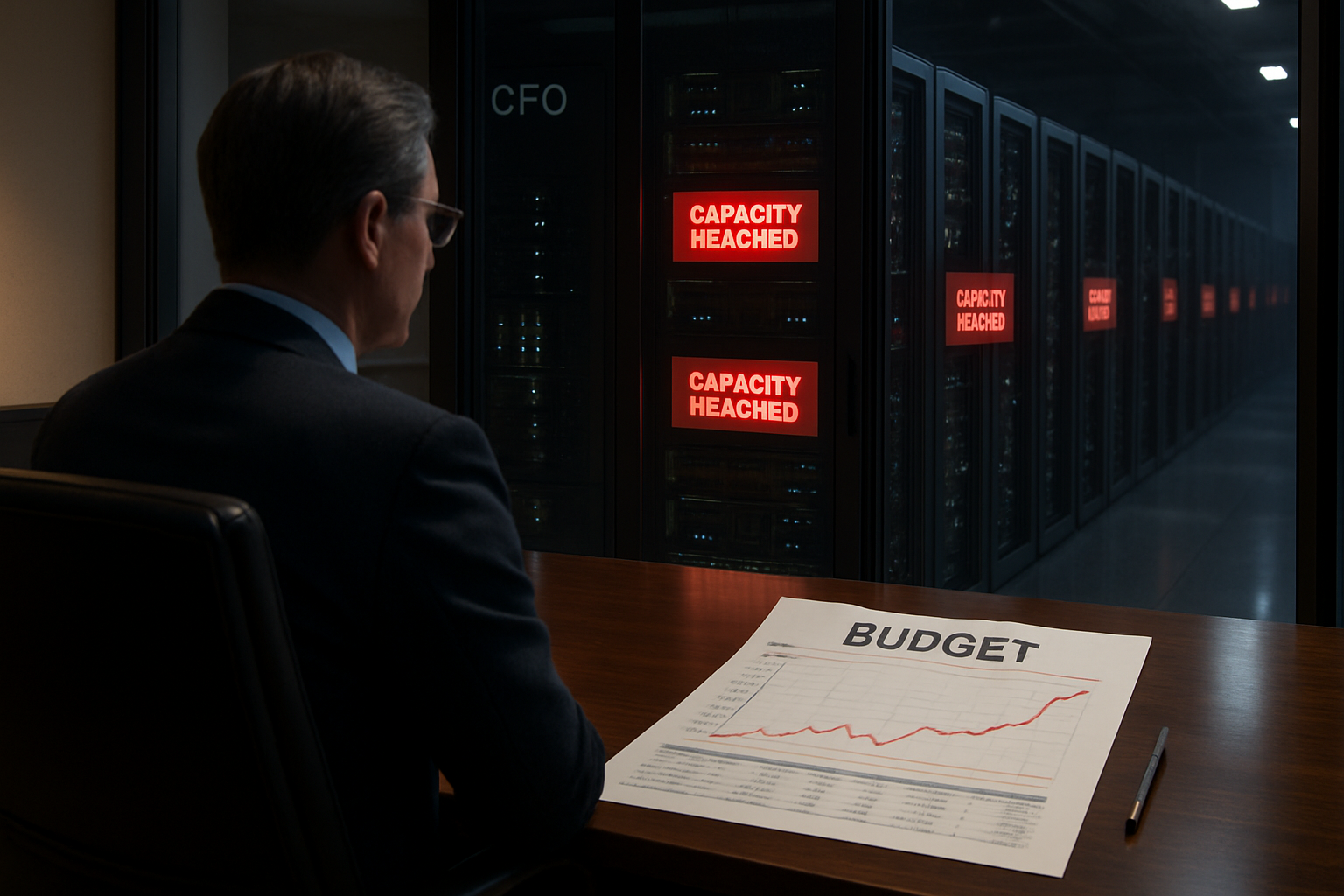
Start with the unglamorous bottlenecks. The most powerful models are supply‑constrained. GPUs, data centers, and power are on an investment clock that moves in quarters and years, not news cycles. Every constraint upstream forces rationing downstream. Enterprises experimenting with frontier models discover that their employees can now spend real money with a keystroke. “Tokenmaxxing” sounds like a meme; it looks like a budget line. When usage bills spike, enthusiasm turns into governance. Suddenly there are caps, cost centers, and review boards. Tools don’t get rolled out because they can; they get rolled out because a manager can show measurable gain per dollar of compute burned.
That gating matters for headcount. Layoffs based on a promised future efficiency are easy to announce and hard to harvest without proof. In 2026, proof is expensive. The compute crunch and usage costs act like a governor on an engine that would otherwise redline. They don’t stop progress. They meter it.
Inside the fog of “AI‑washing”
There’s another distortion field: attribution. Executives now have a universally understood label to attach to restructurings that were going to happen anyway. Call it “AI‑washing.” It muddies the empirical signal. If a company trims a sales team because demand softened, and the press release nods to automation, is that an AI layoff or a cyclical one wearing a modern costume? Policymakers and analysts trying to measure displacement must separate narrative from necessity. Without that separation, we risk building policy for a ghost problem while missing the contour of the real one.
Where the blade actually touches
Where AI is biting, it’s nibbling first at the on‑ramp. Entry‑level white‑collar roles are the easiest to decompose into well‑scoped tasks and the hardest to defend with experience. That creates a paradox: a firm can preserve senior roles by automating the junior work that trained those seniors, only to discover it has starved its own talent pipeline. The organization looks efficient today and hollow tomorrow. Meanwhile, across the majority of roles, AI is not a guillotine but a reshaper. Job descriptions are not vanishing; they’re getting rewritten from the inside out as tasks migrate to machines and the remaining human work demands judgment, context, and integration.
This task migration has political economy implications. Productivity gains that accrue to individuals who can orchestrate tools will look like personal brilliance, masking how much of the output is actually compute. Compensation systems and performance reviews will need to be recalibrated. Otherwise, we’ll confuse tool access with talent and build inequity into the next decade’s pay scales.
The calendar problem
Technological job losses don’t arrive on a clear sunny day. Historically, they bunch up when the economy stumbles, because constraints fall away at once: budgets tighten, risk tolerance drops, and a dozen tentative automation pilots suddenly become policy. If Sen is right, 2026 is less a conclusion than an intermission. The labor market’s current steadiness is a kind of insurance against rapid, broad displacement. But it also means that the restructuring pressure is building offstage, waiting for a macro cue.
That timing nuance matters for anyone trying to model the next few years. If layoffs linked to AI are likeliest to surge in a downturn, then the right early‑warning system isn’t a novelty demo; it’s the intersection of adoption readiness and macro stress. Watch not just for new model releases, but for when CFOs feel compelled to convert pilot savings into policy. That’s when the quiet spreadsheets become loud.
Signals to read while the room is quiet
In the meantime, the most revealing stories are happening inside firms, not press releases. Budget committees are writing the real history of adoption by deciding whether a thousand tokens are worth more than an extra analyst. Procurement is discovering that model choice is an energy decision as much as a software one. Managers are learning that automating 40 percent of a role doesn’t free 40 percent of a person; it changes what “busy” looks like. And recruiters are confronting the missing‑rung problem: if you replace the trainee with a model, who becomes the expert in five years?
None of this contradicts the endgame many expect. It says the score is being set by capacity, costs, governance, and the business cycle. That’s why the “apocalypse delayed” framing, while catchy, misses the more interesting truth in Sen’s piece: delay is not mercy; it’s structure. The adoption curve is being bent by physical infrastructure and balance sheets as much as by algorithms. When those constraints loosen—or when the macro environment compels firms to act—the labor story will change tempo.
Until then, the labor market is telling a simple story in a noisy room. Jobs aren’t vanishing en masse in 2026. The sharper question is who is quietly losing the first rung, how quickly compute economics can improve, and whether we’ll recognize the moment experiments turn into operating procedure. If you want to see the future of work, watch the token budget, the power bill, and the next recession. Everything else is stage lighting.
Source: Conor Sen, “The AI Job Apocalypse Is Being Delayed,” Bloomberg Opinion, republished by Advisor Perspectives. Read it here: advisorperspectives.com.