Huang’s Half‑Million and the Shape of the Next Factory Floor
The room was built for policy talk, not prophecy. In a conversation hosted by the Special Competitive Studies Project—a think tank that writes memos for presidents and measures power in supply chains and headcount—Nvidia’s Jensen Huang interrupted the mood of resignation that has settled over so many AI workforce conversations. He didn’t hedge. He didn’t preface with “if.” He said AI has already created more than half a million jobs, insisted the United States is reindustrializing because of it, and then turned his fire not on skeptics but on his own industry. The panic about job loss, he argued, comes from a “God complex” among tech leaders who speak with theater‑level certainty about worst‑case outcomes.
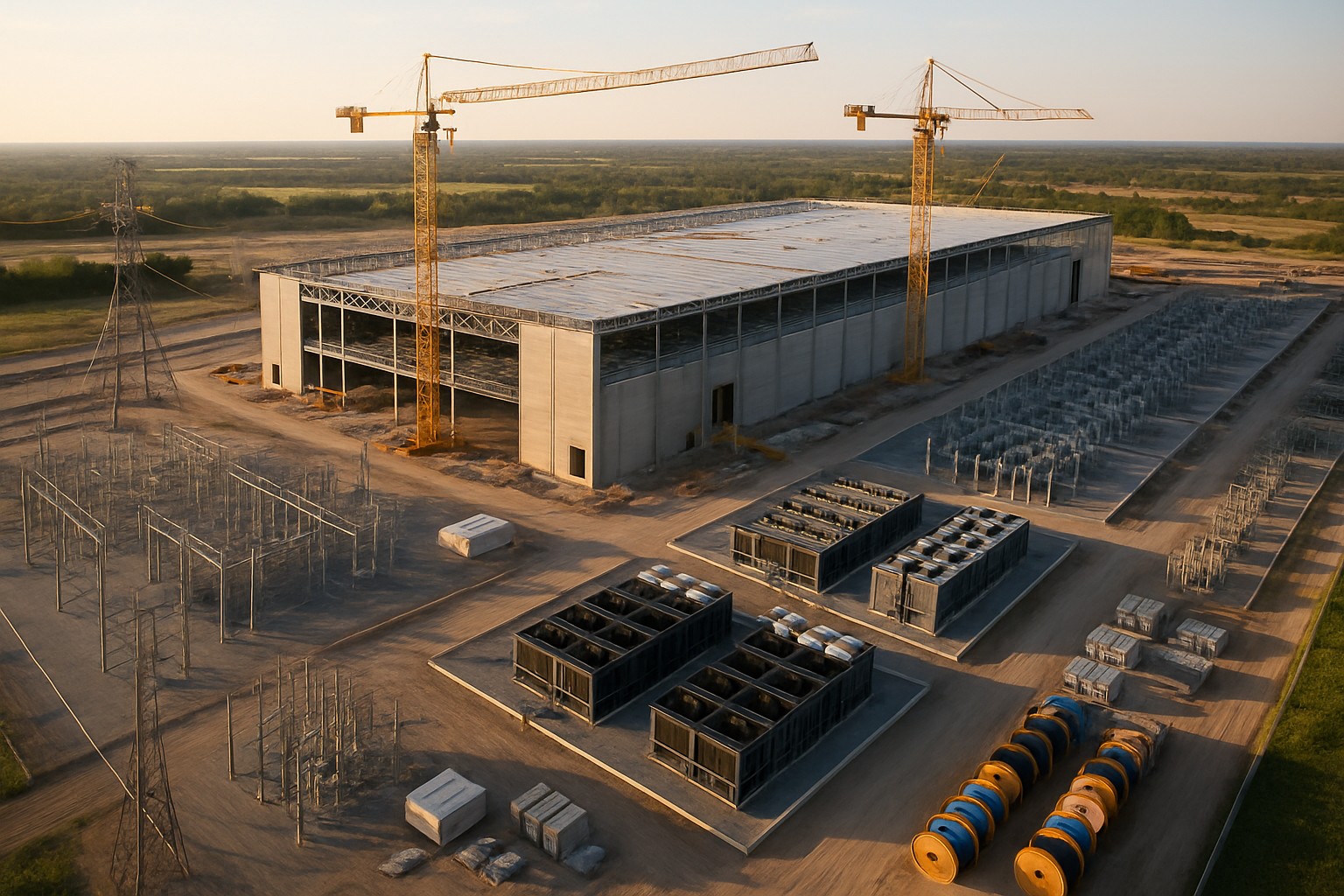
It was a striking inversion. Over the past year, doomer forecasts have felt like the baseline. Executives have made a ritual of saying half of entry‑level white‑collar roles are headed for a wood chipper. Huang didn’t just disagree; he reframed the question. If you zoom out from office cubicledom and watch the ground actually move—the acreage graded for hyperscale data centers, the transformers ordered, the fabs, the advanced packaging plants, the fiber, the liquid cooling vendors, the surge of roles in power engineering, optics, reliability testing, EDA, and everything that bolts metal to math—the picture looks less like subtraction and more like assembly.
What does “half a million” hide and reveal?
Any number that clean invites work. It is almost certainly a composite of direct hires in chip and server manufacturing, construction trades erecting and retrofitting data centers, grid upgrades, logistics, component suppliers, and the expanding software and services layer that keeps these facilities breathing: MLOps, firmware, systems integration, safety evaluation, model governance. Some of those roles are temporary, tied to concrete pours and commissioning windows. Others become the standing army that keeps this new infrastructure within spec for decades. Counting methods matter: do we net out the office assistant replaced by an agentic workflow or the analyst a company “didn’t need to hire” because automation bumped throughput? We don’t know Huang’s spreadsheet, but we can see where the bodies are: in states rewriting transmission maps and counties suddenly short on electricians.
Even if the count is off by a margin, the center of gravity is clear. This wave doesn’t live in slides; it is spilling into industrial parks and power corridors. The job mix is not Silicon Valley’s familiar pyramid. It leans into skilled trades, manufacturing technicians, process engineers, and vendor ecosystems that have been underfed for years. The salaries and bargaining dynamics are different. The training pipelines are different. Community colleges, apprenticeships, and immigration policy—not CS department enrollments—become the binding constraints.
Reindustrialization, but with inference traffic
Huang’s word—reindustrialization—deserves more than applause lines. In practice it means the United States is rebuilding the apparatus that turns materials, energy, and design into compute capacity at scale. That is not abstraction. It’s substations rated for the thermal realities of AI loads. It’s advanced packaging lines for memory bandwidth, not just wafer throughput. It’s domestic suppliers for high‑purity gases, heat exchangers, and photonics. It’s permitting reform for both lines: transmission and production. And it is a labor thesis: that this physical buildout is job‑creative enough to outweigh the office work AI will compress.
If that thesis holds, the map of opportunity shifts. Growth migrates to places with cheap land, permissive zoning, and ready megawatts. The long‑neglected nexus between energy policy and tech employment becomes explicit: every trained lineman and transformer factory pushes the curve in favor of more sites, more onshoring, more durable payrolls. If it stalls—because we cannot move electrons to where models live—then the half‑million becomes a high‑water mark instead of a base.
The white‑collar fault line
The pushback from doomers focused, sensibly, on the office: the entry‑level roles that exist to route information, draft routine text, reconcile, summarize, schedule, and format. These are the tasks models cannibalize with unnerving ease. Dario Amodei’s line about half of these jobs disappearing lands because it describes the daily reality of an automation frontier that is no longer “coming soon.” Companies don’t have to fire to shrink; they can simply stop opening reqs. Young workers feel the chill first.
Huang’s counter isn’t that those tasks are safe. It’s that task substitution inside firms coexists with market expansion outside them. When costs collapse, demand often expands far faster than heads shrink, and new categories of work appear around the widened frontier. A plant that used to integrate one robotics platform now stands up five. A hospital that trialed a single clinical scribe program last year deploys ten and needs support staff, evaluators, and integration teams to cleanly attach them to record systems and workflows. Elastic demand is the only thing that lets complements outrun substitutes.
But elasticity has a timeline. The freshly automated analyst might not teleport into a power‑systems apprenticeship. The system gains don’t automatically find the dislocated. This is where reindustrialization turns from speech to state capacity: training slots, wage subsidies tied to targeted skills, fast‑track licensure, and immigration pathways that backfill deficits in the short run while domestic pipelines ramp. Without that, “net positive” becomes a macro statistic that doesn’t pay next month’s rent.
The “God complex” and the economics of narrative
Huang’s critique of a “God complex” among tech leaders is not just a jab at ego. Narratives move capital and set HR policies. A CEO telling Wall Street that AI obliterates half of junior roles licenses hiring freezes, accelerates consolidations, and becomes a self‑fulfilling baseline. A different story from the firm selling the accelerators is also not neutral; Nvidia benefits if governments and companies believe the jobs multiplier justifies bigger orders and faster permits. But there’s a difference between unfalsifiable doom and a claim that meets the world where bulldozers and union reps can be counted. When leaders talk as if their forecasts are fate, they shortcut the very experimentation that lets a labor market adapt.
The sober stance is not optimism or pessimism; it is measurement with humility. How many of those counted jobs persist beyond the capex spike and roll into steady opex? How many are geographically concentrated enough to warp local housing and wages, and what does that do to participation? What happens if the HBM bottleneck resolves faster than the transformer bottleneck, leaving silicon idle for lack of electrons? None of these questions are rhetorical. They decide whether half a million is prologue or peak.
What to watch as the claim ripens
Three signals will tell us whether Huang’s framing becomes the default story of AI and work. First, energy throughput. If utilities and regulators clear enough capacity for the next wave of inference, we’re not just building server barns; we’re underwriting a decade of operating jobs and local ecosystems. Second, training conversion. The speed with which displaced office workers and new entrants can move into trades, operations, and AI‑adjacent technical roles will determine whether “net positive” translates to lived opportunity. Third, firm behavior. If enterprises use productivity gains to expand products and markets rather than to simply thin payroll, the complement story wins. If not, we get a barbell economy with bright islands of industrial employment and a long, anxious coastline of underutilized degrees.
Huang entered a policy forum and bet on the physical world. That is the novelty here. He did not argue over model architectures or alignment futures. He pointed to cranes and paychecks and said this is the jobs story. He might yet be wrong in scale or sequence. But he has forced the debate onto ground where it can be audited, not just imagined. For a discourse that’s been floating on worst‑case clouds, that alone is a service: a challenge to measure what’s being built, watch who’s getting hired to build it, and decide policy by what is happening rather than what sounds inevitable.
AI may be a language machine, but the labor market it is pulling into being speaks in steel, voltage, and shift schedules. If the United States can match that new grammar with the right training, permitting, and immigration clauses, Huang’s half‑million could mark the first chapter of a longer employment story. If not, it will read like a headline from a summer that never quite became a season.