Walmart’s Loud Promise: AI Will Make Your Job Better
The line landed with the practiced thump of a company motto, but the room heard it as more than applause bait. “Technology will power our future. But our associates will lead it,” Donna Morris told a roaring arena of Walmart employees in Arkansas last week. Fortune distilled the moment: the largest private employer in the United States is rolling AI across the enterprise and promises to use it to upgrade work, not erase it. In a year when “AI” has become a euphemism in too many layoff memos, Walmart walked onto its biggest stage and made a counter‑pledge.
What an Employer This Big Actually Signaled
If a startup says it will augment, not replace, it’s a branding exercise. When a company with 2.1 million workers says it, it becomes a labor market hypothesis. Walmart tethered its rollout to visible, operational terrain—product design pipelines, the constantly shifting chessboard of truck coordination, in‑store planning—and paired that with something rarer: a training guarantee in the form of an AI certification program for U.S. associates, built with OpenAI and tailored to roles on the floor and in the office. Managers hammered the phrase “people‑led, technology‑powered,” not as PR flourish but as operating doctrine: AI as assistive system, humans accountable for outcomes and for the customer moment.
That phrasing matters. Responsibility is not being outsourced to a model. The company is not suggesting that a shopping assistant named Sparky, or the internal builder tools associates are now experimenting with, will take the heat when something goes sideways. The human remains on point, even as more of the work happens through AI‑infused interfaces.
The Unusual Bet: Training at the Pace of Deployment
The certification program may be the most consequential piece. Not because badges are exciting, but because standardizing AI literacy across frontline roles resets what “qualified” means in retail. For decades, many retailers pushed complex processes into handhelds and dashboards and quietly relied on a subset of power users to carry the load. Walmart is saying the quiet part out loud: every associate will need to be functionally conversant with AI tools that generate plans, summarize inventory states, draft vendor communications, or predict backroom bottlenecks. That is a new baseline, and baselines eventually shape wages, promotion paths, and who gets scheduled where.
The upside is obvious. A formal, role‑aware curriculum makes the invisible, ad‑hoc upskilling that already happens on busy shifts more equitable and more efficient. It turns “learning a new tool” from a favor traded between colleagues into a recognized step on a ladder. The risk is subtler: credentials can become gates. If your store’s next wave of raises or leadership slots hinges on a certification that requires time you don’t control, the training promise becomes a constraint unless the company also protects time and provides on‑the‑clock access. Walmart previewed the program as tailored and accessible; the follow‑through on logistics—covered hours, devices that work, coaching that meets people where they are—will determine whether the signal converts into mobility rather than a new filter on opportunity.
Augmentation Changes the Texture of Work
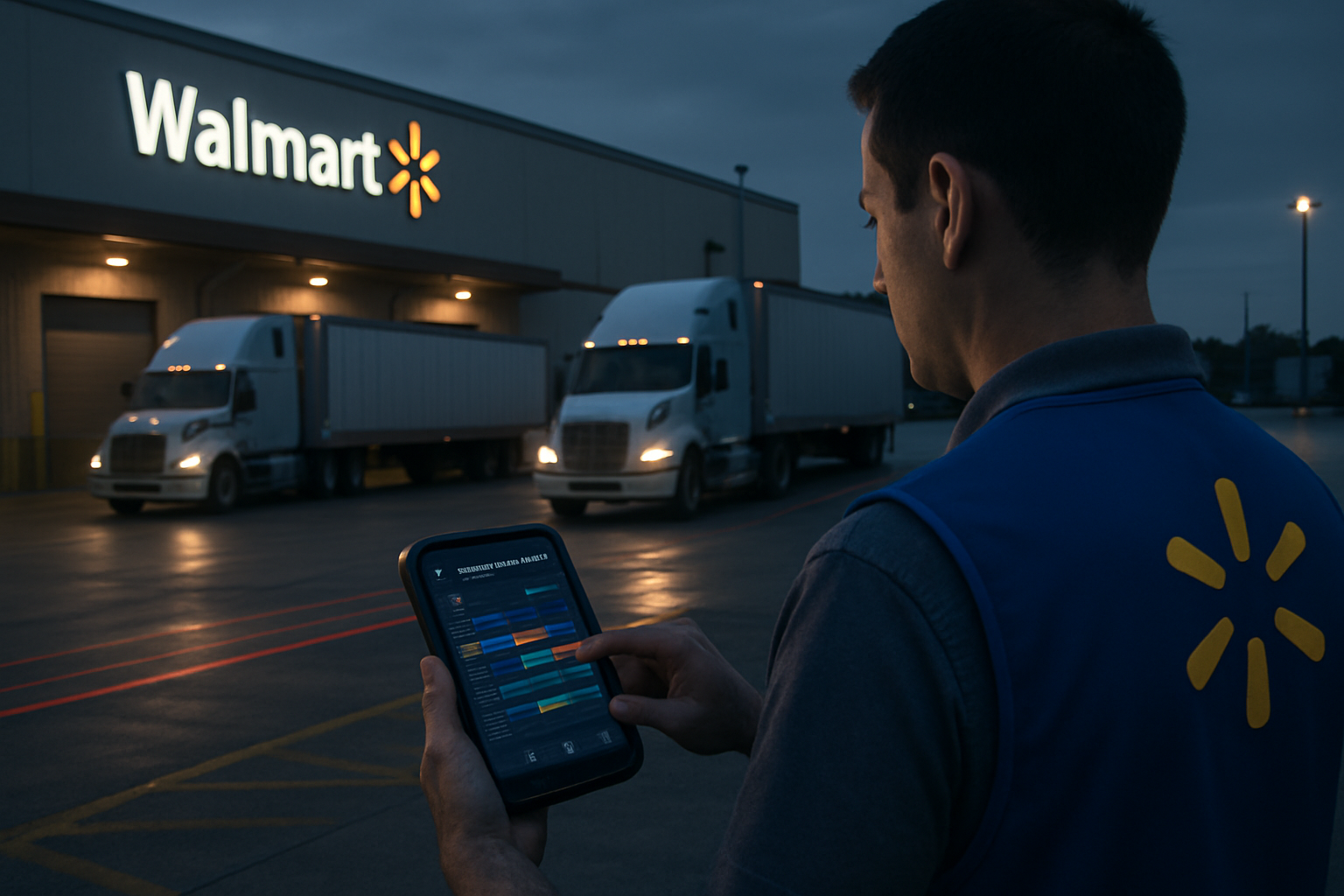
On the floor and in the yard, AI‑assisted planning and coordination can mean fewer frantic radio calls and more predictable rhythms, the difference between an overtime scramble and a clean handoff. In logistics, the model that aligns truck arrival windows with unload capacity is not just a nice optimization; it’s a safety feature when it cuts congestion and removes manual guesswork in bad weather. In product design, generative systems that synthesize demand signals and vendor data can surface ideas that a human team then shapes, accelerating cycles without pushing people to grind spreadsheets late into the night.
But “faster” ripples. When a tool can summarize, route, and recommend in seconds, the organization tends to raise the bar for “done.” That can improve service and reduce burnout if paired with staffing that matches the new cadence. It can also push decision responsibility down a level if everything now appears “easier.” Walmart’s insistence that associates lead—and are accountable—acknowledges that authority has to move with responsibility. Stores that treat AI outputs as suggestions rather than orders, and that protect the right to escalate or override, will get the most out of “assistive” without quietly slipping into algorithmic management by another name.
The Countercurrent to the Layoff Script
Fortune’s framing hit a nerve precisely because 2026 has been punctuated by companies citing AI in headcount cuts. Walmart’s posture is a study in scale‑specific pragmatism. This employer rarely has a shortage of work; it has a choreography problem—too many moving parts, too much local variance. Augmentation is strategically coherent in that world. If AI lifts productivity per associate, there are endless backlog items to refactor into higher‑value service: deeper localization of assortments, smarter loss prevention, faster backroom‑to‑shelf turns, more proactive customer support. The cost savings can land as redeployment rather than removal, especially in a network that constantly hires to fill normal churn.
There’s brand calculus here too. Retail is a public square. A pledge to invest in skills instead of pink slips creates social permission to automate more aggressively. It is both a hedge against political blowback and a bet that trained people are a durable moat as tools commoditize. If the largest employer proves that broad upskilling and job redesign can pay, imitators will copy the playbook; if it stumbles, the layoff narrative regains momentum.
Supply Chains Don’t Stand Still
What happens in Bentonville doesn’t stay in Bentonville. If Walmart’s internal agents and certifications reset the tempo of its operations, suppliers will feel the metronome. Vendors that can plug into AI‑paced replenishment or respond to generative design briefs will have an edge. Software providers will architect around Walmart’s interfaces. The OpenAI partnership isn’t only about classes; it’s about aligning tooling, security, and support to a workforce that numbers in the millions. That gravitational pull could tilt the retail tech ecosystem toward systems that assume a trained associate on the other end, not a bewildered one.
The Scorecard That Will Prove This Out
Pledges sound clean. Reality is a collage of metrics. If this strategy works, you’ll see shelf availability improve without chronic overtime, safety incidents fall as routing becomes less chaotic, shrink decline as pattern detection reaches associates earlier, turnover ease as promotions track with certifications that feel attainable, and customer satisfaction climb because humans have time to do human work. If it doesn’t, you’ll hear a different music: credentials that stall careers, quiet attrition instead of explicit cuts, and stores leaning on a handful of AI “whisperers” while everyone else shrugs at the tools.
Either way, the tactic is now public and measurable. Walmart didn’t just buy software; it put its reputation on the line with a sentence: technology will power, people will lead. That’s a compact. The company has offered its workforce training, agency, and the promise that when AI moves in, jobs move up. The industry will watch whether the promise holds through holidays, through inventory crunches, through everything that turns strategy into habit. For millions of workers, this isn’t a theoretical debate about automation. It’s a pledge on the loudspeaker, and the next truck is already backing into the bay.