The Weekend the Echo Became the Signal
On a Saturday that refused to break news, the loudest thing in the AI-and-work universe was an echo. One interview, recorded days earlier with Google DeepMind’s Alex Imas, rose back to the surface and refused to leave. It wasn’t a fresh scoop, but it became the weekend’s compass anyway, and the direction it pointed to was more unsettling than any headline about yet another round of tech layoffs: not that AI is already mowing down white-collar jobs, but that the story we tell about AI might soon nudge companies to do the mowing.
First, the calm: no data for a bloodbath
Imas is not a catastrophist. He leads AGI economics at DeepMind and, crucially, he says he hasn’t seen broad, AI-specific job carnage in the data. Even in highly exposed functions like software engineering, the large-scale displacement many expected still hasn’t materialized in the datasets he tracks. This largely matches what 2026 surveys keep finding across the US, Europe, the UK, and Australia: adoption is growing, pilots are common, productivity stories are pocketed, but the employment needle—so far—barely twitches.
In another time, that reassurance would have diffused the nervous energy. But it’s the second half of his message that keeps getting clipped, shared, and underlined—because it reframes who could actually pull the trigger on a labor shock.
Then, the hazard: a cascade with no productivity at its core
Imas warns of a behavioral chain reaction. Imagine a few visible companies announcing cuts “because AI,” positioning the move as evidence of discipline and modernity. If markets reward that posture, others quickly follow, not because their internal metrics demand it, but because being the only firm that didn’t “get efficient with AI” looks reckless to investors and boards. The layoffs start to rhyme across industries, and the rationale hardens into convention. At that point, the causal arrow flips: it’s not AI’s measured productivity gains driving employment reductions, but the narrative pressure generated by AI itself.
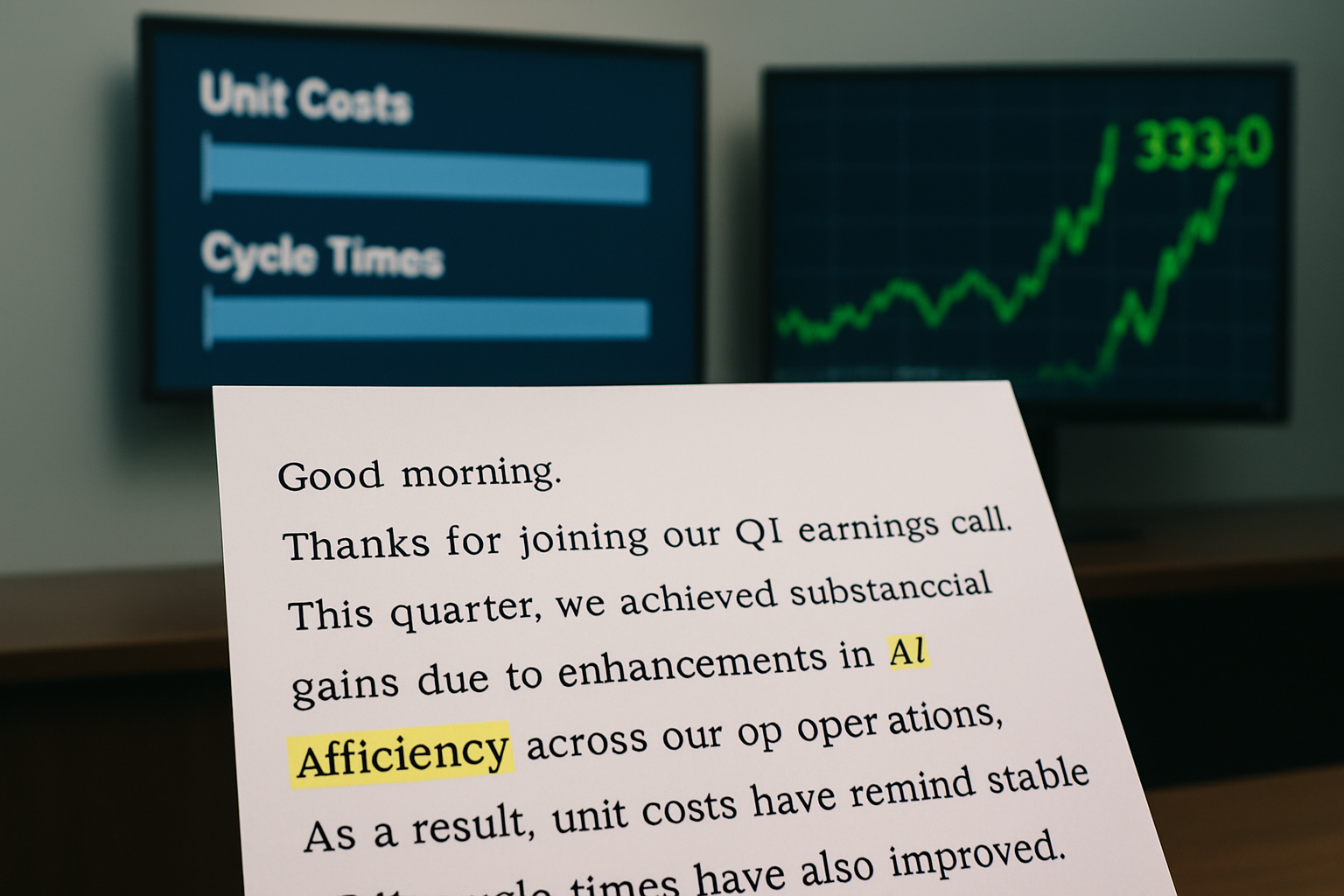
This is not science fiction. Corporate signaling is a contact sport, and executive decisions are made inside tight feedback loops of peers, analysts, and headlines. When a language model becomes a balance-sheet incantation—spoken on earnings calls to justify resizing—credibility and FOMO do the rest. Even if the underlying workflows haven’t yet delivered the promised unit-cost drop, the appearance of action buys air cover. And appearances scale fast.
Why an old interview mattered on June 20
The weekend’s “biggest” story was, in formal terms, a rerun. But the recirculation itself was revealing. It spiked precisely because it threaded a needle no one else has with much clarity: no macro shock yet, but a credible path to one that runs through the C-suite’s herd instincts. The juxtaposition is uncomfortable. It suggests the near-term risk to white-collar work is less about a breakthrough model demolishing tasks overnight and more about a copycat strategy becoming the default playbook, regardless of whether the spreadsheet gets healthier two quarters later.
What a cascade would feel like from the ground
If this takes hold, the early signals won’t look like a gentle reallocation. They will feel synchronized. Job postings in decision-support, customer operations, content and marketing ops, and junior software roles would retreat in unison even where productivity case studies are thin. Wages could soften together across markets that rarely move in lockstep. Earnings calls would shift tone: “AI efficiency” language would multiply precisely when margin and unit-cost lines stay stubborn. And inside the firms pulling the lever, internal dashboards would start showing a mismatch—headcount lower, rhetoric triumphant, throughput suspiciously flat.
The test that cuts through the fog
There’s a simple way to separate real transformation from narrative contagion: follow the after-effects. If a company says AI has made the team leaner, unit costs should fall, service levels should rise, and cycle times should compress—within a quarter or two, not in some hazy later. If those metrics don’t budge while the layoff memos keep citing automation, the story’s center of gravity isn’t efficiency; it’s optics. Replicate that pattern across earnings seasons and you don’t just have isolated bad calls—you have a cascade.
Why this matters for people who build and people who lead
For workers in AI-exposed roles, the obvious lesson is to master the tools. The less obvious one is to master measurement. Keep receipts on your own throughput gains, error-rate drops, and cycle-time improvements. In a narrative-driven environment, personal evidence is a shield. For managers, the warning cuts deeper: if you adopt AI because you must be seen adopting AI, and the follow-through doesn’t improve the work, you have created fragility. The cost will show up later in brittle processes, burned trust, and a culture that optimizes for messaging over mechanisms.
The paradox of 2026
We are living through a moment when the absence of dramatic macro data is itself actionable information. The models are real; their capabilities are compounding; yet the employment effects remain uneven and often ambiguous. That ambiguity creates a vacuum that a storyline can fill. On June 20, the echo didn’t just repeat a warning—it modeled, in miniature, the very dynamic it described. If enough boardrooms internalize the tale that everyone else is cutting “because AI,” the prophecy writes the pink slips.
The most useful posture right now is ruthless empiricism. Celebrate real, measured gains. Penalize AI theater. And whenever someone invokes automation to justify a headcount decision, ask the only question that can keep a cascade from turning into policy: what moved, exactly, besides the narrative?