When the Fed Meets the $0 Startup Advisor
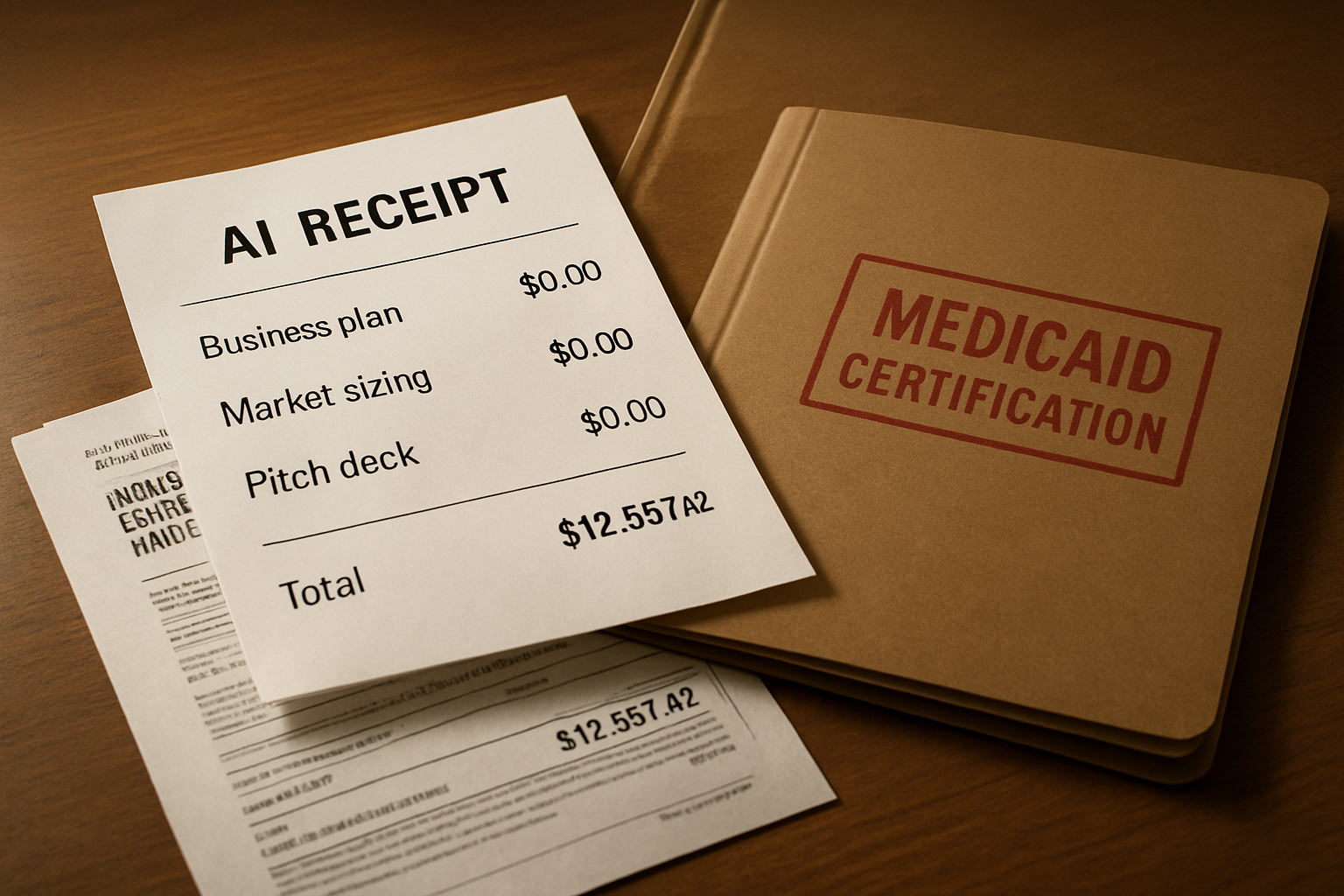
Michelle Turner didn’t hire a boutique consultancy to start her company. She opened a laptop in Virginia Beach, typed questions into off‑the‑shelf AI tools, and treated the answers like a provisional board of directors. Fundraising basics, a business plan that could clear skeptical eyes, investor pitches that didn’t meander—each step arrived at consumer prices. In January 2025 she launched Here Now Health, a mental‑health platform for foster children. By this summer it employs 16 people and is certified in three states to deliver Medicaid‑funded counseling. The twist isn’t the heart of the mission; it’s the cost structure of expertise. Turner bought, on demand, the playbook that used to require money, network, and a lot of time.
That little deflation in the price of “what to do next” is why her story reads less like a profile and more like a data point. The Federal Reserve, led by new chair Kevin Warsh, has placed AI on the table not as a curiosity but as the primary variable in a review of how much growth the economy can absorb without sparking inflation—and whether output can climb while payrolls thin. Warsh calls AI the most important economic change of his adult life: broadly beneficial, but likely to shift where pain lands. The institution tasked with steering demand is now running scenarios about what happens when the playbook Turner used is in everyone’s pocket.
The collapse of execution costs
Investors like John Bailey are starting to speak in blunt price language: the toll to access core business tasks—planning, market sizing, messaging—has drifted toward zero. That’s not the same as saying company building is free. It means the first dozen decisions no longer demand gatekeepers. AI turns generic knowledge work into a baseline utility; what’s scarce is judgment, domain access, compliance follow‑through, and the hours to do the unglamorous parts. Turner’s Medicaid certifications make this plain: AI didn’t deliver therapy or negotiate with state agencies, but it removed fog from the path, compressing months of wandering into weeks of directed motion. In aggregate, this is why business formation has been rising. As Apollo’s Torsten Slok argues, when startup complexity is slashed, more attempts get made—and attempts that reach viability hire.
Scarcity now, abundance later—maybe
Zoom out, and you can see two economies sharing a room. One is expensive and very physical: data centers, power hookups, cooling, land, fiber, tradespeople who can assemble and maintain it all. BlackRock’s Jean Boivin calls this the scarcity side of the ledger—an investment surge that lifts certain prices, including specialized labor. The other is a software economy that promises abundance if the productivity story shows up on time: more services per worker, more revenue per hour, and the diffusion of capabilities once confined to elite teams. The friction is temporal. The build costs and the wage heat arrive immediately. The productivity dividend, if it comes, shows up on a lag and does so unevenly across sectors.
Jobs created, ladders removed
This is where employment gets complicated. Richmond Fed President Thomas Barkin hears from firms that AI is finally easing chronic skilled‑labor shortages. That can coexist with the darker finding flagged by Reuters: about 23 million U.S. workers are on career paths where the next rung leads into roles unusually exposed to AI. If those rungs vanish, people don’t fall upward—they stall into lower‑wage work. The geography—Florida, the Northeast, Texas, California—mirrors regions dense with clerical and back‑office functions. Entrepreneurship and infrastructure buildouts add jobs, but they don’t automatically reconstitute the ladder that once lifted coordinators into managers. AI changes not only which jobs exist, but which promotions do.
The Fed’s new map of slack
For monetary policy, the question is less “Will AI kill jobs?” and more “What is slack in a reallocated economy?” If AI lets a firm produce the same output with fewer admin hours while raising demand for field technicians, the unemployment rate can look steady even as millions of tasks move. The Phillips curve doesn’t vanish; it gets redrawn around different constraints. Watch the translation of new business formation into payrolls, the wage premium in power‑hungry infrastructure versus clerical categories, and the duration of unemployment spells among mid‑skill workers whose ladders just ended. June’s softer jobs print may be less about cooling demand and more about a messy handoff—births of small firms that haven’t scaled headcount yet, alongside incumbents trimming roles AI now handles.
Turner’s company is proof that AI can be an accelerant for doing the hard, regulated thing—standing up a care provider for some of the most vulnerable children in the system. The macro debate isn’t whether that kind of outcome matters; it’s whether the economy can shorten the distance between the people AI displaces from their next promotion and the founders and sectors that are suddenly hiring. The $0 startup advisor is here. The policy test is whether mobility can be priced that low, too.