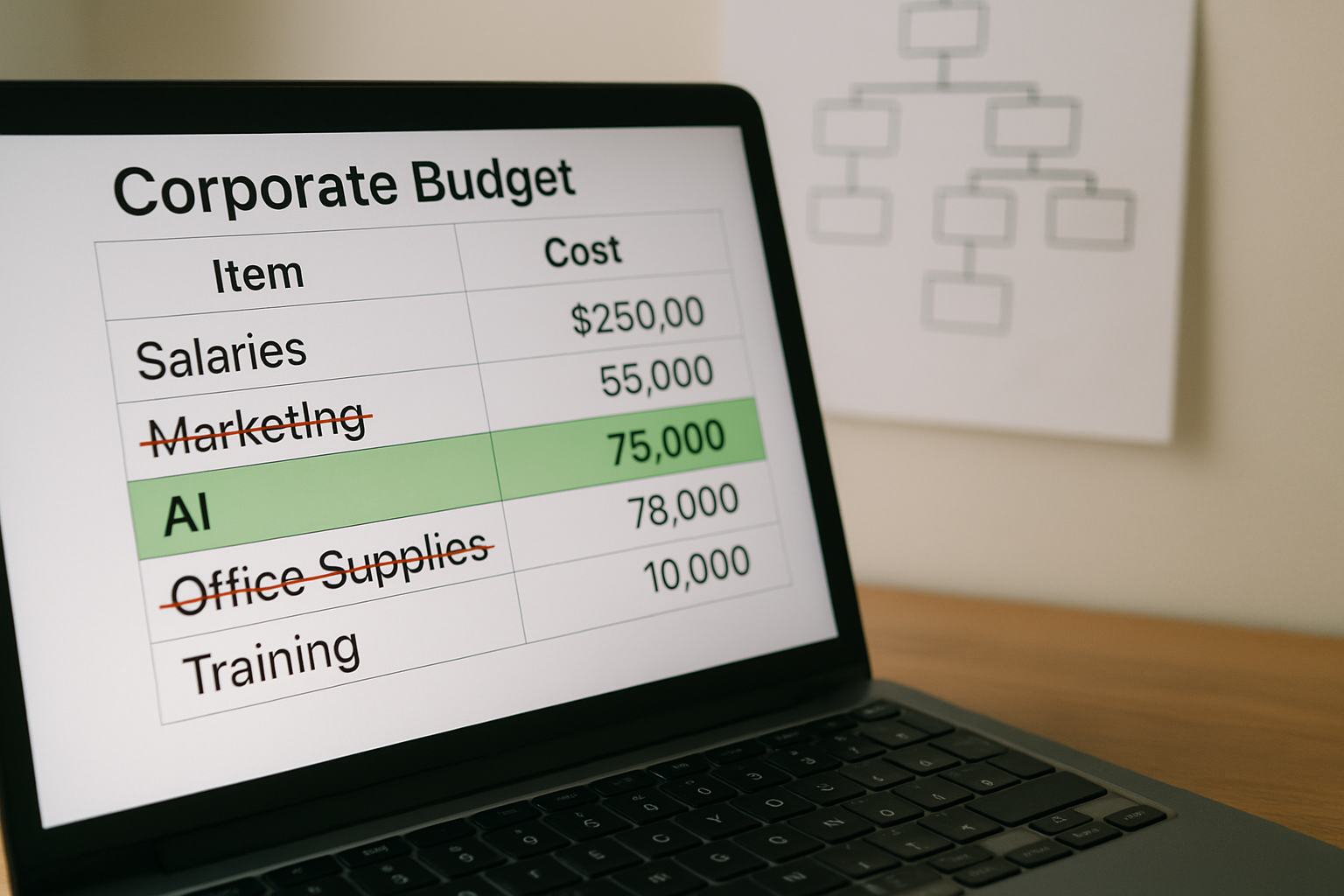
AI, the scapegoat with a budget line
Yesterday’s most important employment story didn’t come from a boardroom memo or a viral spreadsheet. It came from a quiet act of accounting. The Associated Press surveyed the recent wave of layoffs that arrived with “because of AI” stapled to the subject line and asked a basic question: did the software actually swing the axe? The answer, distilled from executives’ statements, economist interviews, and on-the-ground accounts, is far less cinematic than the press releases suggest. AI is everywhere in the narrative. In the numbers, its fingerprints are faint.
The poster child who still got cut
Consider Amazon. After another round of corporate reductions and separate trims tied to closing most Amazon Go and Fresh stores, the AP profiled N. Lee Plumb, an “AI enablement” lead and heavy user of the company’s internal coding tool. If augmentation were a shield, he should have been safe. He wasn’t. His read was unsentimental: invoking “AI” signals discipline to investors, even when the engine under the hood is old-fashioned cost pressure, post‑pandemic bloat, or a reshuffle of priorities. When one of the heaviest internal users of AI doesn’t survive an “AI-driven” culling, causality gets blurry.
What firms say when they say “because of AI”
Pinterest has framed restructuring as a budget reallocation toward AI‑proficient talent. Expedia’s Seattle cuts touched machine learning roles even as the company talks up automation. Dow packaged 4,500 layoffs into a plan that name-checks AI and automation. The language is crisp and modern; the attribution, as the AP notes, is slippery. Meanwhile, Home Depot and Peloton dispensed with the alchemy entirely and said their fresh cuts are about speed, agility, and cost—no automation fig leaf. In other words, the same labor outcome can arrive with or without the AI label; the label itself is revealing.
The organizational math doesn’t sum to mass layoffs—yet
Cornell’s Karan Girotra offers the most useful lens in the piece: current generative AI mostly boosts individual productivity. That’s valuable, but it does not mechanically reduce headcount. To actually shrink teams, companies must redesign workflows, spans of control, and interfaces between functions. In the absence of that redesign, you get faster people doing roughly the same jobs—not fewer people. That fits the data AP cites from Goldman Sachs’ January tracker: since December, very few layoffs have been explicitly attributed to AI, even as exposure remains highest in marketing, design, customer support, and tech. The tracker predates some announcements, but the signal stands—direct attribution is rare.
Alibi, allocation, automation
The cleanest way to parse the moment is to separate three forces that all wear the AI costume. First, AI as alibi: a rhetorical cover for cuts driven by macro anxiety, over‑hiring, or margin targets. Invoking AI converts retrenchment into “strategic modernization,” which plays better on earnings calls. Second, AI as allocation: budgets moving from legacy initiatives to AI‑adjacent bets, which can reduce headcount even as new AI roles open. The workforce shrinks and tilts at the same time, so the net effect depends on how aggressive the tilting is. Third, AI as automation: actual displacement because workflows have been re‑architected so thoroughly that the work no longer needs doing the old way. This is slower, messier, and requires managerial courage; it’s also where durable labor effects will eventually come from.
What real AI-driven layoffs would look like
When automation, not alibi, is the motive force, the evidence shows up beyond the press release. You’d see redesigned processes with fewer handoffs, flatter teams with wider spans of control, and measurable cycle-time improvements that persist after the dust settles. Hiring pipelines would narrow in absolute terms even as job descriptions harden around AI fluency. Budget lines would shift from contractors and manual ops toward orchestration, data plumbing, and compute. The productivity delta would be legible in output per head, not just in the rhetoric per slide.
Why this mattered yesterday
The AP piece earned its syndication because it stitched together the marquee layoffs, put executive claims next to lived experience, and injected economic reasoning where a slogan might have sufficed. It doesn’t deny that AI is reshaping work; it rejects the lazy default that “AI did it” explains 2026’s job cuts. The story sets a higher bar for attribution: don’t confuse the narrative premium AI commands on Wall Street with the operational changes required to make it a true headcount reducer.
The market will eventually reward the companies that turn individual AI speed-ups into organizational redesign. Until then, treat “because of AI” as a hypothesis, not a verdict. The truth won’t be in the tagline; it will be in how the work is rewired.