America thinks AI will cut jobs—just not theirs
The most revealing data point of the day didn’t come from a lab demo or a corporate memo; it arrived as a temperature check of the country. On April 1, a national Fox News poll offered a clear, present snapshot of how U.S. voters see AI and work. The headline wasn’t the rising concern about AI in society—that’s now a steady drumbeat—but a subtler, more consequential pattern: most people expect AI to shrink the labor market, and yet most don’t see the axe hovering over their own desk.
The split-screen mindset
Zoom in on the five-year horizon and the divide comes into focus. A solid majority of employed voters say they’re not worried about losing their job to AI. Step back to the macro view and that confidence evaporates: far more expect AI to cut positions overall than to create them. It’s the classic third-person effect applied to the office—risk is real in the aggregate, manageable in the mirror. This isn’t bravado so much as a rationalization that we’ve all rehearsed: my tasks are too context-heavy, my customers too dependent on me, my domain too nuanced to automate. Maybe. Or maybe we’re just bad at mapping system-level shifts onto our own calendars.
Comfort without commitment
The poll surfaces an even stranger pairing. Many voters say they’re comfortable with new technology, yet most don’t consider learning AI important to their career right now. That tells us comfort is not the same as capability, and optimism about one’s job security often substitutes for action. The readiness gap opens exactly here: enthusiasm for gadgets, indifference to tooling up. The exceptions are revealing—higher earners, people with grad degrees, and men under 45 register more urgency. Translation: those with optionality sense the arbitrage and are already reaching for it.
Why this matters more than another survey headline
Because incentives follow perception. If workers don’t feel personally at risk, voluntary upskilling will lag no matter how loud the societal anxiety gets. Employers planning AI rollouts shouldn’t mistake the absence of panic for the presence of preparation. Left alone, organizations will ship the models before they ship the training, and the people who could benefit most will be the last to adopt. That doesn’t mean catastrophe; it means avoidable productivity left on the table and a widening skills delta inside teams that used to be peers.
For policymakers, the voter lens is the point. This isn’t a poll of tech workers, it’s a poll of registered voters—a preview of how workforce dollars and guardrail debates will be received. Rising general concern combined with low perceived personal threat is the perfect recipe for “do something” politics that funds glossy programs people won’t use. The fix isn’t bigger megaphones; it’s making AI fluency the default path. Think employer-matched learning stipends that automatically enroll new hires, credentialing that shows up in pay bands, and procurement rules that require human-in-the-loop training alongside any AI deployment.
The timeline trap
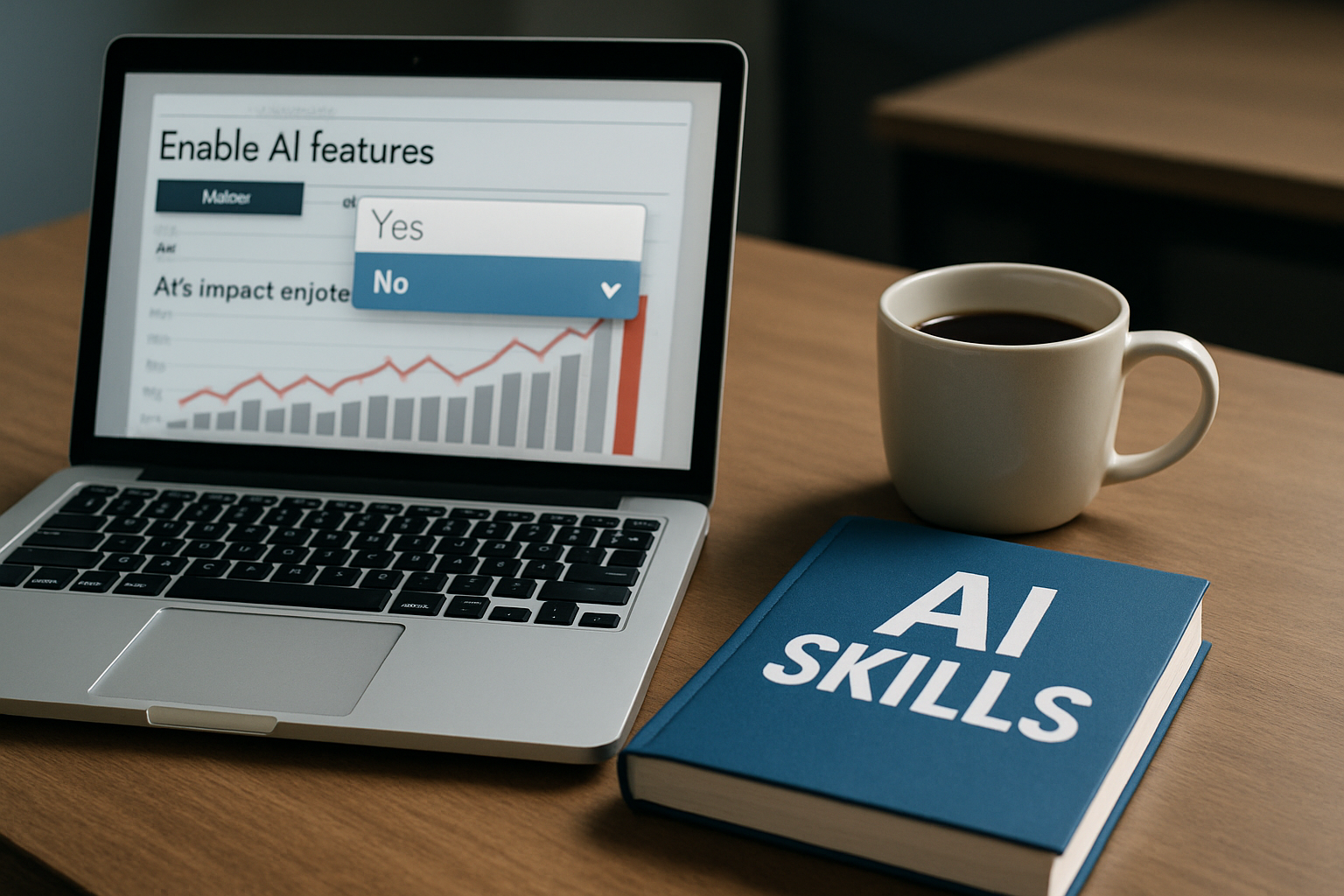
Five years sounds distant enough to defer action and close enough to worry others will act first. The poll’s trendline—concern climbing from the mid‑50s to the mid‑60s over the last few cycles—suggests people are recalibrating, just slowly. That pace mismatches how software adoption actually works: once AI is threaded into the tools people already touch, the user interface to change becomes a drop-down, not a degree. Those who waited for a crisis signal won’t get one; they’ll get a feature update.
How to read the fine print
Yes, the methodology matters: a bipartisan field team, about a thousand registered voters, margin of error in the low single digits, mixed phone and online modes. The exact percentages will wobble. The shape of the story won’t. Concern about AI as a societal force is climbing, confidence in personal job security is steady, and self-driven AI learning is not yet a mainstream priority.
What this means inside the building
If you run a team, plan for the human gradient, not the average. Pair model deployment with mandatory, low-friction training that uses people’s own workflows as the curriculum. Measure time saved and reward skill acquisition the way you reward hitting quota. Assume your most confident users are not your most capable, and assume your quiet skeptics can become power users once the benefits show up in their actual tasks.
If you’re an individual worker, don’t wait for your risk perception to change; it’s a lagging indicator. The market will not pay a premium for people who are merely unafraid of AI. It will pay for people who turn it into throughput, precision, and new revenue. The poll tells us most of your peers aren’t moving yet. That’s not reassurance. It’s an opening.