The month the layoff memo learned a new word
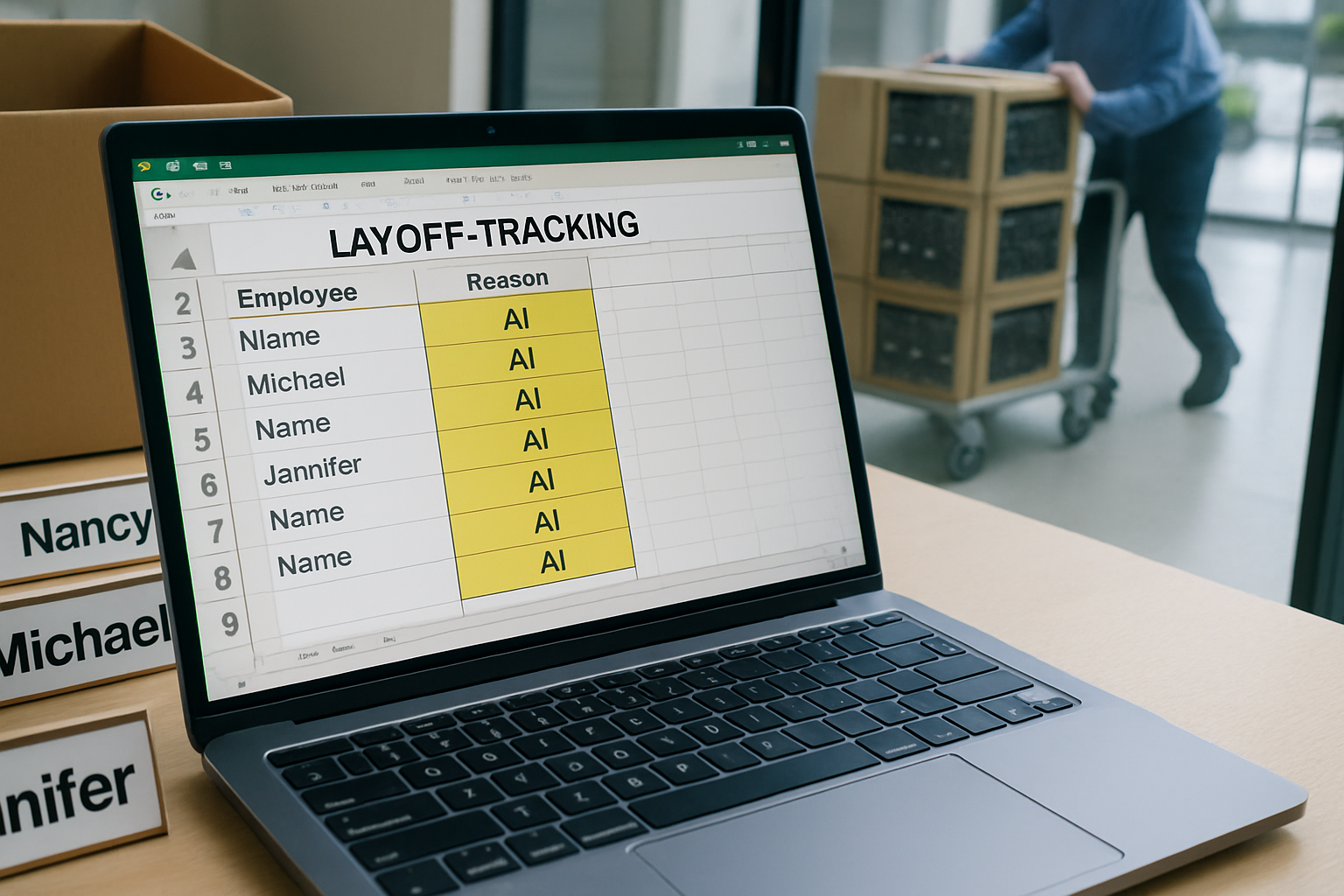
For years, executives hid workforce reductions behind familiar labels—restructuring, market conditions, a reorg that arrived right on schedule. In March, the cover story changed. On the Challenger, Gray & Christmas spreadsheets that track employer-announced cuts, one column surged past the rest. The most common reason U.S. companies gave for layoffs last month wasn’t a bad quarter or a factory closing. It was artificial intelligence.
eWeek stitched the narrative together on April 3: 60,620 job cuts were announced across the U.S. in March, and 15,341 of them—one in four—were explicitly attributed to AI. Tech bore a disproportionate share. Within that single month, 18,720 tech jobs were cut; across the quarter, 52,050, the roughest Q1 start since 2023. The historical context makes the pivot starker. March cuts were down 78% from last year’s anomaly of federal reductions, but up 25% from February. In other words, this isn’t an economy-wide collapse; it’s a change in what employers say is driving the downsizing.
From adoption to attribution
AI has been threading through workflows for half a decade, but until now the human consequences were described obliquely. March looks like a crossing: a move from quiet adoption to pointed attribution. Challenger has tracked “AI” as a stated reason since 2023; cumulatively, it has been cited in 99,470 cuts since then—about 3.5% of all layoff plans over that span. In March alone, it led every other rationale. Year to date, AI explains 27,645 announced cuts, roughly 13% of 2026 plans so far. Something changed in the language, and language in corporate disclosures is rarely accidental. It evolves when boards, investors, and communications teams agree that a new line is safe to say out loud.
That shift matters beyond semantics. When executives name AI as the cause, they are telling their capital providers that labor productivity is no longer a vague aspiration; it’s an operating thesis now attached to the headcount plan. The budget footnotes back it up. Many of the same companies trimming teams are increasing AI investment, converting recurring people costs into compute, tooling, and vendor credits. The spreadsheet cells are realigning: fewer salaries in SG&A, more depreciation and cloud line items in COGS.
Signal or alibi?
This is where the debate gets interesting. eWeek surfaced the counterpoint articulated by Sam Altman and Marc Andreessen: some firms, they argue, are “AI-washing” broader cost cuts, wrapping old-fashioned belt-tightening in the gloss of inevitability. There’s truth on both sides. Employer-cited reasons are self-reported; they reflect messaging as much as mechanics. But if AI were merely a fig leaf, you’d expect it to trail behind generic explanations like restructuring. In March, it didn’t. The simplest reading is that a meaningful slice of work—especially repeatable, text- and process-heavy tasks—is already being absorbed by systems that are good enough, cheap enough, and integrated enough to justify permanent changes to staffing plans.
The more sobering interpretation is that cause no longer matters to the outcome. Once “AI” becomes an accepted justification to markets, it creates a permission structure. Leaders can point to a benchmark outside the company—everyone is doing this—and then prove they are keeping pace. Whether a particular bot replaced a particular job is secondary to the story that the replacement is underway and measurable in margins.
The quiet budget revolution
Look closely at who is cutting and where the money is going. Tech accounted for 18,720 of March’s cuts and 52,050 in Q1. Simultaneously, these firms are announcing new model training initiatives, inference rollouts, and automation toolchains. The line from pink slips to purchase orders is short. Tasks that once required mid-level coordinators, QA passes, or routine support are being handed to orchestrated systems: LLMs bound to checklists, retrieval layers wired to internal wikis, and agents that click what used to be someone’s screen. These systems are not free, but they scale with workload, not weekends. Finance notices that shape of expense and prefers it. That preference, once revealed, tends to persist.
None of this implies a net employment doomsday in a single quarter. It does suggest that the job mix is shifting in a way you can now read straight from the reasons column. The backfills that quietly defined continuity are being paused. The frontier hires—machine learning platform engineers, data product owners, prompt and evaluation specialists—are greenlit even as adjacent teams contract. The organization doesn’t necessarily get smaller; it gets narrower and more unevenly skilled, with more of its operating capacity trapped in opaque systems and vendor APIs.
What to watch after March’s break in the pattern
March’s 25% month-over-month rise in total cuts coincides with AI taking the top rationale for the first time. Treat that as a structural test rather than a spike. If the attribution holds through Q2 earnings, you’ll see it echoed in guidance: SG&A stepping down faster than revenue growth, headcount commitments hedged with “automation efficiencies,” and capital plans that tilt toward compute capacity. If the share of AI-cited cuts retreats, it will tell a different story—that March was a messaging experiment, not an operational pivot.
Either way, April 3 offered the cleanest signal yet for anyone tracking the labor side of the AI transition. Not a case study, not a survey of intentions, but a national statistic with a new leader in its reasons column. The contested causality is part of the point. Measurement in labor markets often starts as narrative. In March, the narrative changed, and the numbers followed it onto the page.