The Fed Quietly Redefined Job Security: It’s Spelled A‑I
Some warnings arrive with blaring headlines. Others are delivered in the calm voice of a central bank blog, and those are the ones you should probably read twice. Yesterday’s coverage of new research from the New York Fed did exactly that: it translated a technical note into a career verdict. The message isn’t theatrical; it’s transactional. If you can operate AI, your role is more likely to evolve with the technology. If you can’t, you’re negotiating with the future from a weaker seat.
What the Fed Actually Measured
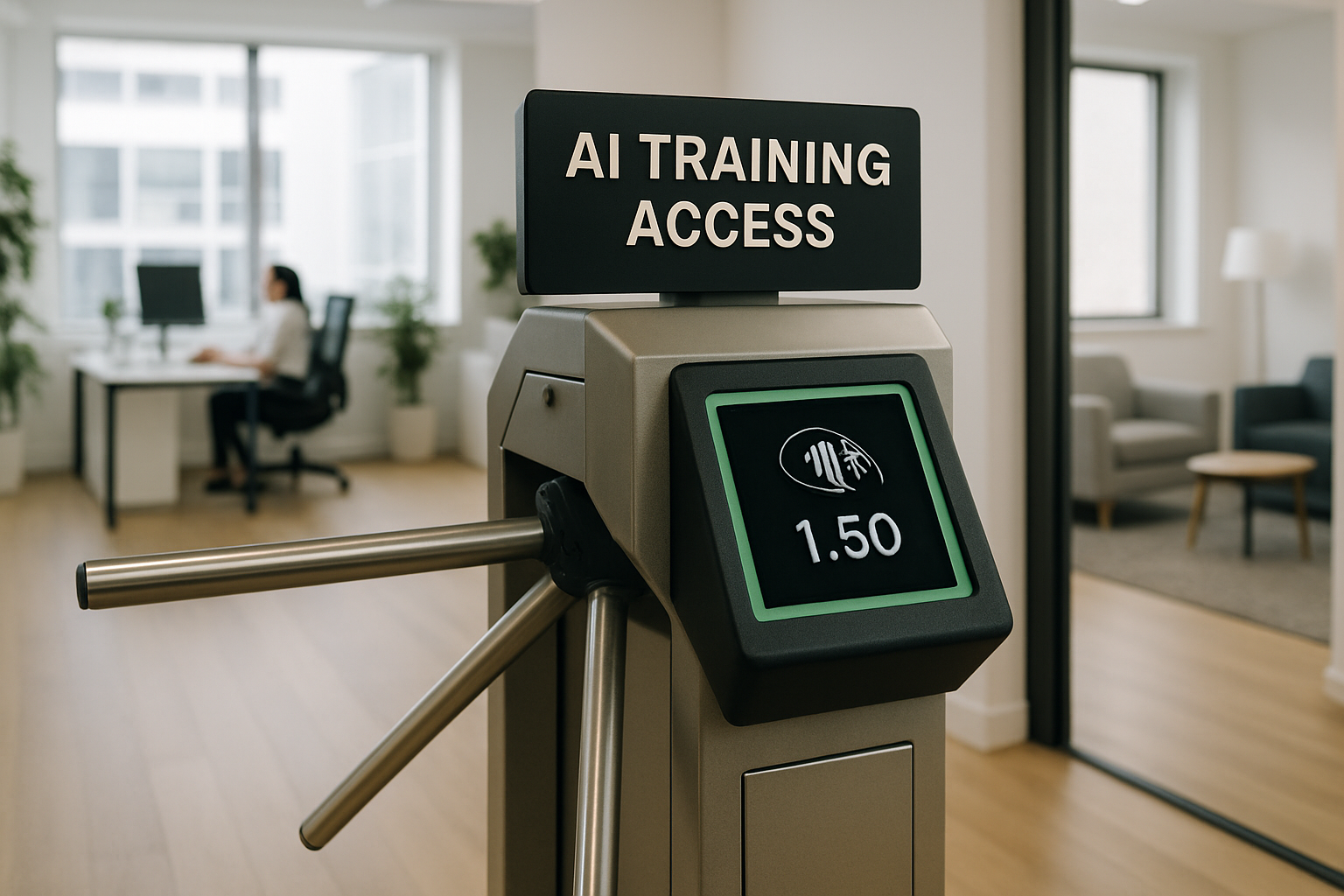
This wasn’t a think piece built on vibes. In November 2025, the New York Fed tucked targeted questions into its Survey of Consumer Expectations, then published the analysis this month on its Liberty Street Economics blog under a telling title: use of generative AI at work and the value of access to training. The novelty is in the pairing. It didn’t just ask who is using AI; it asked what workers would pay to learn it—or what they’d have to be compensated to go without. That willingness-to-pay/accept lens converts training from an HR perk into an asset with a price tag, and it exposes where the market for that asset is failing.
The readout is uncomfortably coherent with what many of you are seeing on the ground. Workplace AI use is no longer niche, but it’s distributed unevenly. Full-time, higher-income, college-educated workers are out in front; many others aren’t in the race yet. And here’s the inversion that matters: the groups that value AI training the most—especially those without a college degree—are among the least likely to have employer-provided access to tools or instruction. The people who know they need the ladder can see it; they just can’t reach it.
The Twist in the Jobs Debate
The study also dials down a different kind of anxiety. In the short run, it finds more evidence of role redesign and retraining than outright job loss among those currently employed. That doesn’t mean displacement risk vanishes; it changes its shape. The near-term hazard isn’t an abrupt pink slip. It’s being cycled out of the most productive tasks because you can’t co-drive with the software your colleagues have already learned to steer. The difference is crucial: the locus of control shifts. When adoption is fast but separations are slower, the bottleneck becomes skills acquisition, not macro layoffs.
The Access Gap Is the Story
Labor economists will see the outlines of a classic problem. General skills—ones you can take to another firm—tend to be underfunded by employers who worry competitors will free-ride. Workers with fewer buffers, meanwhile, can’t front the time or tuition. The Fed’s willingness-to-pay data makes that abstract friction concrete. There is measurable demand for AI fluency among those least likely to receive it at work. Left alone, that gap widens into a wage and opportunity gradient. In practical terms, the model operators capture productivity gains and advancement; the rest do the tasks that remain.
By quantifying both adoption and the price workers assign to training access, the Fed gives policymakers and workforce programs a focal point more precise than generic reskilling slogans. Close the access gap and you moderate the bifurcation. Ignore it and you entrench it. That framing lands at a moment when the broader Fed system is also documenting a different but related shift: as firms integrate AI, some are rethinking job postings and hiring cadence. When roles morph faster than requisitions, internal mobility and training become the labor market’s shock absorbers.
Employers: The ROI Is No Longer Theoretical
For companies, the study reads like a balance-sheet item disguised as a social science survey. If employees are assigning real monetary value to AI training and you’re not providing it, you’re quietly taxing their future wages while starving your own process improvements. The premiums will accrue somewhere: to competitors who build internal academies, to teams that standardize AI-augmented workflows, to frontline managers who can reassign tasks because everyone shares a common toolset. Training isn’t charity; it’s a throughput upgrade with retention attached.
Workers: A Practical Hedge, Not Hype
“Learn AI now” can sound like marketing. Yesterday it became risk management. The Fed’s data suggests that in the near term, the dividing line isn’t between humans and machines, it’s between people who can direct a model toward business value and people who can’t. Treat that capability like a license: it expands your surface area for opportunities inside your current role even before it opens doors elsewhere. Crucially, the people who stand to gain the most are the ones least likely to be offered it. That’s the uncomfortable arithmetic—and the case for being proactive about finding credible training, documenting AI-augmented wins in your current workflows, and asking your employer to put real budget behind it.
Policy: Aim for the Bottleneck You Can Measure
The strongest policy lever here isn’t a promise that “new jobs will appear.” It’s underwriting access to the skills that let workers follow the work as tasks change. Because the Fed quantified workers’ own valuation of training, programs can be designed with clearer price signals: portable training credits, outcomes-based subsidies for providers that move non-users into on-the-job adoption, or procurement preferences that reward employers who publish and deliver AI upskilling plans for non-degree talent. The point isn’t to pick tools; it’s to fund the ability to use whichever tool wins.
Strip away the punditry and the study leaves a stark, usable map. Adoption is accelerating. Displacement, for now, is arriving as redesign. The scarcest resource is not models or data; it’s access to the competence to wield them. If your organization treats AI training as optional, it is choosing a smaller future. If you, personally, treat it as optional, you are negotiating against yourself. The Fed didn’t predict a flood. It priced the value of a bridge—and showed who’s being kept from crossing it.