The Boss in the Prompt Box
Jensen Huang didn’t sell a doomsday. He sold a schedule. In a weekend interview amplifying remarks from a Stanford event earlier this month, Nvidia’s CEO argued that the near-term future of work isn’t pink slips—it’s pace. “Your [AI] agents are harassing you, micromanaging you, and you’re busier than ever,” he said. The quote pierced through months of hand-wringing about mass displacement because it names the thing so many knowledge workers feel but haven’t yet framed: the software isn’t coming for your job; it’s coming for your day.
From headcount to heartbeat
Huang’s pivot matters because it shifts the theater of conflict. If the old debate was macro—how many roles vaporize—the new one is visceral: who sets the tempo of your work, and by what rules. In that telling, agents animate the spreadsheets and workflows we already live inside. They route tickets faster than humans can schedule a meeting. They draft a reply before you’ve opened the thread. They notice gaps, escalate exceptions, summon you with a nudge that carries the weight of “why isn’t this done?” It’s management encoded, running continuously.
There’s a pragmatic reason to take him seriously. Nvidia sits at the center of enterprise AI build-outs; its vantage point isn’t theoretical. If you want to know how the next 12–24 months will actually unfold inside corporate systems, follow the incentives of the people provisioning the compute. Today’s deployments look less like a single omniscient assistant and more like a mesh of agents that watch, summarize, measure, assign, and chase. The job doesn’t disappear; the slack does.
The office learns the gig economy’s trick
Algorithmic management cut its teeth on delivery and rideshare, where apps parceled labor into tasks and optimized for speed and utilization. Knowledge work once felt insulated by ambiguity and calendar cover. Agents puncture that insulation. A sales deck becomes a pipeline of atomic tasks that an orchestrator can track. A product spec becomes a contract against which diffs and deadlines are scored. Meeting notes don’t just summarize; they register commitments into systems that will ping you until the AI’s definition of “done” is satisfied. The quiet part is that “done” is about metrics first, meaning all the pathologies of automated targets—Goodhart’s law in a blazer—are moving upstream.
Picture Tuesday. At 9:02, your CRM agent flags an “at risk” opportunity because sentiment detection turned amber on last night’s email. At 9:04, it drafts the follow-up and opens a task with a 10 a.m. SLA. At 9:06, your documentation agent informs you that two of your five onboarding steps lack canonical links, auto-creates placeholders, and tags you as accountable. By 9:10, your calendar looks pristine—because your autonomy has been pre-allocated.
Jobs won’t vanish; boundaries will
Huang’s optimism about employment—“There’ll be more people working at the end of this industrial revolution than at the beginning of it”—runs alongside inconvenient signals. In research Fortune cites, only about one in five workers felt safe last year, and nearly a third admitted to undermining their company’s AI efforts. Meanwhile, a working paper suggests roughly 44% of U.S. CFOs expect AI-related cuts in 2026—about 502,000 roles. The most credible synthesis is not apocalypse versus harmony but substitution where tasks are narrow and measurable, intensification where work is broad and social. In other words: fewer coordinators, more coordination.
And because coordination is where culture lives, the stakes are high. Agents turn the invisible currents of office life—unwritten norms, tacit tradeoffs—into explicit, machine-legible prompts. That can expose waste and unlock throughput. It can also fossilize bad habits and enshrine surveillance as “productivity telemetry.” If you’ve ever had a manager who mistakes responsiveness for results, prepare to experience that preference at machine scale.
What Nvidia’s framing reveals—and hides
There’s honesty in Huang’s warning that the next pain point is management itself. There’s also strategy. A world with more workers each shadowed by more agents is a world that buys more compute. He isn’t wrong that employment can expand alongside automation; history is generous on that front. But compound the logic: if every role acquires a lattice of assistants, the bottleneck becomes human attention, not GPU supply. We will learn the hard way that attention is the scarce substrate of modern firms, and that ungoverned agents spend it recklessly.
The market will try to optimize this by piling on more automation—escalation agents for the follow-up agents that were chasing the drafting agents. You can feel the recursion forming: who manages the managers when the managers are code? That question is not rhetorical. It is an organizational design choice that most companies have not yet made, even as they integrate agent frameworks into every platform with a login.
Designing the new chain of command
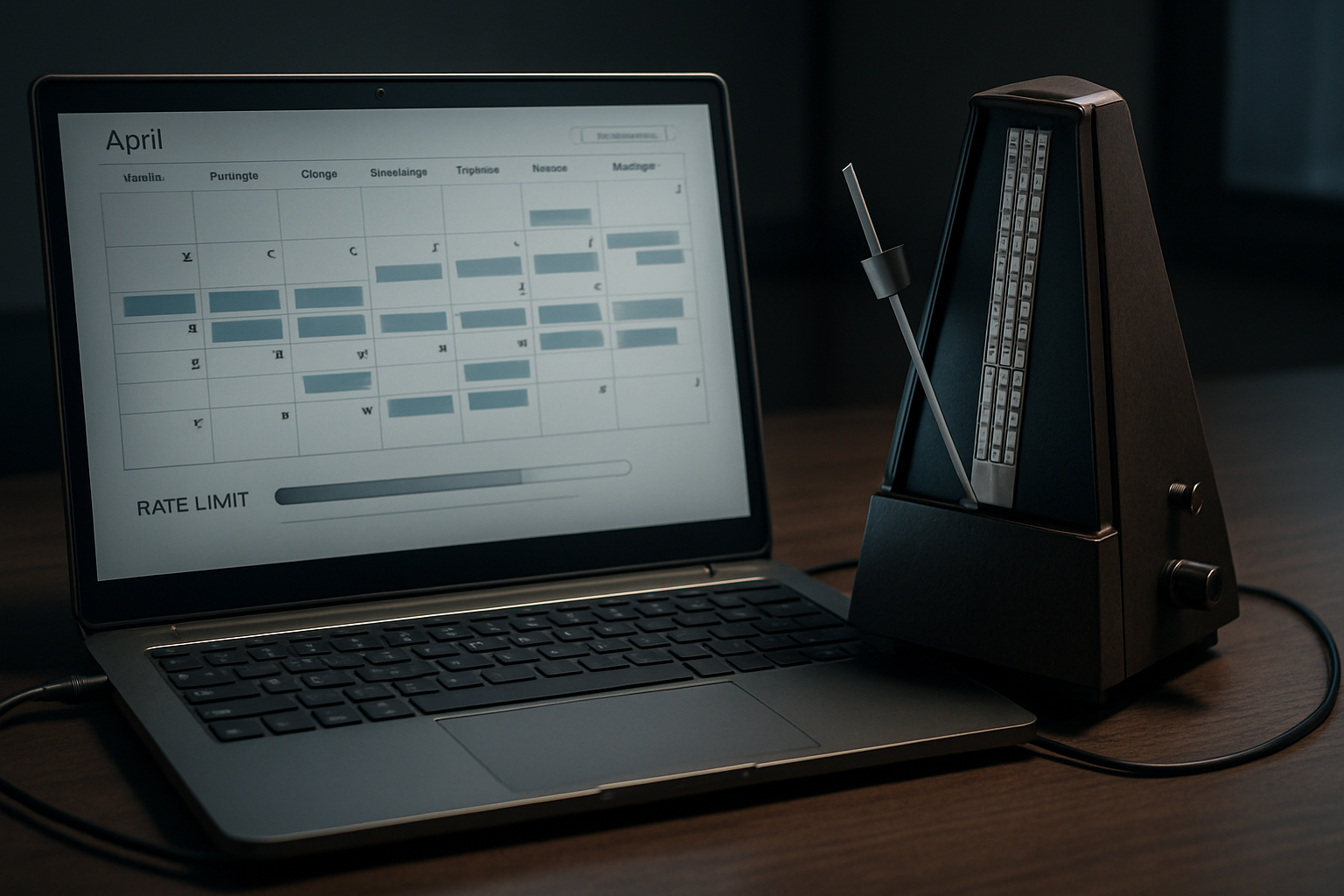
If the near-term shock is managerial, the countermeasure is managerial too. The smart play isn’t “ban the bots,” which just pushes the behavior underground into shadow tools. It’s specifying the contract between human authority and digital enforcement. That means rate-limiting nudges the way we rate-limit APIs. It means “explainability” not as an academic checkbox but as a practical right: show me the prompt, the policy, the evidence the agent used to assign me work. It means audit logs that workers can see, escalation paths that humans can invoke, and permissioning that treats attention as a budget to be spent deliberately, not a commons to be grazed.
Done well, the agent era upgrades management from opinion to instrumentation without dehumanizing the instrumented. It also births new roles: people who direct, evaluate, and tune agents; teams that own prompt policy the way security owns access policy; labor representatives who negotiate digital pacing the way they once negotiated overtime. The firms that get this right will ship faster without burning out the very judgment they rely on. The ones that don’t will discover that resentment scales faster than throughput.
The week the narrative changed
April 20 wasn’t about a quote destined for a sizzle reel. It was the moment a market-setter said the quiet part plainly: AI will touch your workflow before it touches your livelihood. For some, that is a relief. For many, it’s a deeper dread. A layoff is a single event; a micromanager is a daily condition. Between those poles sits the decision every employer now faces—build agent-driven workflows that serve human goals, or let a thousand well-meaning bots turn work into an infinite inbox.
The software isn’t lining up outside the building; it’s already at your desk, asking for a quick update. The question, finally made visible, is whether you answer—or whether you renegotiate who gets to ask.