AI’s New Coalition: Hard Hats, Megawatts, and the Quiet Rewriting of Work
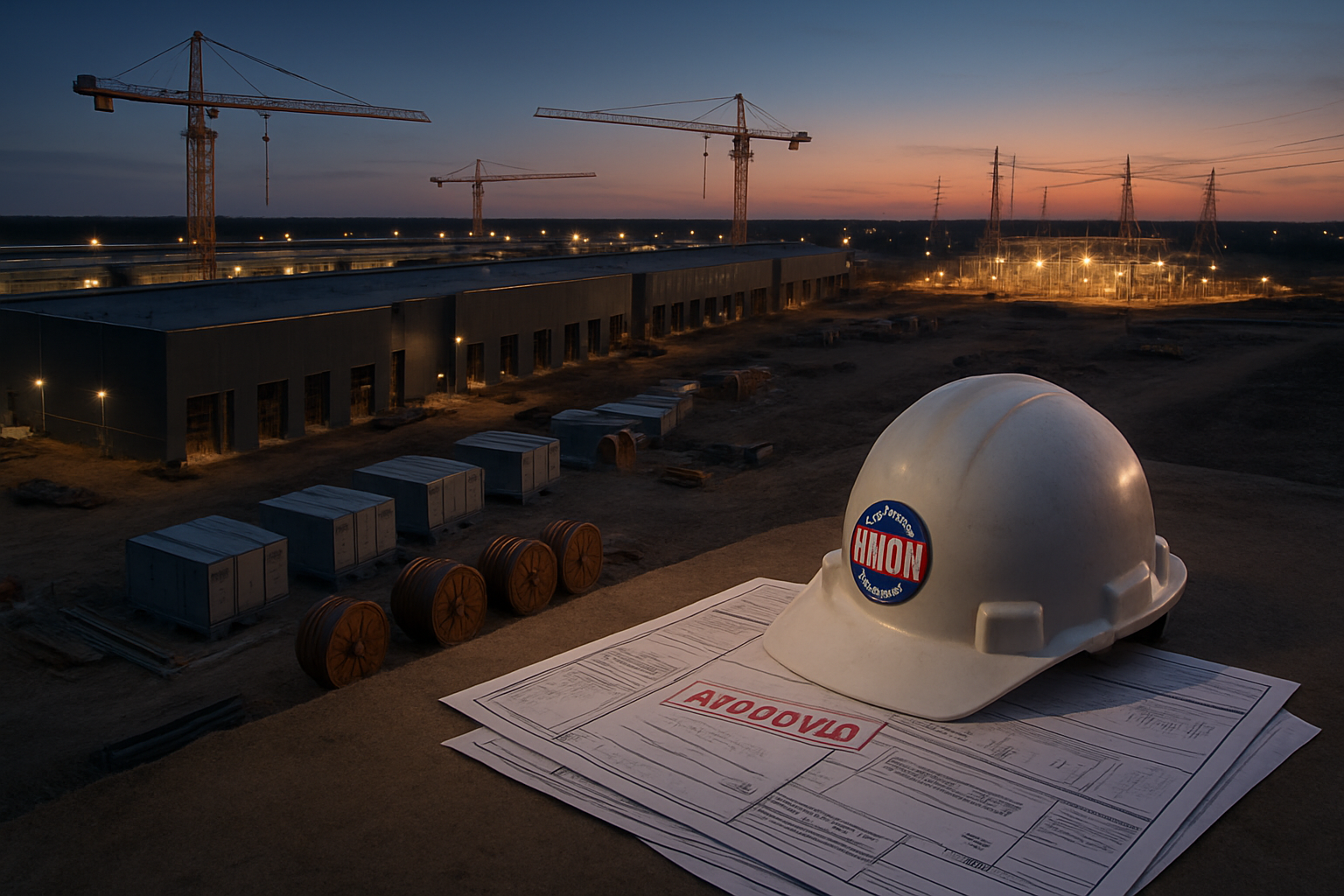
Walk into a union training center this spring and the future of artificial intelligence doesn’t look like a demo or a deck. It looks like classrooms replumbed for capacity, welding bays booked round-the-clock, and dispatch lines jammed with calls to staff jobs that didn’t exist five years ago. The Associated Press mapped it yesterday: the immediate labor footprint of AI isn’t a wave of software hires or pink slips for office workers—it’s a nationwide surge of union construction, power, and electrical work, with man-hours “skyrocketing” as data centers multiply.
The numbers have a way of silencing abstractions. In central Ohio, at least two out of every five hours for the Building & Construction Trades Council now tie back to data center projects. In the Washington, D.C. region, roughly half of IBEW Local 26’s workload is the same story. Boilermakers Local 154, which went four years without a single apprentice, suddenly has a class topping two hundred. These aren’t forecasts or pilots; they’re paychecks and pension credits landing today, union cards in pockets, and a pipeline of apprentices pushed to its limits.
The physical economy of an algorithm
AI can feel spectral—models streaming from clouds, abstractions stacked on abstractions. But behind the quiet immediacy of a chatbot sits a bristling physical economy: concrete pads, switchgear the size of buses, water lines, substations, and the fiber that stitches it all together. Tech companies have drawn a clear conclusion about how to make that physical stack real and fast. They are partnering with the trades that can build reliably at scale, and they’re putting money into the pipeline. Google pointed to a $10 million grant for a union-backed electricians program it says will expand the workforce by 70%. OpenAI’s Sam Altman didn’t bother with euphemism, crediting union trades with “laying the foundation for the AI economy.”
Foundation isn’t just metaphor. The AP’s reporting traces project labor agreements from household-name cloud sites to code-named mega-campuses—Oracle/OpenAI’s “Stargate” project in Michigan and “Project Blue” in Arizona among them—alongside contracts to construct the power plants and infrastructure needed to feed the compute appetite. Rob Bair of the Pennsylvania Building & Construction Trades Council was blunt about the leverage this confers to communities: data centers “do create a hell of a lot of construction jobs,” he said, urging towns to negotiate hard for improvements and benefits rather than reflexively saying no.
A new political map, drawn in copper and concrete
This is where the story widens. Unions are not merely labor on these jobs; they’re becoming advocates for them. The AP describes building-trades locals turning out at hearings and pushing back on moratoriums and restrictive bills from Maine to Illinois to Virginia. It’s a coalition that would have been hard to predict a decade ago: unions aligned with tech firms and pro-business officials, occasionally standing opposite environmental groups and neighborhood organizations worried about land use, power draw, and water. That tension is a feature, not a bug, of AI’s new industrial phase—progress now runs through land rights, transmission lines, and permitting clocks.
Mark McManus of the United Association framed labor’s calculus with disarming pragmatism: even if unions stood aside, “the data centers would still be getting built.” The choice, then, is whether members do the work and capture the wages, training, and bargaining power that follow. By his accounting, union members are on more than 90% of U.S. data center projects. That statistic hints at a deeper shift: in a capital-intensive buildout where delay is ruinous, the certainty delivered by union shops—the apprenticeships, safety records, the ability to surge crews—becomes a strategic asset. In return, tech’s money and political muscle help expand classrooms, modernize training centers, and normalize multi-year project pipelines that keep locals busy.
What this reframe means for “AI took my job”
For years, the AI/jobs debate has been staged on whiteboards: tasks automated, salaries compressed, teams reorged. Those dynamics are real. But the AP’s reporting forces a second frame into view: AI as a blue-collar employment engine that is unionized by default, apprenticeship-based, and geographically distributed. It’s measurable in overtime sheets and journeyman rates, not just HR memos. It is also compounding. Every data hall anchors years of follow-on electrical and mechanical upgrades, plus the grid and power projects required to keep the racks alive.
The implications run past labor statistics. If the limiting reagent for AI’s next chapter is megawatts, land, and people who can pull the wire and set the chillers, then political power flows toward whoever can deliver those inputs. That rebalances who sits at the negotiating table when a tech company scouts a site: the county board, the utility, and the trades council are suddenly co-authors of the AI roadmap. Communities that bargain well will translate one-time construction booms into enduring benefits—training seats, local hiring provisions, and infrastructure upgrades that outlast any single campus.
None of this guarantees harmony. Expect more showdowns where unions back projects and environmental or neighborhood groups seek limits. Expect more hearings where the promise of apprenticeships is weighed against strain on grids and water systems. But the old binaries—tech versus labor, automation versus employment—are giving way to something messier and more accurate. As of May 2, the most honest picture of AI’s job impact in America might be a welder’s mask aglow beside a humming substation. The code will keep evolving. So will the contracts that make it physical.