Colorado Just Drew a Bright Line Through the Heart of Algorithmic Management
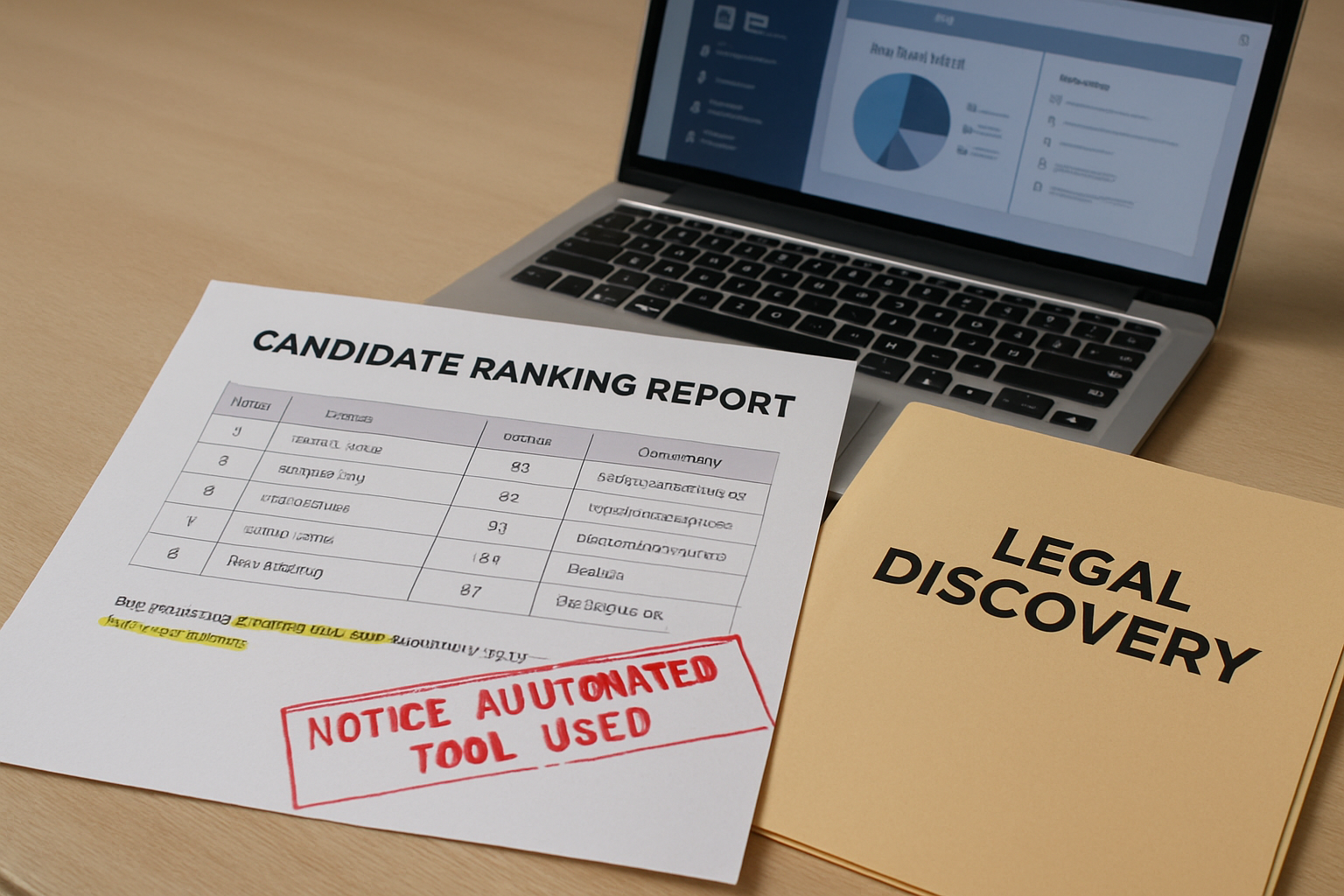
The email lands in a recruiter’s inbox with a subject line that once felt optional: “Notice: Automated tools may inform our hiring decision.” It reads like paperwork until you realize it marks a turning point. Colorado has redrafted its AI playbook not around abstract models or sweeping governance rituals, but around the precise moment an automated system nudges a human resource decision—who gets an offer, who gets a raise, who gets managed out. The state didn’t ban the machinery. It labeled the fulcrum where the machinery meets a person’s livelihood and said: tell them, and you’re on the hook if the outcome breaks the law.
From grand designs to the decision point
On May 14, Governor Jared Polis signed SB 26‑189, replacing Colorado’s 2024 experiment with something sharper. The new statute abandons the anxiety-inducing category of “high‑risk AI systems” and adopts a broader, more pragmatic lens: automated decision‑making technology, or ADMT. It doesn’t care if a tool is deep learning, gradient boosting, or a deterministic score sheet living in a vendor’s dashboard. If it processes personal data to generate a prediction, ranking, score, or recommendation that is used to make, guide, or assist a decision about an individual, it’s in scope. And if that tool materially influences a consequential decision, the law activates.
The key novelty is that phrase—materially influences a consequential decision. Employment sits squarely in the list of such domains. This is where the definitional wars end and the practical era begins. For years, employers split hairs over whether a system was “AI.” Colorado’s rewrite dissolves that argument. If your comp banding tool sorts people using performance scores, if your résumé screener pre‑ranks applicants, if your promotion panel sees a machine‑generated readiness score, you’ve crossed into regulated territory.
The new contract between employers, vendors, and workers
Colorado traded heavy preemptive governance for a tight coupling of notice and liability. Employers must inform applicants and employees when ADMT helps steer a consequential HR decision. Gone are the broad, one‑size impact assessments and sprawling internal controls of the 2024 law. In their place is a cleaner accountability chain: when an automated tool materially shapes an outcome, developers and deployers live under the same anti‑discrimination rules that have regulated employment for decades. If the tool contributes to an unlawful result, the existing statutes bite.
This looks lighter on paper, but the practical burden shifts, not vanishes. Notice will force a paper trail. Plaintiffs’ attorneys will use that trail to ask exactly how the tool influenced the decision and which features did the influencing. Vendors, suddenly more exposed, will compete on clarity: model cards that mean something, feature documentation that survives discovery, and audit artifacts that don’t read like marketing. The “not AI, just analytics” dodge will no longer shield procurement choices.
The 18‑month runway that won’t feel long
The law takes effect January 1, 2027. That sounds generous until you map the work. HR leaders need a real inventory, not the slide deck they’ve been reusing since 2022. What tools process personal data to generate scores or recommendations? Where do those outputs touch pay, performance, hiring, termination, or promotions? Which vendors can provide substantive transparency, and which can’t? Notices have to appear in the right places—application portals, offer letters, performance systems—without turning into wallpaper no one reads. Contract templates will need fresh clauses on explainability artifacts, bias testing cadence, and litigation support. Even without mandated impact assessments, any serious employer will simulate them, because “we chose the vendor carefully” is not a defense when a pay equity chart goes sideways.
Material influence will be the new battleground
Expect a cottage industry to spring up around what counts as “material.” Employers will be tempted to route decisions through a human layer and argue the machine’s role was minor. But thin human oversight won’t rescue an outcome if the person relied on a ranked shortlist, a risk score, or a model‑generated performance signal. The question becomes empirical: if you remove the automated output, does the decision change? That is a testable proposition. It rewards employers who can trace decision pathways and penalizes those who can’t reconstruct how the sausage was made.
Legal chess, but on a familiar board
Colorado didn’t invent a new civil rights regime; it plugged automation into the one that already governs employment. That’s design, not retreat. It aligns with the federal posture—Title VII, EEOC guidance, and disparate impact doctrines that care about results more than labels. Plaintiffs won’t need a fresh cause of action to probe an algorithmic promotion score; they’ll use the notice to open discovery and the outcome data to make their case. Ironically, by removing heavy compliance checklists, Colorado may have eliminated safe harbors employers could have waved around while outcomes remained skewed. Now the defense is the outcome itself and the reasoning behind it.
The politics are not a footnote. The 2024 law, set to go live in June 2026, met a wall of industry pushback, a lawsuit from xAI, and attention from the U.S. Department of Justice. The rewrite narrows the blast radius and focuses on where harm actually lands. It’s also more exportable: other states can copy a notice‑plus‑liability model without importing an entire governance bureaucracy.
What changes for the people in the loop
For candidates, the shift will be visible. Job portals will state plainly that automated tools inform decisions. Rejection emails may reference the availability of further information or appeal routes if employers extend such processes. For employees, performance and pay cycles will carry disclosures when algorithms help set the stage. The quiet part gets said out loud: a machine helped make this call. For managers, that sentence changes behavior. Many will ask to see the factors behind a model’s score before they sign off, not out of curiosity but out of self‑preservation.
The market will standardize around intelligibility
Vendors who can’t show feature importance, cohort performance, and portability of explanations will feel pressure. “Human in the loop” will no longer be sufficient; the human will want to know what they’re looping over. Audit‑ready logs, decision simulators, and bias dashboards will become product features, not consulting gigs. Ironically, the broad ADMT definition catalyzes better tooling across old‑school analytics and cutting‑edge models alike, because both now live under the same exposure.
A broader redefinition of “AI regulation”
Colorado’s move reframes the national conversation. Instead of fighting yesterday’s battles over whether a tool hits some technical AI threshold, policymakers can regulate the act: automated processing of personal data that shapes consequential outcomes. That harmonizes more easily with EU‑style risk thinking while staying compatible with U.S. civil rights law. It also anticipates the next wave, where bespoke large models, off‑the‑shelf scoring APIs, and spreadsheet macros blend into the same workflow. The law doesn’t need to recognize the shape of the engine to govern the collision with a person’s paycheck.
The takeaway for leaders who build and deploy
You have time, but you don’t have slack. Inventory the systems. Map where outputs touch decisions. Negotiate for real transparency. Write notices that inform rather than obscure. And treat “material influence” as an engineering and process question you can answer with evidence. If your algorithms genuinely improve fairness or accuracy, this framework lets you prove it. If they don’t, the lack of process won’t save you.
Colorado just told every employer and HR tech vendor what game they’re playing. It isn’t about chasing a buzzword. It’s about owning the moment when automation reaches into someone’s working life—and being ready to explain what happened next.