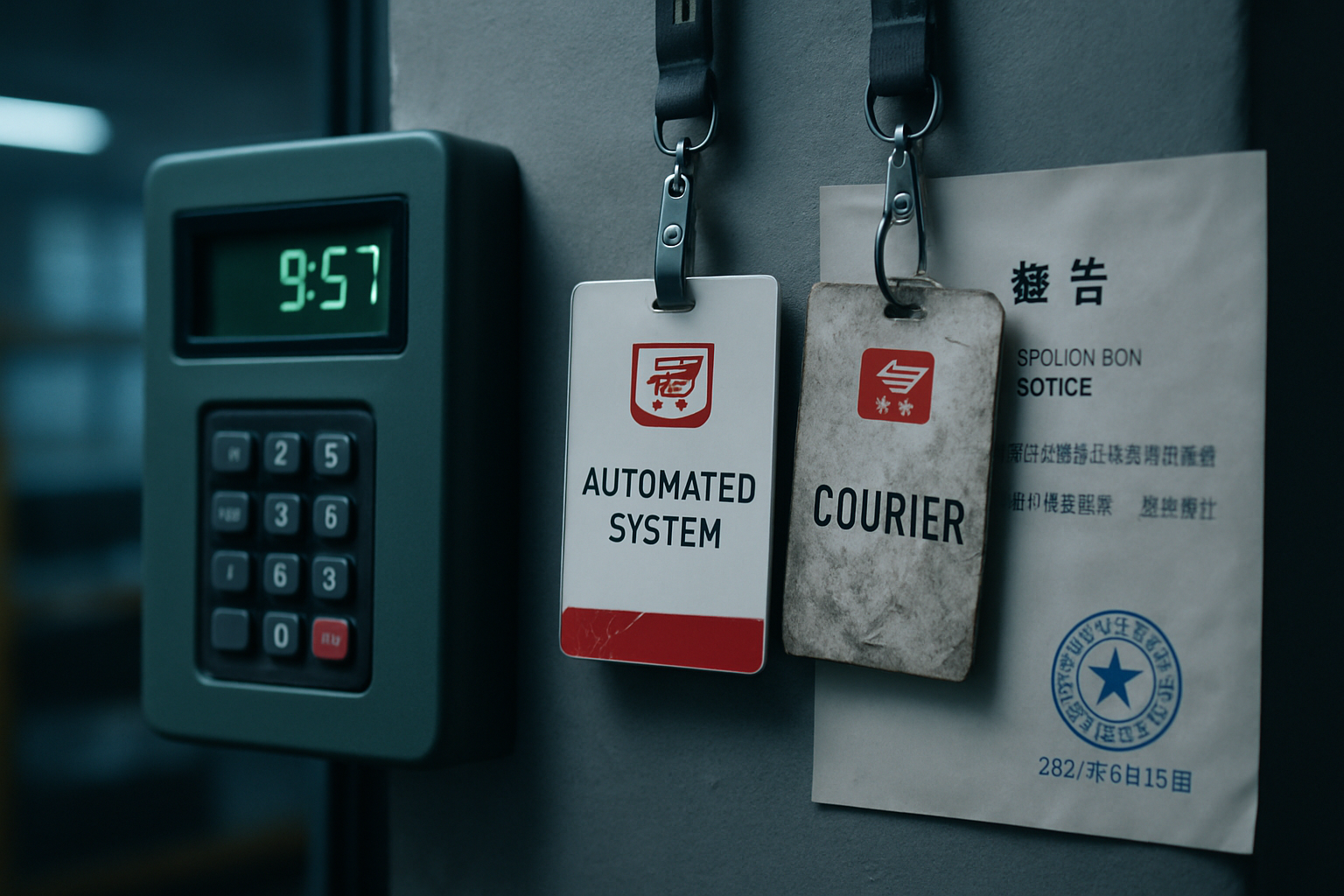
JD.com Promises Not to Fire Humans Replaced by Machines. Now Comes the Hard Part.
Before sunrise, when the couriers are taping parcels and the robots are already wide awake, a sentence started darting through JD.com’s internal chats and then spilled across Chinese social media: “JD.com will not fire a single front‑line worker replaced by machines.” It wasn’t a rumor or a stray line in a brochure. It was founder Liu Qiangdong, on the record, promising to do “everything possible to safeguard employment” for a company that signs paychecks for nearly 900,000 people.
In an era when “efficiency” has become a synonym for headcount reduction, the specificity of the vow landed with a thud that demanded attention. Not a generic pledge to “upskill.” Not a soft assurance to “support transitions.” A direct statement that automation will not be the pink slip. The company highlighted more than 80 training bases set up to prepare staff for jobs operating and maintaining the very systems that might otherwise displace them. It’s a rare moment in big tech where a leader names the tradeoff and chooses the people—on paper, at least—over the machines.
The Promise Is Engineered by Law as Much as by Leadership
Context matters. In recent weeks, Chinese courts have clarified that replacing a worker with AI, by itself, doesn’t meet the legal threshold for termination under the Labor Contract Law. One case publicized by the Hangzhou Intermediate People’s Court even resulted in compensation for an employee swapped out for automation. It isn’t a blanket prohibition on all AI‑related firings, but it sharply raises the cost and legal risk of citing automation as the reason to cut staff.
Liu’s framing makes sense against that backdrop. The statement reads less like a moral flourish and more like a strategy aligned with the legal terrain: remove “the machine did it” from the corporate playbook and get serious about redeployment. In effect, Chinese case law has begun to set an employment floor for the automation era. JD just volunteered to build on top of it.
The Mirror JD Holds Up to Itself
The tension is that JD is among the world’s most aggressive adopters of automated logistics—unmanned warehouses, drone delivery pilots, autonomous vehicles, and so‑called unmanned delivery stations. These are not speculative demos; they are the bones and nerves of a logistics system built to move at national scale. Promising not to fire the very people those systems could replace sounds, at first, like a contradiction. In practice, it is an operational puzzle: reassign, retrain, and redesign work at a velocity that keeps pace with the machines.
That puzzle has measurable components. A network of 80‑plus training bases is meaningful, but training is a throughput problem, not an announcement. How many couriers, sorters, and store staff can be cross‑trained per month? How many roles in robot maintenance, exception handling, safety oversight, or AI operations actually exist at each site? What are the wage trajectories of the redeployed versus the displaced role they left? If “front‑line” is the protected category, what happens at the seams—contractors, seasonal workers, and third‑party partners where legal protections are typically thinner? The credibility of the pledge will show up not in speeches but in transfer statistics, pay stubs, and rosters.
Retention as a Competitive Strategy
There’s also a business case hidden inside the promise. Logistics is a choreography of edge cases: damaged parcels, address errors, sudden weather, and human expectations that don’t fit a neat API. The workers who’ve lived those edge cases hold a map of tacit knowledge no robot inherits on day one. Retaining that knowledge—as mentors, supervisors of automated flows, or first responders when autonomy fails—reduces failure costs that don’t show up in glossy demos. A tight labor market for mechatronics talent makes reskilling internal staff not only a social good but a hedge against a skills bottleneck.
More subtly, the vow de‑risks automation for the company itself. Firms often chase productivity wins from robots only to discover hidden costs in churn, morale, and regulatory friction. By committing to redeployment, JD spreads the adjustment over time and keeps the workforce invested in the transition. Call it labor‑first automation: deploy the machine, keep the human, and change the job until both make sense together.
What Makes This Different From the Usual “Upskilling” Talk
Corporate leaders have spent years promising to retrain workers “for the jobs of tomorrow,” usually without naming the jobs or guaranteeing the employment. Liu named the trigger—replacement by machines—and took firing off the table for front‑line staff. That precision matters. It creates an internal constraint that executives downstream must respect when they design warehouses, schedule routes, and specify service‑level agreements. Instead of leaving ethics to a slide deck, JD encoded it as an operational rule: if a robot shows up, the person stays employed and moves.
Constraints like this are productive. They force design choices. If you can’t shrink headcount when you automate a station, you redesign the station to exploit the combined capacity of humans and machines, or you allocate freed capacity to new services and geographies. The constraint pushes creativity from “how many people can we save” to “how much more can we do with the team we keep.”
The Legal Signal Will Echo
Rivals now face a clear calculation. With courts signaling that “AI did it” is not a lawful justification for termination, citing automation is a reputational hazard and a legal risk. JD’s public commitment raises the bar further. Competitors can mirror the policy and share its political and legal cover, or they can resist and defend each layoff in a courtroom and on social media. Expect regulators and policymakers outside China to watch this experiment closely: a blend of corporate pledges plus case‑law guardrails is a very different social contract than the laissez‑faire approach elsewhere.
It’s important, though, to keep the legal nuance. The courts did not create an absolute ban on AI‑related dismissals; they clarified that automation alone doesn’t satisfy statutory grounds. Companies still have room to allege performance, redundancy under proper procedures, or other causes. That’s why JD’s language matters. It narrows management’s options by choice, not just by law.
How We’ll Know It’s Real
Over the next quarters, the signal will resolve into data. We should see internal transfer rates rise in lockstep with each wave of automation. Training centers won’t be photo‑ops; they’ll be factories of new credentials that correlate with promotions, not demotions. Safety incidents in automated sites should fall as experienced workers become the guardians of exception handling. Compensation should not quietly erode via reduced hours or downgraded titles. And attrition should be the lever of last resort, not a quiet end‑run around the pledge.
If JD succeeds, it will have done more than keep people on payroll. It will have reframed the automation dividend as something partially paid to labor in the form of job security and skill mobility, rather than captured solely as margin. If it fails, the cracks will be visible: longer shadows of temporary contracts, stagnant wages under new job names, and training that looks suspiciously like waiting rooms.
The Stakes for “AI Replaced Me” Readers
This isn’t a sentiment story. It’s a systems story. A company at the bleeding edge of automated logistics has agreed, under emerging legal pressure, to carry the complexity of human employment forward rather than shedding it. That choice turns the AI‑and‑jobs debate from prophecy into operations. It challenges the default assumption that efficiency must be purchased with layoffs. And it sets up a real‑time test of whether large‑scale redeployment can keep pace with the acceleration of machines.
For once, the central question isn’t “How many jobs will AI destroy?” It’s “Can a firm that promises not to fire the people its machines replace still win on speed, cost, and quality?” JD has placed its bet: build the robots, keep the workers, and make the math work. If they do, we may remember this week not for a headline about compassion, but for a blueprint that forced automation to share its gains with the humans who built the system in the first place.