Wells Fargo’s Quiet Admission: AI Is Reshaping Jobs in Real Time
On a stage built for valuations and basis points, Charlie Scharf slipped in a different kind of disclosure. At Bernstein’s investor conference, the Wells Fargo CEO waved off the tidy comfort of “AI will kill jobs” or “AI will create jobs.” It’s both, he said, at the same time. And then he described the operational messiness that simple headlines refuse to hold: work compresses in one corner of the bank just as a new kind of work appears in another, and the people doing the first kind aren’t the ones ready for the second—at least not yet.
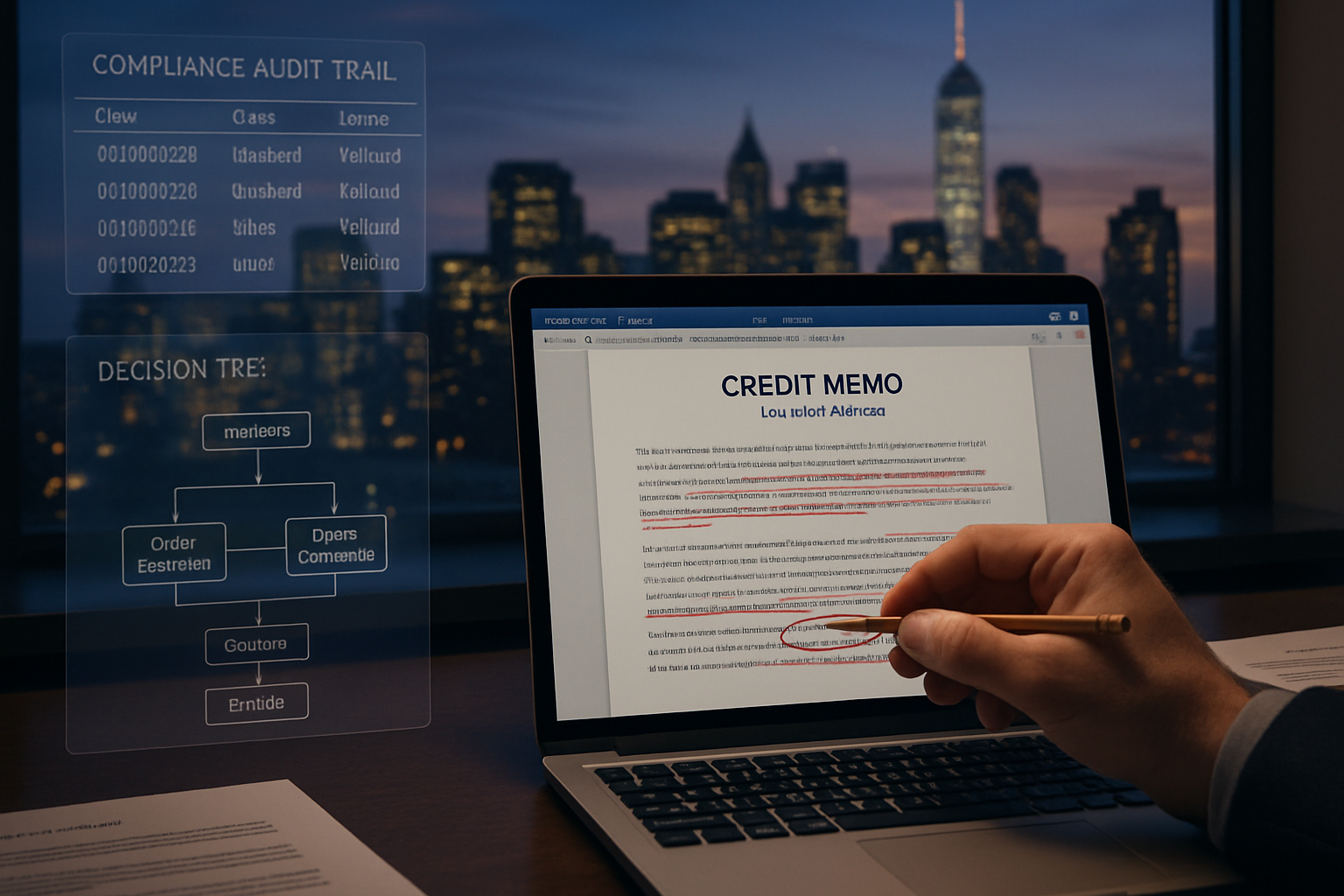
That candor matters because it comes with specifics. As of April, most Wells Fargo employees have baseline AI access. Leadership isn’t romanticizing it; they’re testing where those tools actually change service and throughput. The early targets aren’t exotic. They’re the heartland of white-collar banking: auditing and testing, legal and contracts, patent filings, investment‑banking pitch books, credit memos. If your job has long lived inside documents and reviews, you can feel the tremor. Drafting, summarizing, and cross‑checking are no longer the slowest parts of the process. The machine drafts first; humans decide what stands.
Where the work actually moves
Inside a bank, paperwork is power—evidence chains for regulators, narratives for clients, decisions that define risk. AI is sliding into that stream. The implication isn’t a simple subtraction of headcount. It’s a rebalancing. Analysts who once built decks from scratch become editors, pattern spotters, and explainers. Credit officers spend less time assembling memos and more time interrogating model assumptions and edge cases. Legal teams treat first drafts as raw ore and shift attention to judgment calls and negotiation strategy. These are not cosmetic tweaks; they change who is indispensable in a meeting and who can be replaced by a template.
Scharf warned that savings don’t automatically flow to the bottom line because competitors will chase the same speedups. That’s the gravity of competition: what looks like margin today becomes table stakes tomorrow. So the differentiator shrinks to two things that are harder to copy—how fast you re-skill your people, and how credibly you bind AI’s outputs to governance and client trust. If every bank can generate a passable pitch book, the win goes to the one that can explain, audit, and adapt that book under real‑world constraints without tripping risk alarms.
The misalignment no one is pricing
The most important sentence from the stage wasn’t about efficiency; it was about timing. Portions of work disappear before the next roles fully exist. That gap doesn’t resolve with a hiring requisition. It forces companies to build internal mobility like a product: inventories of skills, repeatable upskilling paths, and managers judged by how many people they successfully redeploy, not just how clean their cost line looks. In Scharf’s framing, “people don’t go away”—but their old tasks do, and not on a schedule that politely waits for new job families to mature.
This is where AI‑literate domain expertise beats generic “AI skills.” A model builder without banking context is less valuable than a banker who can direct, critique, and defend model‑assisted decisions end to end. That’s why Wells Fargo expects both selective hiring and serious retraining. The future headcount mix tilts toward creators of models and agents, yes, but just as much toward translators—professionals who can turn probabilistic outputs into choices a regulator, a client, or a credit committee will accept.
Signal strength: coming from a $2.2 trillion institution
When the chief executive of a systemically important bank outlines an employment roadmap, it echoes beyond one firm. Financial services has spent years chasing efficiency; this isn’t another cost program. It’s a statement of operating design. The white‑collar stack is being rewired from document‑first to decision‑first, with AI compressing the distance between the two. The broad labor message is neither panic nor complacency. It’s targeted reskilling plus focused hiring, executed early enough to beat the mismatch clock.
There’s a sobering strategic corollary. If every major bank pursues the same AI efficiencies, labor arbitrage won’t decide winners. Organizational learning speed will. The firms that measure how workflows change, certify which tasks can be safely machine‑led, and move people into those flows before competitors do will harvest productivity that doesn’t immediately leak into price wars. Everyone else will discover that “we bought the tools” is the starting line, not the finish.
The recomposition era
Scharf’s remarks, reported by CIO Dive, offer a cleaner frame for the next few years: jobs aren’t taken or made so much as they’re re-composed. Pieces of roles move into software; the leftover pieces become more valuable if you can prove their judgment content. That’s a quiet revolution in status and pay inside office work. The person who can describe why an AI‑drafted credit memo is wrong in exactly the way that matters will outrun the person who can produce three more drafts by noon.
If you work anywhere near documents, reviews, or client narratives, assume the first draft is no longer your job. The job is deciding what survives the draft, what must be proven, and how to make that proof legible to bosses, clients, and regulators. Wells Fargo isn’t predicting that future; it’s already reorganizing around it. The rest of the industry can either wait for the mismatch to arrive—or start closing it now.