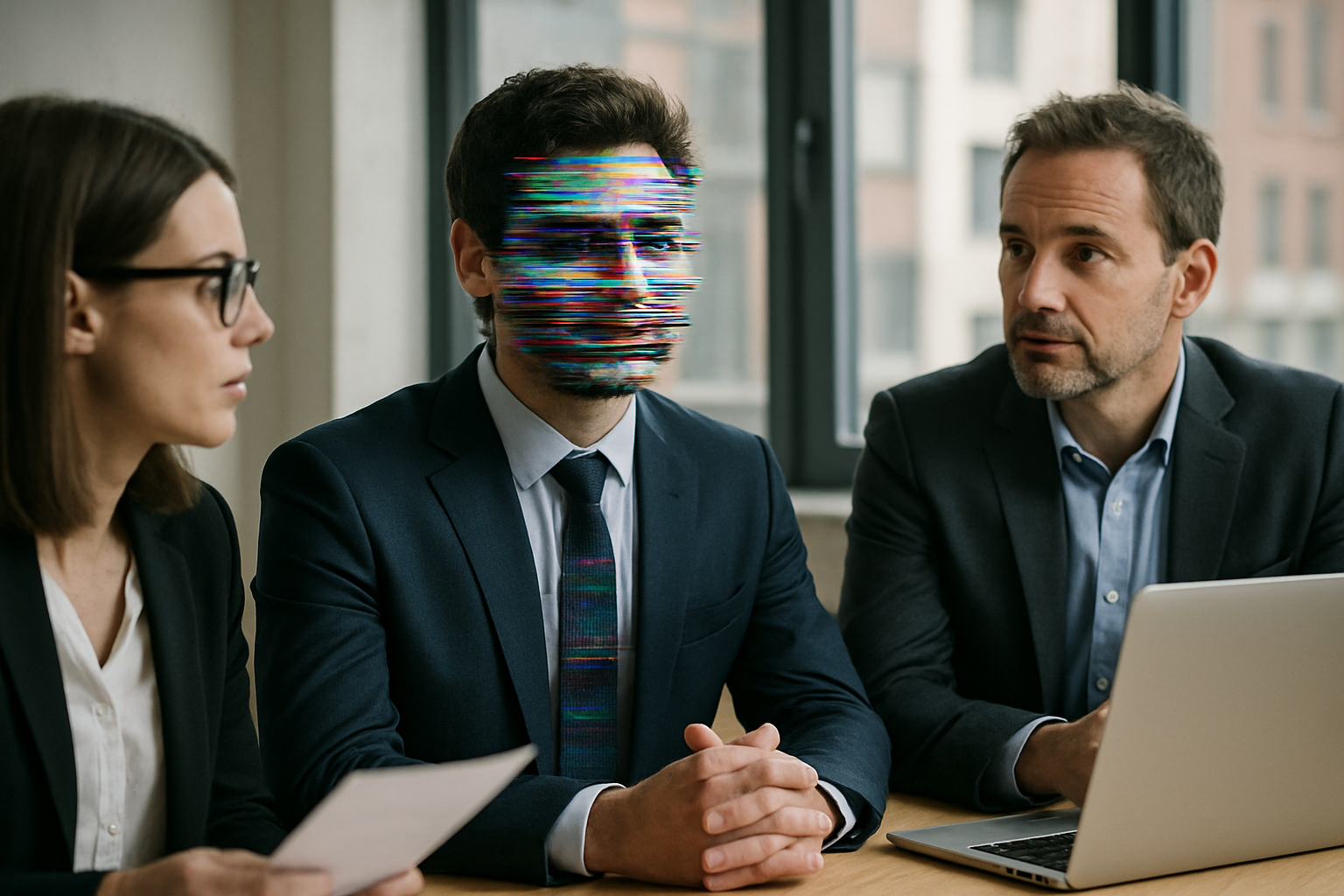
Remember that scene in “Catch Me If You Can” where Leo DiCaprio’s character cons his way into various professions? Turns out, AI is now handing out the cheat codes. But instead of charm and a good suit, it’s deepfakes and real-time answer generators that are the tools of the trade. The Week’s recent exposé on AI-driven deception in job seeking isn’t just another headline about AI disrupting the workforce; it’s a glimpse into the uncanny valley of employment, where authenticity itself is up for grabs.
We already knew AI was reshaping hiring, automating resume screening, and even conducting initial interviews. But the twist? Job seekers are fighting fire with fire, or rather, algorithms with algorithms. This isn’t about replacing humans with bots; it’s about humans becoming bots, or at least convincingly impersonating them.
The Glitch in the Matrix (and the Zoom Call)
The article highlights the story of an applicant whose AI-filtered face malfunctioned during a Zoom interview, revealing the digital mask. Think of it as the Matrix code glitching, only instead of seeing a black cat twice, you see a distorted, pixelated face. This incident, while almost comical, underscores a crucial point: the technology isn’t perfect, but it’s rapidly improving. And as it improves, so does its potential for deception. The survey that revealed 17% of U.S. hiring managers have encountered deepfakes isn’t just a statistic; it’s a sign that this is already a widespread problem.
Why Fake It ‘Til You Make It? (Or Just Fake It)
The motivations behind this digital deception are multifaceted, ranging from simple financial gain (getting paid for a job you’re not qualified for) to more sinister purposes, like North Korean operatives infiltrating organizations. The article points to skill augmentation as another driver. Think of it as having a digital co-pilot whispering answers in your ear during a technical interview. It’s not just about faking competence; it’s about outsourcing it in real-time. This raises a fundamental question: what does “competence” even mean in an era where AI can instantly provide the right answers?
The Algorithmic Arms Race: Employers Strike Back (Sort Of)
Here’s where things get really interesting. The rise of AI-powered hiring tools has inadvertently created a demand for AI-powered deception tools. It’s a classic arms race. Employers adopt AI to streamline the hiring process, and candidates adopt AI to game the system. The result? A technological stalemate where it becomes increasingly difficult to distinguish between genuine talent and digital trickery. Some companies, the article notes, are reverting to old-school methods like personal referrals. It’s a bit like ditching your GPS and pulling out a map – a recognition that sometimes, the low-tech solution is the most reliable.
Beyond Tech: The Contagion Effect
While the article focuses on the IT sector, the implications extend far beyond. As AI tools become more accessible and sophisticated, we can expect to see similar tactics employed in other industries. Imagine deepfake nurses providing medical advice, or AI-assisted lawyers arguing cases. The potential for misuse is vast, and the consequences could be severe. This isn’t just about protecting companies from fraud; it’s about protecting the public from potential harm.
The Real Losers (and Maybe Some Winners)
So, who really loses in this scenario? Obviously, companies that get duped by deepfake applicants take a hit. But perhaps the bigger loser is the very concept of meritocracy. If AI can be used to artificially inflate skills and experience, then the traditional markers of success – education, experience, talent – become less meaningful. Ironically, this might create a niche for “authenticity experts” – people who can verify the genuine skills and experience of job candidates. Think of it as a new kind of background check, but instead of verifying credentials, they’re verifying humanity.
And who wins? Well, the developers of these AI deception tools are likely to see a surge in demand. But beyond that, it’s hard to see any clear winners. This isn’t a technological leap forward; it’s a step into a murky, uncertain future where trust is eroded, and authenticity is a commodity.
The takeaway? We’re not just facing a future where AI replaces jobs; we’re facing a future where AI can be used to fake them. And that’s a whole different level of disruption.