The Number That Said Everything: 4.95% at the Nation’s Largest Employer
It was supposed to be a routine rite of corporate spring: a shareholder meeting, a slide deck, a few carefully shaped sentences about transformation. But in Bentonville, the most meaningful line wasn’t on a slide. It was a number—the fraction of investors willing to demand a formal accounting of how Walmart’s swelling use of AI touches the lives and livelihoods of its 1.6 million U.S. employees. 4.95% is not a squeaker; it’s a signal. It tells boards across America that, for now, the market will grant management broad latitude to remake frontline work with algorithms—and keep the impacts largely off the balance sheet of public scrutiny.
The Theater of Progress, Without the Program Notes
On stage, Walmart’s story is confident and frictionless: people-led, tech-powered. There are AI certification programs for every U.S. associate, designed with OpenAI. There are smarter stores, where cameras identify produce at self-checkout and digital shelf labels flicker with instant price changes nationwide. The choreography is meant to reassure—this is not automation replacing people; it’s technology augmenting them. In the same hall, a worker stepped to the mic and described something different: a “robust rollout of AI tools” that is already eroding day-to-day conditions. Two incompatible narratives passed each other in the aisle, and shareholders chose one to believe.
What the Vote Really Rejected
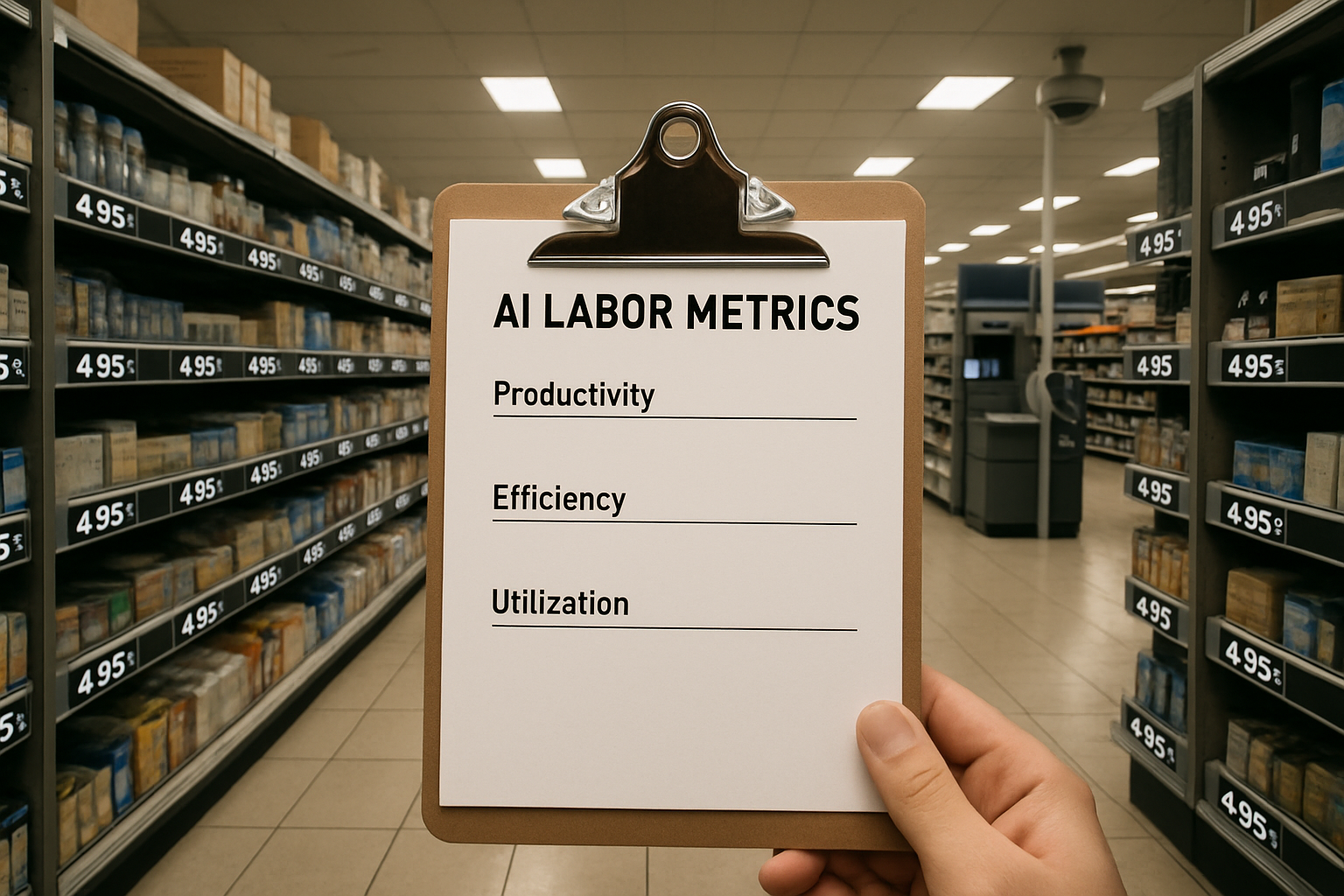
The defeated proposal wasn’t a demand to halt AI or to second-guess every systems decision. It asked for a map: the principles guiding deployment, the governance that keeps those principles honest, and the metrics that tell us whether job quality is rising or sinking—compensation, equity, scheduling stability, injury rates, training effectiveness. Management’s response was a familiar corporate grammar of sufficiency: we disclose enough already. Investors, by a wide margin, agreed. The effect is not merely procedural. It establishes a near-term norm that AI’s impact on workers remains a matter for management narrative, not standardized measurement.
The Cost of Optional Transparency
AI’s workplace footprint is legible when you can see the dials. Absent reporting, stakeholders must infer impact from scattered clues: a new vision model at self-checkout that flags more “suspicious” scans; price labels that now update in seconds, quietly reassigning hours from backroom repricing to ever-tighter pick-and-pack targets; training modules that teach prompt craft but leave accountability for algorithmic scheduling in a black box. Without comparable metrics, anecdotes dominate and the signal-to-noise ratio collapses. Scale compounds the problem. When the biggest private employer declines to quantify AI’s labor effects, thousands of smaller employers inherit cover to do the same, and the market for truth about frontline work becomes a patchwork of PR and guesswork.
Why Investors Blinked
At first glance, this looks like the victory of efficiency over empathy. It’s more calculated than that. Formal reporting creates benchmarks. Benchmarks create baselines. Baselines enable comparisons across peers and time, which in turn sharpen the questions boards would have to field when metrics move the wrong way. Disclosure also carries discovery risk: quantify algorithmic targets or discipline rates and you define a paper trail that labor groups, regulators, or litigators can use. Investors, sensitive to execution speed and margin pressure, often prefer the option value of narrative over the irreversibility of numbers. In a cycle where retail is being rewired by automation and ambient AI, optionality is an asset class of its own.
Upskilling Is Not the Same as Control
Walmart’s AI certification push matters; training can expand opportunity, and the company has both the reach and resources to mainstream AI literacy at scale. But skill is only one axis of power in an algorithmic workplace. If systems set the pace, route the work, and score the outputs, then well-trained associates are often competing with the very telemetry that evaluates them. The unasked question in the rejected report was this: who governs the governors? What are the escalation paths when models nudge targets faster than bodies can follow, or when false positives from computer vision systems shift the burden of proof to cashiers and customers?
Precedent, Set
Because this decision landed at Walmart, it travels. Boards will read it as proof that they can accelerate AI deployment while keeping labor-impact reporting discretionary. Consultants will package it as a playbook: emphasize upskilling, spotlight shiny tools, cite general oversight language, and argue that additional reporting is duplicative. The result will be a two-speed transformation where the systems evolve on quarterly cadences but the measurement of their human consequences lags by years.
What We Lose When We Don’t Measure
The absence of standardized AI-labor reporting doesn’t freeze change; it obscures it. We will still see faster inventory turns, tighter shrink controls, and smoother price changes. We will not, without effort, see whether AI has reduced last-minute shift volatility, whether injury rates fall when heavy tasks are redistributed, whether computer vision’s error bars shrink with each model update, or whether training correlates with promotions rather than performance surveillance. Those are the deltas that tell us whether the future of frontline work is dignified or merely optimized.
The Next Chapter Will Be Written in the Shadows—or Brought Into the Light
This is not the end of the conversation; it is the beginning of a new equilibrium. If investors won’t insist on dedicated AI-workforce reporting, pressure will migrate elsewhere—to workers who document changes from the floor, to policymakers experimenting with audit rules, to customers who react when anti-shrink models misfire at self-checkout. Companies can preempt that cycle by embracing real metrics now, when they can still shape the frame, rather than later, when the frame arrives by mandate. Yesterday, transparency lost to transformation. The question for every large employer isn’t whether AI will reshape work; it’s whether they want to own the story with data—or let everyone else write it from the gaps.