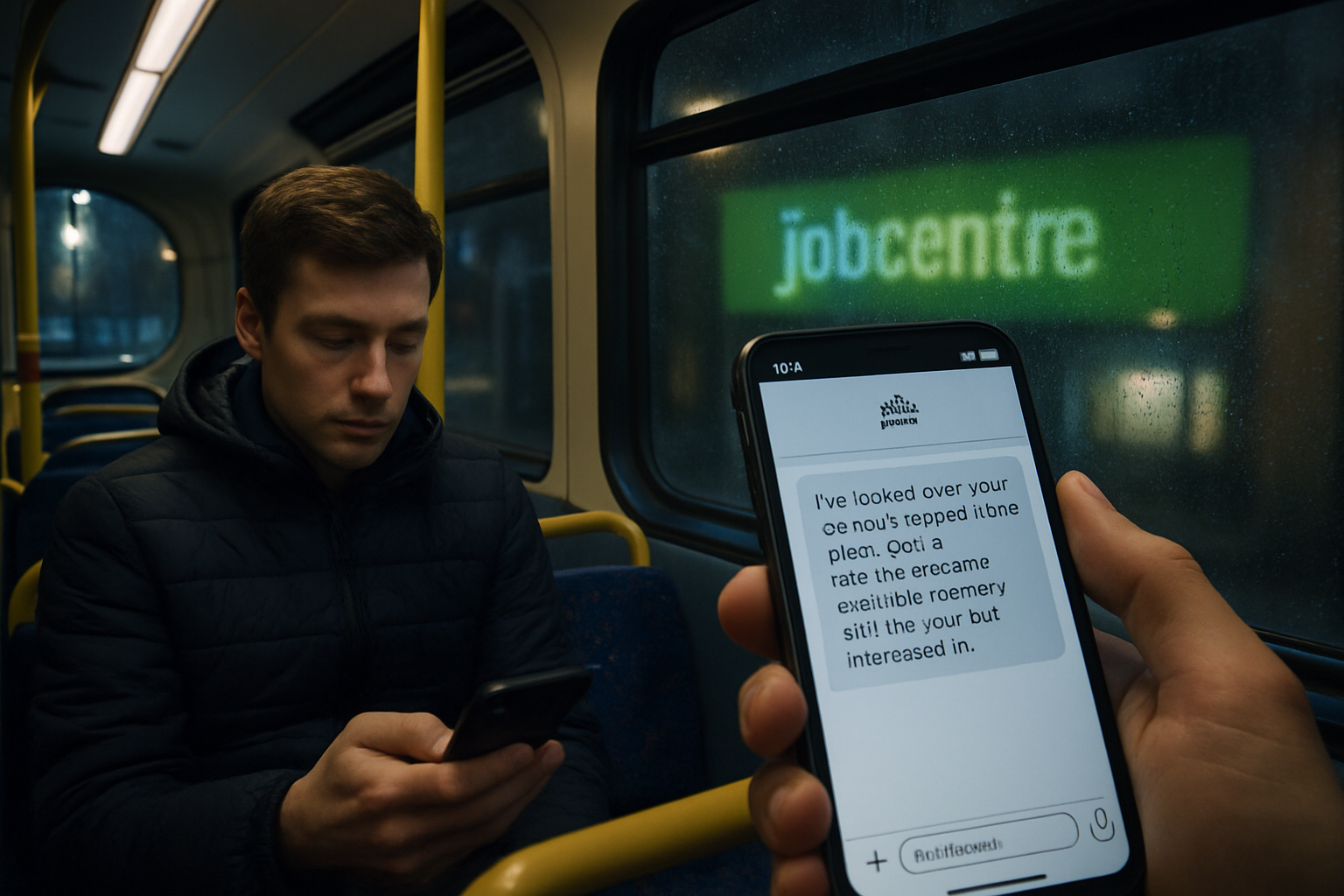
Britain Just Put a Jobcentre in Your Pocket
The applause in London wasn’t for a moonshot. It was for a product. On stage at London Tech Week, the Prime Minister didn’t promise a distant future; he shipped a public service. A government-run AI assistant—live, labeled “Experimental,” and designed to help people find work, build CVs, and plan next steps—stepped into the role usually reserved for job boards and private coaching apps. Starmer’s line was deliberate: if AI will shake the labor market, the state intends to meet citizens where the friction actually hurts—during the days and weeks between jobs.
Calling it a “jobcentre in your pocket” is not just branding. It signals a reframing that matters. For years, the policy conversation ping-ponged between automation panic and skills bootcamps. This tool does something quieter but potentially more consequential: it makes employment matching itself a first-class public function. It runs around the clock, lives under the government’s Work Hub, and, during its initial three-month online pilot reported by the Guardian, will try to compress the messy choreography of job search into a guided, conversational flow. If it works, the distance between layoff and first interview narrows—not through abstract retraining promises, but through an assistant that drafts the CV you need today and routes you toward roles that actually exist.
AI Framed as a Jobs Engine, Not a Threat
Starmer cast AI not as a looming replacement for human labor, but as a catalyst for new, skilled work tied to infrastructure investments and local regeneration. That framing is as strategic as it is optimistic. If the economy is going to keep reshuffling tasks across sectors, faster matching becomes a public good. An assistant that notices your transferable skills, translates them into the language of an emerging role, and nudges you toward an actionable plan is more than a chatbot; it’s policy encoded as a service. In that sense, the tool is a wager that the state can manage technological change not just with safety nets and subsidies, but with software that reduces search costs at national scale.
The Hidden Architecture Behind a Simple Interface
The announcement landed alongside more than £200 million to accelerate AI adoption and upskilling, formal partnerships with major AI labs and employers to share workplace data and practices, and a new AI Economics Institute chaired by Nobel laureate Simon Johnson. That bundle matters because it turns the assistant into a node in a larger feedback loop. If employers actually share the skills they hire for, if researchers rigorously measure time-to-placement, wages, and regional diffusion, and if funding helps firms redesign roles rather than simply eliminate them, the tool becomes part of a “build, measure, govern” cycle rather than a shiny pilot destined to gather dust.
In plain terms: the government is not just launching a site; it is setting up the telemetry to watch how AI changes jobs in real time, and—crucially—committing to adjust policy based on what the data shows. That implies a shift from theoretical debates about net job loss to the operational question that matters for families: how quickly can someone move from redundancy to a better-matched role, and what does that do to their pay and stability over the next year?
If This Becomes the Front Door to Work, Everything Changes
Public employment services traditionally route people through forms, queues, and training referrals. A 24/7 assistant inverts the flow. It can translate a care worker’s experience into logistics competencies, rewrite a manufacturing CV to emphasize quality control and instrumentation, and surface adjacent roles that hiring managers actually want. At scale, that could standardize the messy world of job titles into a shared skill taxonomy, making labor mobility less about who you know and more about what you can do. Done well, it lowers the temperature of displacement: your tasks evolve, and a public system helps you find the new configuration where your skills earn.
But design choices will decide whether it uplifts or funnels. Optimize for the shortest time to placement and the assistant may herd people into the fastest-filling, often lower-paid roles. Optimize for wage progression, job stability, and training pathways, and it starts to widen opportunity rather than just plug vacancies. The metrics chosen—what gets reported on public dashboards, what targets managers chase—will quietly shape millions of micro-decisions the model makes. Transparency about those choices, and user controls to override them, are not nice-to-haves; they are safeguards against algorithmic steering that looks neutral but isn’t.
Plumbing, Privacy, and Trust
Questions now move from podium to back office. How deeply will the assistant integrate with Jobcentre Plus workflows? Will caseworkers see the model’s recommendations, contest them, and feed back outcomes? What data will be ingested from employers, and how will it be audited to prevent “ghost jobs” and stale postings that waste applicants’ time? The service is marked “Experimental,” which is exactly right—but experiments need protocols. Clear data retention policies, redress mechanisms when the assistant gives bad guidance, independent evaluation, and procurement terms that prevent vendor lock-in will decide whether citizens grant this tool the same legitimacy they grant a benefits portal.
There’s also the fundamental reliability problem. Language models can be confidently wrong. If the assistant is allowed to improvise job-search folklore, trust will evaporate. Guardrails that constrain it to verified vacancies, standardized eligibility rules, and vetted CV templates aren’t just technical preferences; they’re the difference between a coach and a rumor mill. The more it can incorporate local realities—transport links, childcare availability, regional wage norms—the more it feels like a public service rather than a generic bot.
Collision Course with the Private Job Market
A national assistant inevitably brushes up against platforms that already monetize matching. Does it aggregate from private boards or compete with them? If government defines open standards for skills and vacancy data—and ties public funding or procurement to those standards—private platforms will likely conform, and the market will tilt toward portability of profiles and recommendations. That would be a subtle but profound shift: people, not platforms, would carry their verified skills across the labor market, and the state would set the baseline for fair access. Other governments will watch closely. Europe’s active labor market systems have the legal machinery to try this; the U.S. has the tech talent but a fragmented safety net. The outcome in the UK will travel.
The Next Three Months Are the Real Announcement
Live pilots are promises with deadlines. By the end of the trial, we should see whether the assistant reduces time unemployed, routes people into roles with equal or better pay, and does so across regions—not just in tech corridors. We should also see the first iteration of public metrics, the edges of the data-sharing regime with employers, and the early signs of how caseworkers fit into the loop. Without that visibility, the “jobcentre in your pocket” becomes a slogan. With it, the UK will have turned AI from a press release into labor-market infrastructure.
AI didn’t show up yesterday as a sci‑fi prophecy. It showed up as a government service that texts back at 2 a.m. If the state can learn to ship, measure, and iterate like a competent product team—while honoring public values—the assistant unveiled this week might be remembered not for its launch page, but for the week it quietly shortened between losing a job and starting the next one.