The Day the Minutes Stopped Defining the Job
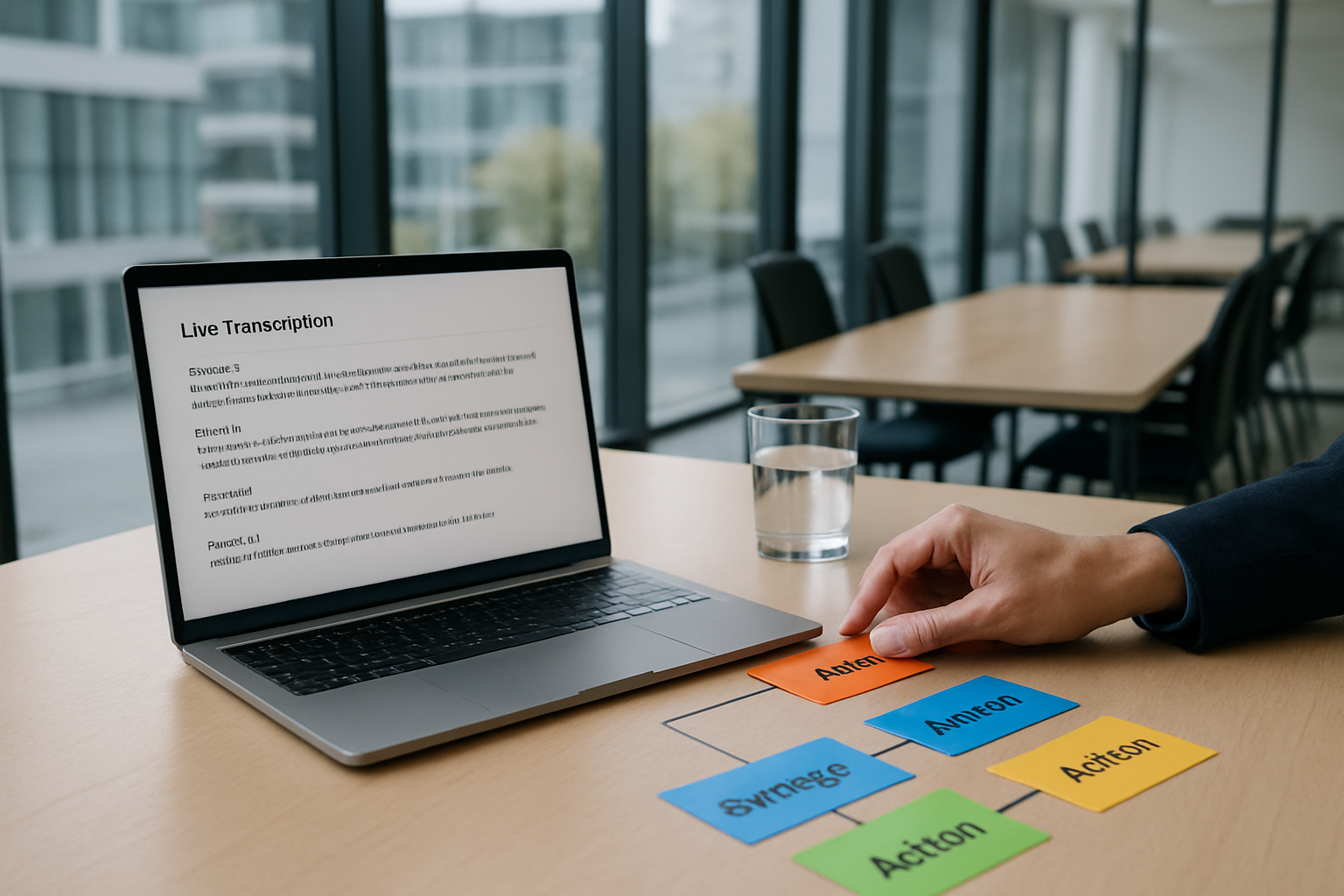
At 9:02 a.m. the laptop started taking notes by itself. Deanna Danger, an executive assistant at Vanderbilt University, didn’t lean over the keyboard as she’s done for years; she leaned into the conversation. Copilot and ChatGPT handled the transcript, the timestamps, the action items. Her work, suddenly, was less about keystrokes and more about judgment—who was dodging a decision, which ask would actually stick, what the subtext meant for the calendar two weeks from now. The Associated Press chose a scene like this to carry yesterday’s most consequential story about AI and employment, and it landed with unusual clarity because everyone knows this job. The title has changed, the tools have changed, but almost every office has lived inside its rhythms.
The AP stitched together two vantage points that rarely meet: a long arc of labor statistics and the grain of daily practice. On the arc, the story is stark. Two decades ago, secretaries and administrative assistants numbered roughly 3.5 million in the United States; by 2024, the count had fallen to about 2.1 million, even as the overall workforce swelled. Earlier software waves—word processing, digital calendars, speech-to-text—turned routine output into buttons and shortcuts. Generative AI is not a fresh storm; it is the newest compression algorithm, squeezing hours of coordination into prompts and templates.
The forward picture is uneven. The Bureau of Labor Statistics still sees decline across most admin and secretarial roles through 2034. One pocket breaks the pattern: medical secretaries are projected to grow around 4% as healthcare expands. That exception is telling. Where the work is wrapped in messy systems—billing codes, EHR friction, privacy rules, patient messages threaded across clinics—the “last mile” remains stubborn. It is not immunity from automation so much as insulation by complexity, a reminder that workflow architecture determines whether AI erases a task or exposes three more.
The AP piece also made the risk legible by naming who holds the roles being redesigned. This workforce has been overwhelmingly female—nearly 97% historically—skews older, with about a third aged 55 and up compared to less than a quarter in the broader economy, and earns slightly below the national median, around $47,460 versus $49,500. Those numbers aren’t trivia. They map to the hazard that efficiency gains accrue to organizations while transition costs fall on workers who have less margin to retrain, fewer nearby openings, and narrower networks to pivot into new titles. A one-click summary can compress a Tuesday; it can also compress a career if nothing expands to replace it.
On the ground, expansion is the live question. Danger’s use of AI to offload minutes is not a disappearance story. It is a redesign story. With notes handled, the room has room—for mediation, sequencing, diplomacy, the kind of interpretive work that no model can perform without a human deciding what matters. Employers are beginning to formalize that expectation. Trainer Fiona Young describes a sweeping surge in demand for hands-on AI upskilling for admin teams at companies like Google, Amazon, Uber, Salesforce, and LinkedIn. The new baseline is not typing speed; it is model fluency, tool judgment, the ability to chain automations into outcomes.
At the same time, incentives are turning blunt. One startup CEO, Oana Manolache, said out loud what many leaders imply: if you ignore AI, your job may not be there. Yet she also insists that a modern executive assistant cannot be swapped for a chatbot, because relationships and context-reading sit outside the autocomplete zone. Both statements can be true. They describe a labor market that rewards assistants who become orchestrators—part chief of staff, part workflow designer—and quietly sidelines those asked only to produce artifacts that software now prints faster than any human.
Globalization threads through this shift. The AP pointed to remote executive assistants in Latin America paired with U.S. tech firms, a model that has matured in the slipstream of remote work and collaborative platforms. When routine tasks become software addressable, time zones become less of a barrier and wage arbitrage becomes more tempting. What remains local are trust, proximity-sensitive judgment, and institutional memory—the assets that tie a person to a particular organization rather than a platform.
The labor market is already whispering before it shouts. Unemployment among office and administrative support has ticked up to about 4.0% from 3.6% a year earlier. Research cited by the AP warns that clerical workers may be particularly exposed: less savings to weather a job hunt, fewer nearby options if a department automates, and skills that read as “adjacent” but not yet “eligible” for faster-growing roles. This is why the training question is not a feel-good footnote. Access to real upskilling—time, budget, credentialing that hiring managers believe—determines whether AI removes ruts from a career path or removes the path.
There is a subtler economic mechanics lesson sitting underneath the anecdotes. AI is unbundling tasks faster than organizations can re-bundle roles. A single assistant can now shadow three executives; meeting prep that once took an afternoon collapses into a careful prompt; inbox triage becomes a supervised filter rather than a marathon. Ratios shift. Headcount follows. If companies do not deliberately carve out higher-order responsibilities, the efficiency dividend accrues to margins rather than to job quality. If they do, the same tools can elevate the role into a node of coordination power—less calendar widget, more organizational glue.
This is why the AP story mattered more than think-tank white papers and venture tweets yesterday. As a wire feature syndicated into local papers, it moved the AI-and-jobs debate out of abstraction and onto a desk millions recognize. It paired longitudinal data with a visible playbook for adaptation, and it named the asymmetries—gender, age, pay—that determine who bears the risk. In a news cycle addicted to novelty, this was a different kind of new: not a breakthrough model, but a reframing that will shape how HR budgets, community colleges, and state workforce boards read the next twelve months.
The open question after the minutes wrote themselves is whether the freed time gets reinvested. If it does, assistants become producers of momentum—sequencing commitments, steering attention, negotiating tradeoffs. If it doesn’t, AI turns a proud craft into a background process and the headcount shrinks. Yesterday’s story didn’t settle that question. It made it unavoidable.