The Unprecedented Federal Purge: A New Precedent for Public Sector Disruption
Something just shifted. Not a tremor, but a deliberate reconfiguration of the bedrock upon which federal employment rests. Yesterday, the Trump administration announced a staggering reduction in the federal workforce, targeting over 275,000 civil service employees – roughly 12% of the civilian federal workforce. This isn’t just a budget cut; it’s a strategic dismantling, and its implications for the future of public service, and indeed, for AI’s role within it, are profound.
While the stated goal is streamlining and cost reduction, the sheer scale and the aggressive tactics employed mark a significant departure from previous government restructuring efforts. This isn’t the slow bleed of attrition we’ve seen before; it’s an accelerated, systemic unwinding.
The Mechanics of Disassembly
The administration hasn’t just wielded the axe; it’s engineered a multi-pronged approach to achieve these reductions, setting a chilling precedent for future public sector employment:
- **Scope:** Over 58,000 confirmed layoffs and 76,000 buyouts already, with an additional 149,000 reductions planned. This isn’t theoretical; it’s actively happening.
- **Targeted Departments:** No agency is immune. The Department of Veterans Affairs (VA), Department of Health and Human Services (HHS), and even the National Aeronautics and Space Administration (NASA) are seeing significant cuts.
- **Novel Implementation:** The methods are particularly notable:
- Executive orders stripping civil servants of established due process employment protections.
- “Deferred-resignation” deals, a novel mechanism for rapid separation.
- Unilateral closures of entire agencies, including the United States Agency for International Development (USAID) and the Consumer Financial Protection Bureau (CFPB), bypassing traditional legislative processes.
Collateral Damage and Legal Pushback
The immediate fallout is already tangible, with critical public services facing potential degradation. The VA, for instance, dismissed over 1,000 probationary employees, including researchers vital to mental health and cancer treatment initiatives. The human cost here is direct and severe, impacting those who rely on these services most.
Unsurprisingly, these actions have triggered immediate and forceful legal challenges. Labor unions and non-profit organizations are contesting the legality of these mass firings. A U.S. District Judge has already granted temporary relief, calling into question the lawfulness of dismissing probationary employees en masse and ordering reinstatements, signaling a significant judicial pushback against the administration’s methods.
Beyond the Budget: A Blueprint for Algorithmic Governance?
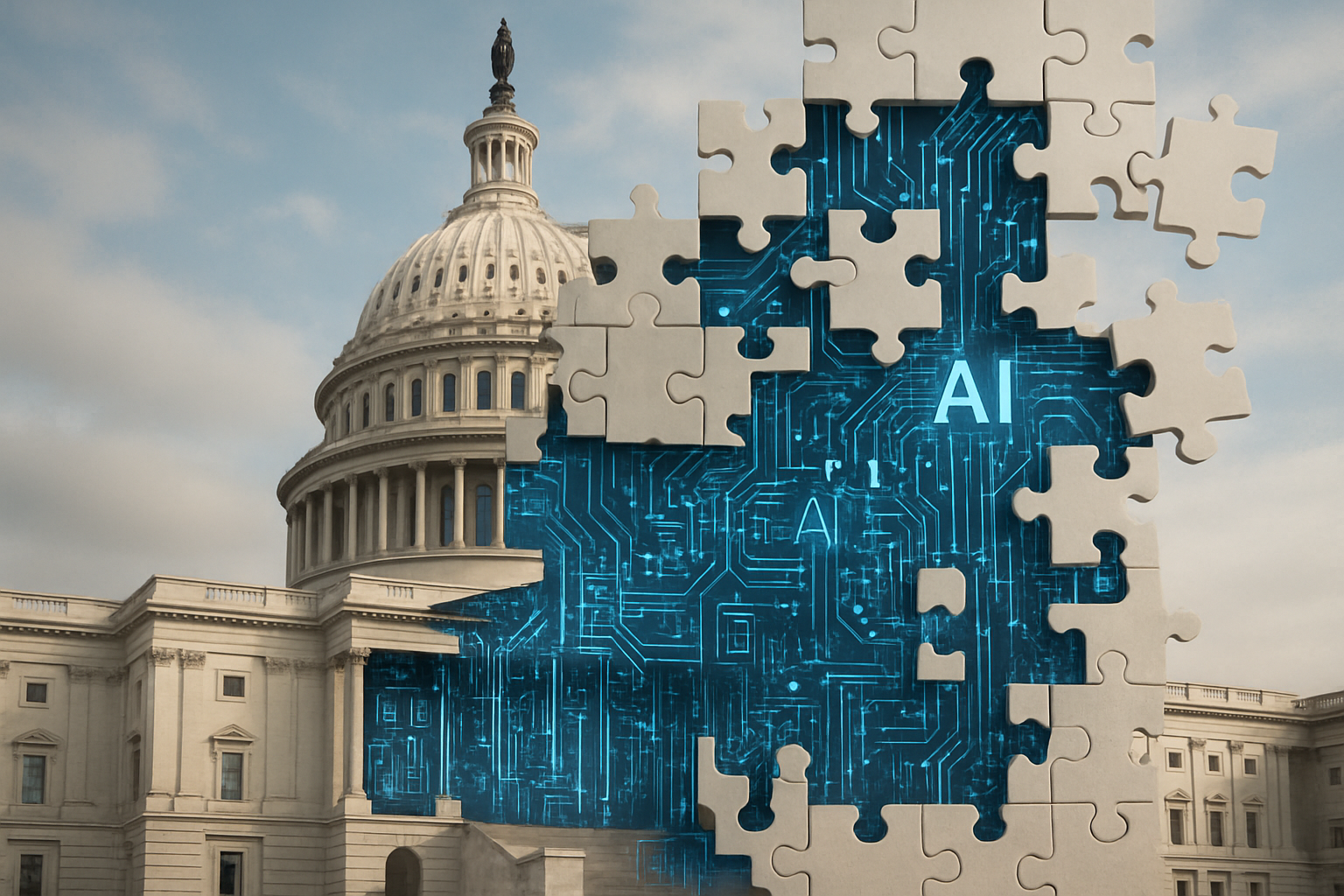
This development transcends mere fiscal policy. For those of us tracking AI’s march into the workforce, these federal layoffs represent a critical inflection point, even if AI isn’t explicitly cited as the direct cause. The aggressive removal of employment protections and the wholesale closure of agencies create a vacuum, and a pathway, for future “efficiency” solutions.
Consider the implications: when due process is eroded, and entire functions are deemed redundant or eliminable by executive fiat, the path is cleared for automated systems to step into the void. This isn’t just about reducing headcount; it’s about fundamentally reshaping the nature of public service delivery. The current actions could be seen as a necessary, albeit brutal, preliminary step to de-risk the integration of advanced AI and automation into governmental operations.
The critical question isn’t whether AI will replace these roles, but whether these unprecedented layoffs are setting the stage for an accelerated, algorithmically-driven transformation of governance. This isn’t just about cost-cutting; it’s a profound redefinition of the social contract between government and its citizens, and a chilling preview of how “efficiency” might be pursued in an increasingly automated future.