On September 1, 2026, at a G20 tech meeting in Chapel Hill, North Carolina, Meta CEO Mark Zuckerberg said the company cannot find enough skilled tradespeople to build the data centers it wants. According to Reuters Connect’s transcript, he said the AI buildout would require “hundreds of thousands and maybe millions” of jobs in skilled trades, and he said Meta’s America’s Workforce Academy guarantees jobs for graduates who complete the training.
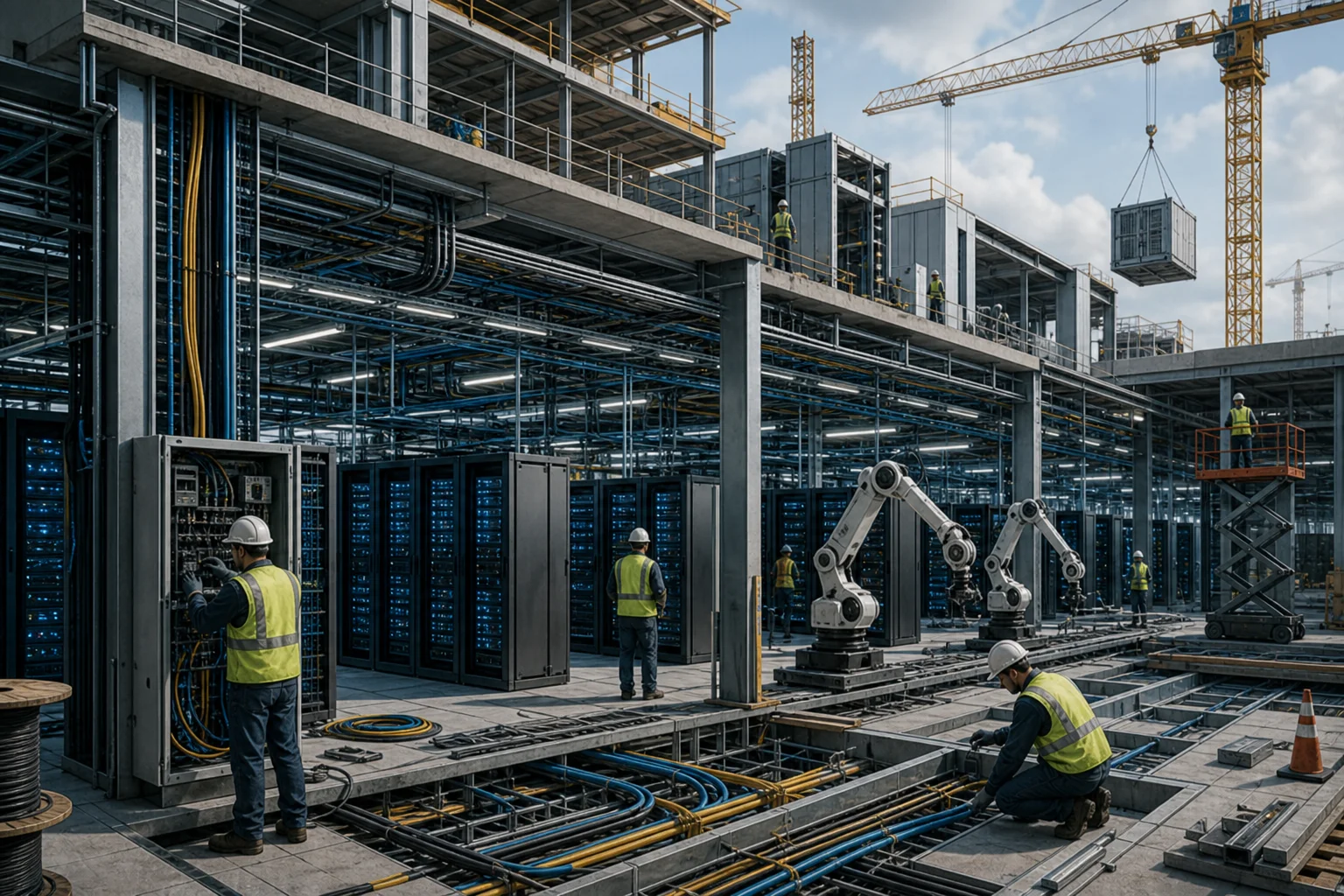
At the same time, WIRED reported on August 28, 2026 that Meta is testing robots in data centers for tasks such as cable swapping and server resets, and that a worker estimated a successful cable-swapping robot could replace up to 80% of some people’s workloads. WIRED also quoted a Meta spokesperson saying the company is investing heavily in training and hiring workers to build and operate its data centers, and that the U.S. has a major shortage of skilled workers.
AFP’s coverage, as published through the Jamaica Observer on September 2, 2026, said Zuckerberg and Elon Musk pressed for more AI data centers and the electric power needed to support them at the same G20 meeting. Taken together, the reports show a narrow but important tension in Meta’s AI push: the company says its infrastructure plans need more human labor in the near term, while it is also testing automation for some work already being done by technicians inside those sites.
What Zuckerberg said at the G20 meeting
Reuters Connect’s transcript says Zuckerberg made his remarks during a G20 tech meeting in Chapel Hill on September 1, 2026. In that account, he said Meta cannot find enough skilled tradespeople to build the data centers it needs. The transcript also records his estimate that the buildout could require “hundreds of thousands and maybe millions of jobs” in skilled trades.
The same Reuters Connect transcript says Zuckerberg stated that Meta’s America’s Workforce Academy guarantees jobs for graduates who complete the program. The supplied sources do not identify the program’s curriculum, duration, enrollment size, or where graduates are placed. They also do not say whether the guarantee applies to every graduate in every cohort or under what conditions it is offered.
Meta’s infrastructure push, as described by Meta and by reporters
Meta’s Newsroom listed “Inside Meta’s Infrastructure Lab” on September 1, 2026, describing hardware being developed to power the next generation of AI. The supplied evidence does not give the details of that item beyond the listing and the broader context that Meta is actively publishing infrastructure and AI hardware material. Separately, WIRED reported that Meta is testing robots that can swap cables, reset servers, and perform other technician tasks inside its data centers.
WIRED’s report adds a second, distinct labor story. It says Meta is testing robots for tasks that now fall to technicians, and it quotes a worker’s estimate that a successful cable-swapping robot could replace up to 80% of some people’s workloads. The supplied sources do not identify which roles or teams that estimate refers to, and they do not say that any particular worker has already been replaced. They also do not state that the robot tests have moved beyond testing.
WIRED also quoted a Meta spokesperson saying the company is investing heavily in training and hiring workers to build and operate its data centers and that the U.S. has a major shortage of skilled workers. That statement is narrower than the automation report: it addresses Meta’s hiring and training response, but it does not describe the outcome of the robot tests, and it does not say how the company weighs those tests against its workforce plans.
Who is affected
The immediate labor demand described in the supplied reporting centers on skilled trades connected to data-center construction. Reuters Connect attributes Zuckerberg’s remarks to that category of work, and AFP’s report, as summarized in the Jamaica Observer, places the comments alongside a broader push for more AI data centers and the electric power needed to support them.
Inside the data centers, WIRED’s reporting points to technicians whose tasks include cable swapping and server resets. The report says Meta is testing robots for those jobs, but the supplied sources do not say which facilities are involved, how many workers are in scope, or whether the tests are tied to a formal staffing plan. That leaves the scale of any job impact uncertain, even as the reporting makes clear that Meta is exploring automation in parallel with a large hiring and training push.
What is known, and what is not
What is known from the supplied evidence is limited but concrete: Zuckerberg made the remarks at a G20 tech meeting in Chapel Hill on September 1, 2026; Reuters Connect says he described a need for “hundreds of thousands and maybe millions” of skilled-trades jobs; and WIRED reported that Meta is testing robots for some data-center tasks. What is not known from the supplied sources is equally important: they do not identify the full scope of Meta’s recruitment plans, the size of any robot deployment, or any timetable for replacing or supplementing human workers.
The reports also leave several procedural points unspecified. The supplied sources do not say whether the America’s Workforce Academy guarantee is a written policy, a recruiting pitch, or a program-specific promise. They do not say whether Meta has set targets for how many graduates it expects to place, or whether the robot work inside data centers is intended to reduce headcount, reduce repetitive tasks, or simply test tools for future use. Those distinctions matter, but the supplied evidence does not resolve them.
What to watch next
Watch for whether Meta gives more detail about the America’s Workforce Academy, the kinds of jobs it says are guaranteed, and how it defines completion. Watch also for whether additional reporting identifies which data-center tasks are being tested for automation, and whether Meta ties those tests to any staffing changes. For now, the supplied sources show a company asking for more human labor to build AI infrastructure while also experimenting with robots for some work already performed inside its data centers.
That combination does not by itself establish a specific employment outcome. It does show that Meta’s AI buildout is already being discussed in two labor frames at once: one focused on a shortage of skilled tradespeople for construction, and one focused on robots that may change how some data-center work is done.
Sources
- Meta's Zuckerberg calls for open approach to AI models at G20 tech meeting — Reuters Connect
- Inside Meta’s Push to Put Robots to Work in Data Centers — WIRED
- Zuckerberg, Musk make plea at G20 for more AI data centres — Jamaica Observer
- Newsroom | Meta Newsroom — Meta