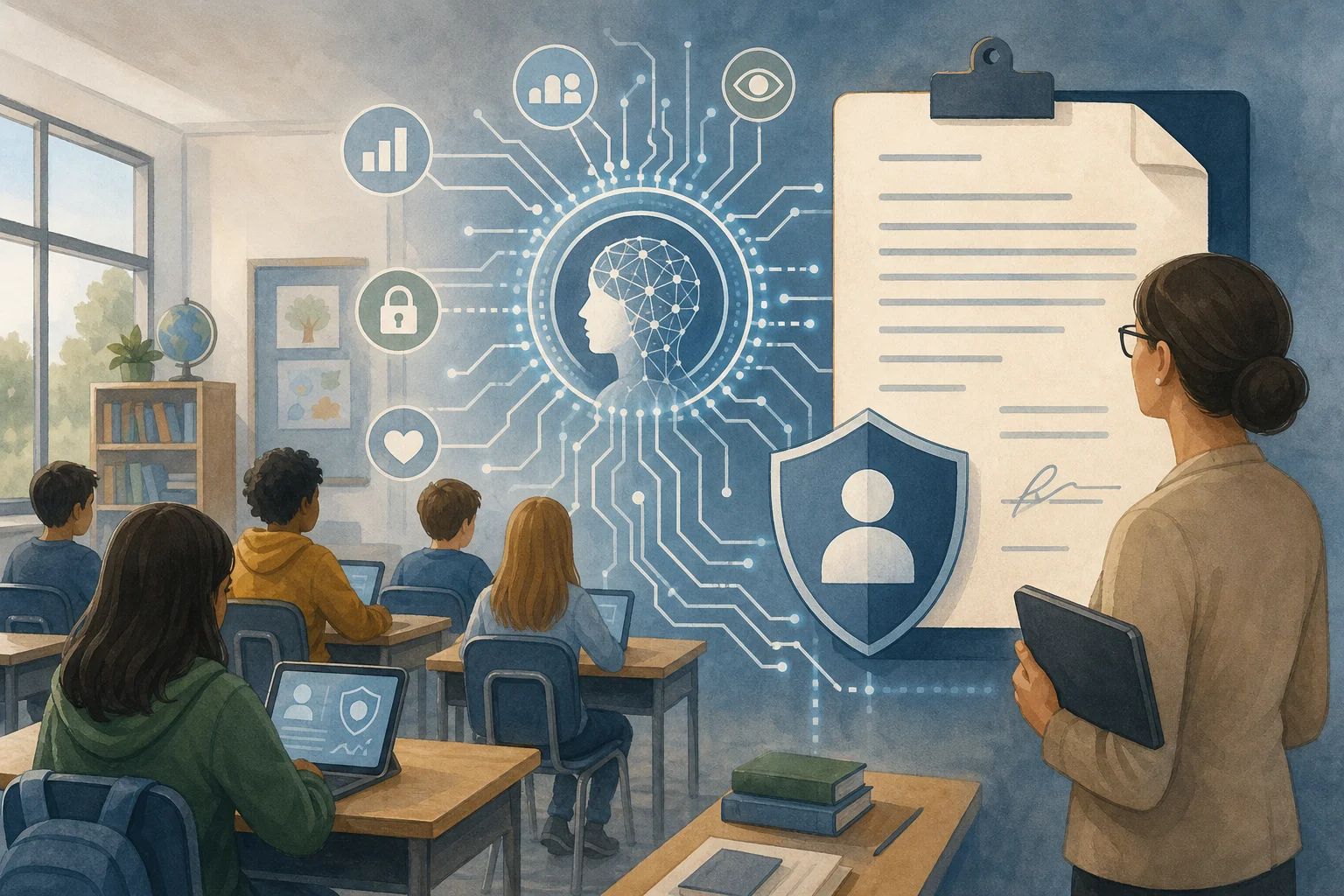
Microsoft, the American Federation of Teachers, and the United Federation of Teachers announced a “National AI Safety & Privacy Standard” for schools on September 9, 2026. In Microsoft’s release, the agreement is described as legally enforceable and as covering students, families, and educators. The memorandum says student and educator data will not be used to train AI models, and that schools retain control over when and how AI is used.
The document is a binding agreement, according to the American Federation of Teachers memorandum. It defines student data broadly, includes a narrow safety-and-security exception, and says that exception cannot be used for general model training or improvement. Education Week reported that the new Microsoft standards apply to existing Microsoft education contracts as of November 1, 2026, and can also be included in new contracts. The supplied sources do not identify any other company or district-specific rollout terms beyond those dates and contract paths.
For educators, the concrete change is not a layoff or hiring announcement. It is a set of contract terms around privacy, surveillance, and control over AI systems used in schools, with Microsoft agreeing to make the protections available in its education agreements and the union side describing them as mandatory for school districts that choose to adopt them in contracts. Education Week also reported that Anthropic and OpenAI were still negotiating similar terms with the union effort.
What the standard says
Microsoft’s release says the standard establishes legally enforceable protections for students, families, and educators. The release says student and educator data will not be used to train AI models, and that schools can incorporate the protections into Microsoft customer agreements. The AFT memorandum says the agreement is binding and sets out the protections in contract form.
The memorandum also sets out a narrow safety-and-security exception. On the supplied record, that exception exists, but it cannot be used for general model training or improvement. The sources do not identify any broader exception, and they do not state that the exception is optional or temporary. They also do not say that any specific school district has already invoked it.
Who is affected
The announcement is directed at schools, students, families, and educators. The Microsoft release expressly says the protections apply to educators. The AFT memorandum says the protections are mandatory and are available to school districts that choose to adopt them in contracts. The supplied sources do not identify which districts have adopted them, and they do not list any school systems outside the Microsoft education contract context.
The immediate labor-policy significance, based on the supplied material, is about working conditions rather than workforce size. The standard gives teachers and school districts an enforceable privacy and oversight tool around AI products that they may use in the workplace. The sources do not say that the agreement changes staffing levels, and they do not identify any job cuts, job gains, or specific changes in teacher workload from the standard itself.
Timing and scope
September 9, 2026, is the date given in the Microsoft release for the announcement. Education Week reported that the standards apply to existing Microsoft contracts starting November 1, 2026, and can be added to new contracts. The AFT memorandum also includes a two-year term and immediate termination for uncured material breach. The supplied sources do not provide a broader implementation timetable beyond those terms.
Because the sources give both the announcement date and the later contract timing, the sequence matters. The announcement describes the standard. Education Week reports the start date for existing contracts. The memorandum describes the agreement as binding and sets out its duration and breach language. The supplied sources do not say whether every school district must adopt the standard, only that the protections are available in Microsoft contracts and that districts may choose to adopt them in contracts.
What is new for school AI procurement
The practical novelty in the supplied reporting is that a major AI vendor is accepting contractually enforceable limits on how school AI products can use student and educator data. Microsoft says the protections can be inserted into education contracts, and the agreement says schools retain control over when and how AI is used. That gives school systems a written standard to point to when negotiating AI procurement, rather than relying only on voluntary promises.
Why that matters is stated directly in the research bundle: it gives teachers and school districts a bargaining tool around privacy, surveillance, and control over AI in the workplace. The sources also say the agreement could serve as a template for other districts and vendors. That is a possibility described in the bundle, not a confirmed outcome, and the supplied sources do not identify which other vendors or districts may follow.
What to watch next
The supplied record leaves several questions open. It does not identify which specific Microsoft education products are covered by the contract language, beyond the general reference to education contracts. It does not identify the districts that will adopt the standard, if any, or the number of agreements affected. It does not say how the two-year term will play out in later renewals or whether any material breach disputes have been raised.
Education Week’s reporting that Anthropic and OpenAI were still negotiating similar terms suggests the school-AI contracting issue is still developing beyond Microsoft. On the supplied evidence, that is the clearest sign of what may come next: more vendors may be asked to accept similar school privacy terms, but the bundle does not say whether they will do so or on what timetable.
Bottom line
This is a contract and governance story, not a layoff story. Microsoft, the AFT, and the UFT announced a binding school AI privacy standard that bars training models on student and educator data, preserves school control over AI use, and can be written into Microsoft education agreements. Education Week reported that existing contracts would fall under the standard starting November 1, 2026, with new contracts eligible as well. The immediate effect, on the supplied record, is to change how school AI products are governed, not how many people are employed.
Sources
- AFT, UFT and Microsoft announce ‘National AI Safety & Privacy Standard’ for schools to protect students, families and educators — Microsoft Source
- National AI Safety & Privacy Standard MOA — American Federation of Teachers
- Microsoft Agrees to New Student Privacy Protections for AI. How Ironclad Are They? — Education Week