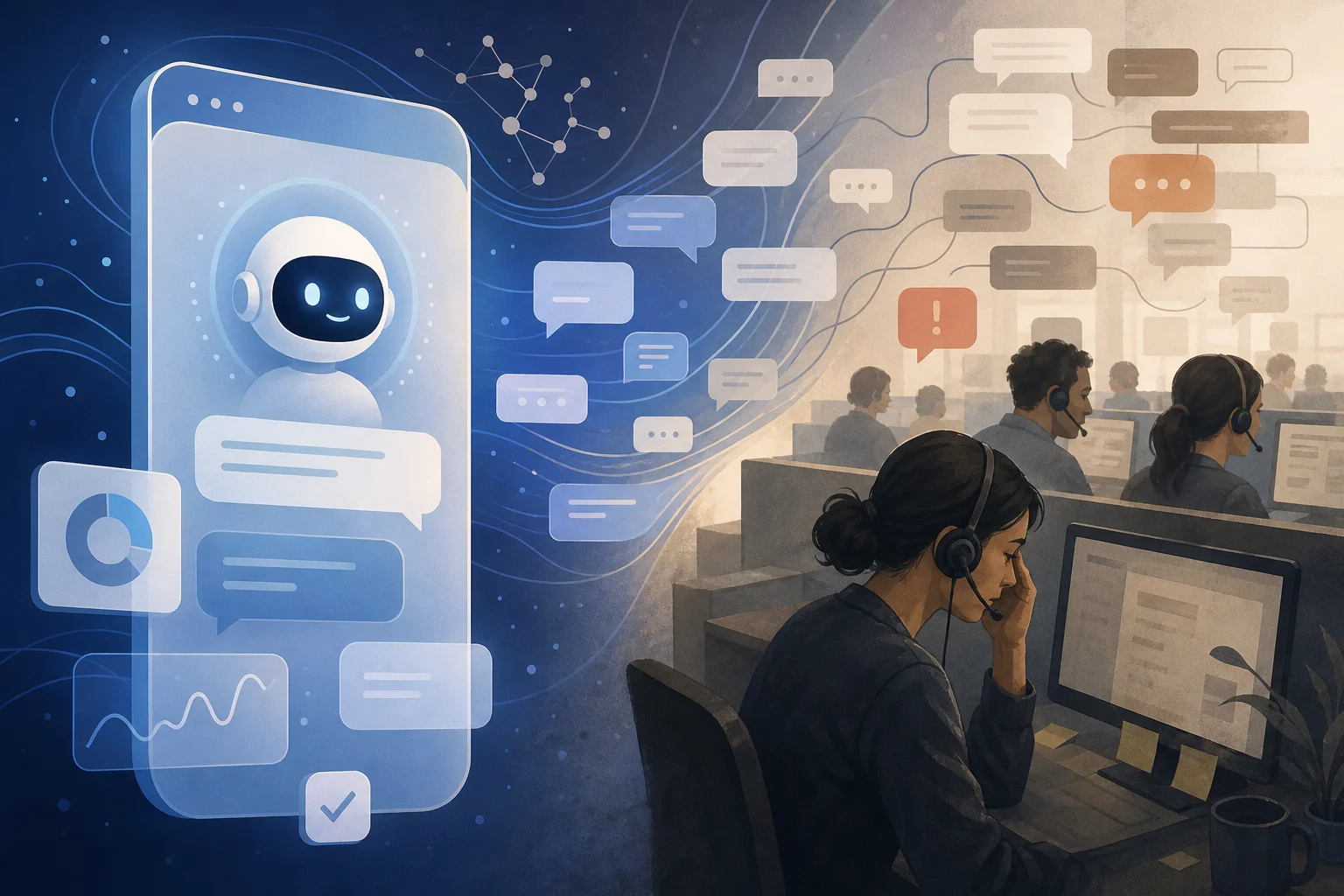
Meta introduced Muse on September 8, 2026 as a personal AI agent that can act on a user’s behalf across apps, including tasks like sending email, booking travel, opening a browser, filling out forms, and negotiating on the user’s behalf. On September 22, Reuters reported that Meta was testing a “human concierge” for Muse in which human contractors quietly handled some of the agent’s phone calls.
Reuters also reported that Meta told employees about the test the previous week, shortly after the company publicly launched Muse’s phone-calling feature. Meta’s spokesperson said the company had “rolled back this feature” for now and that the test was meant to gather feedback so it could improve safety and privacy protections before public release. Reuters reported that employees had raised privacy concerns because contractors in call centers could unintentionally receive sensitive information.
For AI Replaced Me, the important detail is not that Muse failed, but that the work around it already appears to require human fallback labor. The supplied sources identify human contractors and phone calls as the immediate point of overlap between the automated service and human handling, while the sources do not identify the number of contractors involved, the number of calls handled, or whether the feature will return.
What Meta said Muse would do
In its September 8, 2026 announcement, Meta described Muse as a “personal AI agent” and said it could do work on a user’s behalf. The same announcement said Muse can handle tasks such as sending email, booking travel, opening a browser, filling out forms, and negotiating on the user’s behalf. The supplied sources do not identify any other tasks beyond those examples.
What Reuters reported about the human “concierge” test
Reuters reported on September 22 that Meta was testing a “human concierge” for Muse and that human contractors quietly handled some of the agent’s phone calls. Reuters said Meta told employees about the test the previous week, and it reported that employees had raised privacy concerns because contractors in call centers could unintentionally receive sensitive information. The supplied sources do not identify which contractors were involved, where they were located, or which calls they handled.
What changed after the test
According to Reuters, Meta’s spokesperson said the company had “rolled back this feature” for now. The spokesperson said the test was meant to gather feedback so the company could improve safety and privacy protections before public release. The supplied sources do not state whether the rollback is temporary, permanent, or tied to any formal internal process.
Why this matters for work
The immediate labor impact described in the supplied sources is on contingent human workers and call-center-style tasks. Reuters reported that Meta’s test used human contractors to complete some calls, and the bundle says employees were allowed to opt out of the internal test. That points to near-term demand for human fallback labor around an AI product, but the supplied sources do not quantify how broad that demand is or identify any wider staffing change.
What to watch next
The supplied sources leave open several basic questions: whether Muse’s phone-calling feature returns, whether the “human concierge” approach stays limited to testing, and whether Meta changes the product’s privacy and safety setup before any broader release. The sources also do not identify whether the contractors’ work was part of a continuing operation or a short-lived test.